
In Şanlıurfa, southeastern Türkiye, the International Labour Organization (ILO) held a teacher training program on 24 December 2025 as part of ongoing efforts to eliminate the worst forms of child labour in seasonal agriculture. The initiative included representatives from the Ministry of Labour and Social Security and focused on ensuring children’s uninterrupted access to education,… [Read More]
Human Rights Due Diligence for Decent Work: 2025 MOOC Unites Learners Worldwide

The 2025 edition of the MOOC on Human Rights Due Diligence for Decent Work (HRDD4DW) brought together over 5,600 participants from around the world to strengthen their understanding of labour-focused human rights due diligence, with a special emphasis on working conditions. Building on the success of the 2024 edition, which attracted 4,200 participants, this second… [Read More]
How Bridging the Digital Divide Creates Jobs and Fights Poverty

Jobs are the most reliable way to reduce poverty and provide people with hope for a better future. To achieve this, countries must build economies that create opportunities and translate growth into local employment. Yet despite advances in technology, the world’s poorest remain largely disconnected from the digital tools that now drive labor markets, agricultural… [Read More]
Rwanda’s Path from Startup Ambition to Digital Business Success

In Kigali, Rwanda, digital entrepreneurs are beginning to scale their businesses, moving from struggling to access capital to closing deals and expanding their teams. This transformation is driven by the Rwanda Digital Acceleration Program (RDAP), a five-year government initiative supported with $200 million from the World Bank and the Asian Infrastructure Investment Bank (AIIB). The… [Read More]
How Extreme Poverty Has Shifted Worldwide Since the Pandemic
Global poverty trends have been significantly affected by a series of shocks and uneven recoveries over the past five years. Economic pressures from the COVID-19 pandemic, inflation, conflict, and extreme weather have slowed progress in reducing poverty. While some countries rebounded quickly after the pandemic, others struggled to improve their economic conditions. The World Bank’s… [Read More]
Scaling Up Renewable Energy and Access in Cabo Verde with World Bank Support

The World Bank has approved $13.3 million in concessional financing through the International Development Association (IDA) for Cabo Verde’s Renewable Energy and Improved Utility Performance Project (REIUP). The operation is co-financed by a $1.2 million concessional loan and $0.41 million grant from the Canada Clean Energy and Forest Climate Facility (CCEFCF), along with a $0.4… [Read More]
Protecting Water and Biodiversity in Parita Bay Through Local Action

Parita Bay, located on Panama’s Pacific coast, is a biodiversity hotspot and a crucial part of the region’s hydrological cycle. Its mangroves, swamps, lagoons, and rivers store water, regulate flows, buffer floods, and filter pollutants, helping maintain coastal water quality and sustain local ecosystems. For nearby communities, these habitats support fishing, agriculture, water security, and… [Read More]
Mexico’s Strategy to Bridge the Digital Skills Gap and Boost Productivity

Mexico faces a growing skills gap in advanced manufacturing and digital technologies, with 68% of employers struggling to find qualified talent. Sectors such as aerospace, automotive, pharmaceuticals, and electronics require sophisticated technical and digital skills, while traditional education systems are not keeping pace with rising demand in areas like cloud computing, cybersecurity, artificial intelligence, and… [Read More]
Panama Advances Hearing Health with Early Detection and Innovative Technology
Newborn hearing screening is crucial for early detection of hearing loss, which plays a key role in language development, communication, and social inclusion. In Panama, a national program focused on newborn hearing screening and the use of advanced technology is helping children hear from the very first days of life, opening doors to learning, development,… [Read More]
Longer School Days Boost Learning Outcomes in Latin America and the Caribbean

Extending the school day can improve learning outcomes only when the additional time is used intentionally to strengthen education, inclusion, and community engagement. When schools function as educational, cultural, and social hubs, they can help reduce learning gaps and support vulnerable students. Across Latin America and the Caribbean (LAC), students lag behind their OECD peers… [Read More]
Innovative Nature-Based Projects Transforming Social Infrastructure in LAC
Nature-Based Solutions (NbS) provide cost-effective and efficient approaches to protect social infrastructure from floods, extreme heat, hurricanes, and other severe climate events. These solutions, supported by the Inter-American Development Bank (IDB), demonstrate tangible benefits such as energy savings, flood reduction, improved water management, and enhanced urban and coastal resilience through green roofs, vertical gardens, rainwater… [Read More]
Ending Hunger: WFP Executive Director Appeals to World Leaders

Cindy McCain, Executive Director of the United Nations World Food Programme (WFP), has outlined the agency’s strategic priorities for 2026 as it tackles rising global hunger amid escalating humanitarian challenges and resource constraints. According to WFP’s 2026 Global Outlook, 318 million people worldwide face crisis-level hunger or worse, driven by violent conflicts, extreme weather, and… [Read More]
Support and Relief Available for North-West Queensland Flood Victims
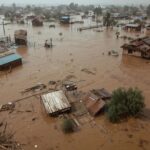
Residents affected by floods in Flinders, Richmond, and Winton can now access Personal Hardship Assistance to support their recovery from the impacts of the North Queensland Monsoon Trough. This assistance provides payments of $180 per individual and up to $900 for families of five or more to cover emergency essentials such as food, clothing, and… [Read More]
$2 Million Fodder Support Boosts Flood-Affected Graziers in North-West Queensland

A $2 million Coordinated Emergency Support Package has been announced to assist graziers in Carpentaria, Cloncurry, Flinders, McKinlay, and Richmond Shires following record-breaking floods in the northern outback. The funding, provided by the Australian and Queensland Governments through the joint Commonwealth-state Disaster Recovery Funding Arrangements (DRFA), will cover costs such as jet fuel, helicopter hire,… [Read More]
$38 Million Boost for North-West Queensland Flood Recovery Efforts

North-west Queensland is set to benefit from a $38 million disaster recovery package aimed at supporting communities affected by recent record-breaking floods caused by a monsoonal trough. The Australian and Queensland Governments have funded the assistance through the joint Commonwealth-state Disaster Recovery Funding Arrangements (DRFA) to help flood-impacted areas recover and build resilience against future… [Read More]
Disaster Relief for Flooded Small Businesses in Northern and Northwestern Regions After Heavy Monsoon Rains
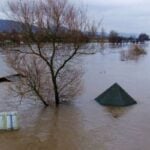
Disaster loans have been activated to support small businesses affected by widespread flooding in north and north-west Queensland. Eligible businesses across 13 local government areas can access low-interest loans of up to $250,000 to cover recovery costs, as well as up to $100,000 to maintain ongoing operations. The assistance targets businesses in Burke, Carpentaria, Cassowary… [Read More]
Back to Sudan: A CARE Leader’s Story Amid Ongoing Humanitarian Crisis

Daw Mohamed last saw his mother in October 2022, six months before Sudan descended into full-scale civil war. For nearly three years, he feared for her safety while working in some of the world’s most dangerous humanitarian settings. Born in a small farming village in West Kordofan, Mohamed’s family remained trapped in a conflict zone… [Read More]
Ensuring Public Trust in Climate Reforms: Lessons from Georgia and Moldova

Georgia and Moldova are navigating dual transitions, aiming for a green and just development agenda while managing complex political challenges. Both countries are at strategic geopolitical crossroads, where political pressures shape public discourse and information spaces. In Moldova, the state’s transfer of gas distribution from Gazprom’s subsidiary to Energocom in August 2025 marked a strategic… [Read More]
How Civil Society Is Redefining Its Place in the World

Narratives play a critical role in shaping how we perceive civil society, the legitimacy we grant it, and the expectations we hold, particularly in a fast-changing world marked by political shifts, technological advances, conflicts, and evolving public perceptions. Today, global, regional, and national narratives are shifting, signaling a deeper redefinition of civil society’s role and… [Read More]
Lessons from USAID: Navigating Rapid Change in Development Operations
As the United States faces democratic backsliding, rising political violence, and attacks on civil society, defenders of democracy must adapt to rapidly changing challenges. The dismantling of USAID in 2025 represents a significant loss for global democracy, but its previous work offers valuable lessons that can guide pro-democracy efforts in the U.S. and worldwide. Operating… [Read More]
How Improved Public Spending, Skills Development, and Housing Policies Can Strengthen Portugal’s Economy
Portugal’s economy has shown resilience in recent years, with historically high employment rates and declining public debt. According to a new OECD report, structural reforms focused on strengthening public finances, boosting productivity, improving employment and skills, and advancing the climate transition could lead to stronger and more sustainable improvements in living standards. The OECD Economic… [Read More]
US Freezes Aid to Somalia Following Reports of Food Aid Misuse
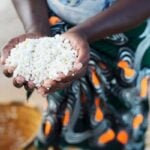
The United States has suspended all assistance to Somalia, citing allegations that Somali government officials destroyed a United Nations World Food Programme warehouse and seized donor-funded food aid. According to the US State Department, reports indicated that 76 tonnes of food intended for vulnerable Somali communities had been illegally seized, prompting immediate action under the… [Read More]
How SORA Technology’s $2.5 Million Funding Could Revolutionize Malaria Forecasting in Africa
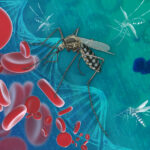
SORA Technology has raised $2.5 million, closing the second tranche of its late seed round and bringing its total funding to $7.3 million. This investment, announced in late 2025 and widely reported in early 2026, will support the company’s efforts to enhance AI-driven disease prediction models and expand drone operations across multiple African countries combating… [Read More]


