Rotary International has granted US$9.9 million to the World Health Organization (WHO) in Pakistan to support the vaccination of 27 million children in high-risk districts against polio. This funding strengthens the Pakistan Polio Eradication Initiative, which conducts regular nationwide and subnational campaigns reaching over 45 million children annually. The effort is coordinated with the Government… [Read More]
Kenya Faces Severe Drought, Two Million People Vulnerable to Hunger and Health Risks
Over two million people across Kenya are experiencing worsening food insecurity following one of the driest October to December 2025 rainy seasons on record. The prolonged drought has led to rising malnutrition rates, increased risk of disease outbreaks, and disrupted access to essential health services. The short rains, which typically bring seasonal rainfall between October… [Read More]
European Union and UNDP Launch €10M Initiative to Support Afghan Women in Business

The European Union has announced a €10 million investment to launch Phase II of the Women’s Economic Empowerment through Local Enterprise Development (WE-LEAD) programme in Afghanistan. Implemented by the United Nations Development Programme (UNDP), the initiative aims to support Afghan women’s livelihoods and economic agency, building on the successes and lessons of WE-LEAD Phase I… [Read More]
EU Pledges €1.9 Billion in 2026 Humanitarian Aid, Supporting Nigeria and Africa with €557 Each

The European Union has announced a €1.9 billion humanitarian aid budget for 2026, with €557 million specifically allocated to West and Central Africa, including the Sahel, Lake Chad basin, and North-West Nigeria. This funding excludes a separate €14.6 million dedicated to North Africa. The announcement comes amid growing humanitarian needs, with 239 million people worldwide… [Read More]
Government Investment Targets Mental Health and Wellness in Canadian Agriculture
The governments of Canada and Manitoba have announced a two-year, $300,000 extension to the Manitoba Farmer Wellness Program (MFWP) through the Sustainable Canadian Agricultural Partnership. This renewal aims to continue supporting the mental health and wellness of Manitoba’s agricultural community, including farmers, farm families, and agricultural employees, by providing access to professional counselling tailored to… [Read More]
UK Government Plans to Equalize Cancer Treatment Across Regions
The UK government has unveiled a new National Cancer Plan aimed at ending the postcode lottery in cancer care, ensuring that patients in rural, coastal, and deprived communities have the same access to specialists, technology, and treatments as those in major cities. People living in areas with fewer cancer consultants often face long waits for… [Read More]
Global Update: Ukraine Attacks, Nigeria Food Aid Crisis, Kenya Drought Worsens
Recent developments across multiple regions highlight escalating humanitarian crises. In Ukraine, attacks have intensified in several areas, including the Odesa region, where a 17-year-old boy was killed, prompting UNICEF to call for an end to strikes on civilian zones and essential infrastructure. The southeastern city of Kryvyi Rih faced renewed attacks, disrupting communities already affected… [Read More]
Gaza War Crimes Investigation to Press Ahead in Search of Justice and Accountability

The United Nations Commission of Inquiry on the Occupied Palestinian Territory, including East Jerusalem and Israel, has reaffirmed its commitment to continue investigating alleged violations of international human rights and humanitarian law in pursuit of justice and accountability. Srinivasan Muralidhar, Chair of the Commission, emphasized that the body operates under a mandate approved by the… [Read More]
Global Spending Gap: $30 Invested in Environmental Harm for Every $1 on Nature Protection

The United Nations has issued a strong call for far-reaching financial reform, warning that current global investment patterns are driving environmental destruction rather than sustainability. According to the State of Finance for Nature 2026 report, for every dollar invested in protecting nature, around 30 dollars are spent on activities that harm it. The report argues… [Read More]
Renewed Fighting in Syria Risks Undermining Fragile Transition Process
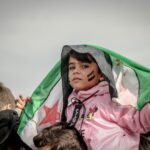
One year into Syria’s post-Assad transition, nearly three million refugees and internally displaced people have returned home, signaling cautious progress after more than a decade of conflict. However, United Nations officials warn that the country remains extremely fragile, with persistent threats from ISIL, unresolved sectarian and ethnic tensions, the presence of foreign fighters, and unsecured… [Read More]
Global Surge in Internet Shutdowns Prompts UN Warning Over Digital Blackouts
The United Nations has warned of a sharp global rise in internet shutdowns, with UNESCO reporting that governments are increasingly cutting online access during protests, elections, and periods of crisis. The agency emphasized that such measures persist despite the central role of internet connectivity in democratic participation and the exercise of fundamental rights. According to… [Read More]
Unlocking Green and Blue Economy Investment Opportunities in Mauritius and Seychelles

Mauritius and Seychelles, as Small Island Developing States, face distinct yet interconnected challenges in transitioning to renewable energy and advancing circular economy models. Mauritius must address limited land and natural resources, heavy dependence on imported fossil fuels, fragmented policies, capacity gaps, and the need for large-scale infrastructure investment to meet its clean energy ambitions. Seychelles,… [Read More]
Mozambique Flood Crisis: IOM Expands Emergency Aid for More Than Half a Million Displaced
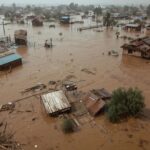
The International Organization for Migration (IOM) is intensifying its emergency response in Mozambique as severe flooding continues to displace large numbers of people across the country. The organization is expanding life-saving assistance while strengthening nationwide displacement tracking, coordination, and protection efforts in collaboration with the government and humanitarian partners. Weeks of heavy rainfall have triggered… [Read More]
Lebanon Shows Signs of Economic Recovery as Reforms Advance
Lebanon’s economy recorded positive growth in 2025, marking the beginning of a modest recovery after years of severe economic contraction. According to the latest World Bank Lebanon Economic Monitor, real GDP expanded by 3.5 percent in 2025, reflecting early signs of macroeconomic stabilization, a rebound in tourism, and the impact of reform progress, albeit uneven…. [Read More]
Bhutan Advances Clean Energy Goals with World Bank Group–Supported Hydropower Financing

The World Bank Group’s Boards of Executive Directors have approved a major financing package to expand Bhutan’s hydropower generation, support regional clean energy trade, stimulate economic growth, and create jobs. The initiative underscores Bhutan’s strategic role in advancing sustainable energy development while strengthening economic opportunities through low-carbon power exports. At the center of the package… [Read More]
Central Asia Launches First Regional Electricity Market with World Bank Support

The World Bank’s Board of Executive Directors has approved the Regional Electricity Market Interconnectivity and Trade (REMIT) Program, a 10-year initiative designed to enhance energy connectivity across Central Asia. The program will establish the region’s first-ever regional electricity market, expand electricity trade, increase transmission capacity, and create a foundation for integrating large-scale renewable energy. In… [Read More]
Nigeria Faces Food Aid Shortages as WFP Signals Cuts Amid Escalating Northern Crises

The United Nations World Food Programme (WFP) has warned that over one million people in northeast Nigeria could lose access to emergency food and nutrition assistance within weeks unless urgent new funding is secured. For the first time in the country, WFP’s aid will be limited to only 72,000 people, highlighting the severity of the… [Read More]
Kenya Secures $16.5 Million from AfDB for Renewable Energy Expansion

The African Development Bank (AfDB) Board of Directors approved a $16.5 million loan in November to support the development of the 35 MW OrPower Twenty-Two (OTTL) Geothermal Power Plant, a key renewable energy project in Kenya. The plant aims to increase the country’s baseload generation capacity and accelerate its transition to clean energy. The OTTL… [Read More]
Why Labour Markets Need Policy: Lessons on Employment and Decent Work

Well-designed employment policies play a decisive role in turning the idea of decent work into a lived reality for millions of people, according to Dorothea Schmidt, Chief of the International Labour Organization’s Employment Policy, Labour Market and Youth (EMPLAB) branch. She emphasises that employment policies are not abstract government documents, but powerful tools that shape… [Read More]
Why Indonesia Needs Education Budget Reform to Improve Quality and Equity

Indonesia deserves recognition for making education a constitutional priority. This commitment reflects an understanding that education is not simply one sector of development, but the foundation of human development, democracy, and citizenship. Yet despite strong state attention, a critical question remains unanswered: how far has education budget policy truly addressed the persistent challenges of quality… [Read More]
Creating Jobs at Scale: Why Entrepreneurship Ecosystems Matter More Than Ever

When J-PAL co-founder Esther Duflo spoke with the Aspen Network of Development Entrepreneurs (ANDE) last fall, she delivered a message that strongly resonated with both organizations: evidence is not about confirming what we already believe, but about discovering what truly makes a difference. She also highlighted the long-term ambition behind evidence-based entrepreneurship support—to help small… [Read More]
Five Key Lessons from Viet Nam’s National Adaptation Plan Mid-Term Evaluation
Viet Nam is among the countries most vulnerable to the impacts of climate change, with rising sea levels, saltwater intrusion, typhoons, floods, and landslides posing serious risks to its long coastline, low-lying deltas—particularly the Mekong Delta—and mountainous regions. These climate hazards are already exacting a heavy toll. In 2025 alone, the country recorded 415 deaths… [Read More]
What Remains After Project Exit? Lessons from Livestock and Dairy Interventions in Northern Afghanistan
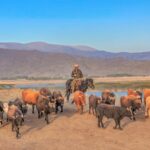
Projects that use the market systems development (MSD) approach often argue that their most successful interventions create lasting impact for target communities long after donor funding ends. In practice, however, these claims are rarely tested. Ex-post evaluations are uncommon, leaving a significant gap in understanding what truly remains once projects exit. To address this gap,… [Read More]


