• Skip to primary navigation
  • Skip to main content
  • Skip to primary sidebar

fundsforNGOs News

Grants and Resources for Sustainability

  • Subscribe for Free
  • Premium Support
  • Premium Login
  • Premium Sign up
  • Home
  • Funds for NGOs
    • Agriculture, Food and Nutrition
    • Animals and Wildlife
    • Arts and Culture
    • Children
    • Civil Society
    • Community Development
    • COVID
    • Democracy and Good Governance
    • Disability
    • Economic Development
    • Education
    • Employment and Labour
    • Environmental Conservation and Climate Change
    • Family Support
    • Healthcare
    • HIV and AIDS
    • Housing and Shelter
    • Humanitarian Relief
    • Human Rights
    • Human Service
    • Information Technology
    • LGBTQ
    • Livelihood Development
    • Media and Development
    • Narcotics, Drugs and Crime
    • Old Age Care
    • Peace and Conflict Resolution
    • Poverty Alleviation
    • Refugees, Migration and Asylum Seekers
    • Science and Technology
    • Sports and Development
    • Sustainable Development
    • Water, Sanitation and Hygiene (WASH)
    • Women and Gender
  • Funds for Companies
    • Accounts and Finance
    • Agriculture, Food and Nutrition
    • Artificial Intelligence
    • Education
    • Energy
    • Environment and Climate Change
    • Healthcare
    • Innovation
    • Manufacturing
    • Media
    • Research Activities
    • Startups and Early-Stage
    • Sustainable Development
    • Technology
    • Travel and Tourism
    • Women
    • Youth
  • Funds for Individuals
    • All Individuals
    • Artists
    • Disabled Persons
    • LGBTQ Persons
    • PhD Holders
    • Researchers
    • Scientists
    • Students
    • Women
    • Writers
    • Youths
  • Funds in Your Country
    • Funds in Australia
    • Funds in Bangladesh
    • Funds in Belgium
    • Funds in Canada
    • Funds in Switzerland
    • Funds in Cameroon
    • Funds in Germany
    • Funds in the United Kingdom
    • Funds in Ghana
    • Funds in India
    • Funds in Kenya
    • Funds in Lebanon
    • Funds in Malawi
    • Funds in Nigeria
    • Funds in the Netherlands
    • Funds in Tanzania
    • Funds in Uganda
    • Funds in the United States
    • Funds within the United States
      • Funds for US Nonprofits
      • Funds for US Individuals
      • Funds for US Businesses
      • Funds for US Institutions
    • Funds in South Africa
    • Funds in Zambia
    • Funds in Zimbabwe
  • Proposal Writing
    • How to write a Proposal
    • Sample Proposals
      • Agriculture
      • Business & Entrepreneurship
      • Children
      • Climate Change & Diversity
      • Community Development
      • Democracy and Good Governance
      • Disability
      • Disaster & Humanitarian Relief
      • Environment
      • Education
      • Healthcare
      • Housing & Shelter
      • Human Rights
      • Information Technology
      • Livelihood Development
      • Narcotics, Drugs & Crime
      • Nutrition & Food Security
      • Poverty Alleviation
      • Sustainable Develoment
      • Refugee & Asylum Seekers
      • Rural Development
      • Water, Sanitation and Hygiene (WASH)
      • Women and Gender
  • News
    • Q&A
  • Premium
    • Premium Log-in
    • Premium Webinars
    • Premium Support
  • Contact
    • Submit Your Grant
    • About us
    • FAQ
    • NGOs.AI
You are here: Home / cat / Creating Jobs at Scale: Why Entrepreneurship Ecosystems Matter More Than Ever

Creating Jobs at Scale: Why Entrepreneurship Ecosystems Matter More Than Ever

Dated: January 23, 2026

When J-PAL co-founder Esther Duflo spoke with the Aspen Network of Development Entrepreneurs (ANDE) last fall, she delivered a message that strongly resonated with both organizations: evidence is not about confirming what we already believe, but about discovering what truly makes a difference. She also highlighted the long-term ambition behind evidence-based entrepreneurship support—to help small firms grow into mid-sized enterprises that can sustain expansion, generate stable employment, and integrate into global markets. Her insights underscored both the importance of entrepreneur-led development and the need to rethink how support is designed and delivered.

Over the years, policymakers and implementation leaders have increasingly viewed entrepreneurship as a pathway to job creation in low- and middle-income countries (LMICs). Drawing on extensive experience and ongoing conversations with research and implementation partners, several practical lessons are emerging about how to make this pathway more effective.

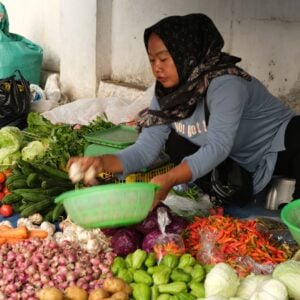
Small, dynamic businesses account for an estimated 50 to 90 percent of employment across LMICs. Despite their importance, these firms face persistent barriers, including limited access to finance, talent shortages, and the challenge of transitioning to low-emission economies. Yet only a small share of international development assistance—around three percent—has traditionally focused on helping them overcome these constraints. While direct support to individual businesses can create jobs, lasting impact depends on addressing the broader conditions that shape entrepreneurial success.

Entrepreneurship does not happen in isolation. Businesses thrive or struggle depending on the surrounding ecosystem of investors, mentors, policies, institutions, and market opportunities. These interconnected systems, known as entrepreneurship ecosystems, determine whether firms can start, survive, and scale. Enterprise Support Organizations (ESOs), such as accelerators and incubators, play a critical role by helping entrepreneurs access capital, build capabilities, and connect to markets. Strengthening these organizations can ease growth bottlenecks and enable more durable job creation. For instance, tailored business consulting has proven effective in improving firm performance, yet adoption remains limited. Researchers increasingly point to the need for affordable, locally delivered services that make proven practices accessible and sustainable over time.

A growing body of evidence on firm growth is also helping practitioners and researchers refine how entrepreneurs are supported. Smarter targeting has shown promise by directing resources toward firms with higher growth potential and tailoring financial or technical support to their specific needs. In some cases, non-traditional data—such as performance in business plan competitions, community recommendations, or personal characteristics of founders—combined with advanced analytics have helped predict business success more accurately. Investing in such tools allows ESOs to focus efforts where they can have the greatest impact.

Connecting businesses to markets is another powerful lever. Programs that facilitate trade, e-commerce, and procurement often increase sales and employment by linking small and mid-sized firms to new buyers and to one another. These relationships also transfer valuable know-how, making local businesses more productive. Similarly, collaborative learning between researchers and practitioners has driven meaningful improvements in program design. Evidence from initiatives like the Global Accelerator Learning Initiative revealed that some acceleration programs unintentionally worsened gender disparities in financing, prompting organizations to introduce gender-focused acceleration models.

For donors and policymakers committed to job creation and inclusive growth, these insights point to three critical shifts. First, funding should prioritize organizations, not just individual programs. Supporting ESOs to build internal capabilities, data systems, and networks requires longer-term and more flexible funding, but it enables them to specialize, measure impact, and scale solutions that meet real market needs. Second, continued investment in evidence is essential—not only through research, but also through stronger data systems and partnerships that translate findings into practice. Finally, a systemic perspective is needed. Success should be measured not only by the number of firms supported, but by whether entire ecosystems become more resilient, inclusive, and aligned.

Stronger entrepreneurship ecosystems create scalable pathways for business growth, foster trust and collaboration, and improve access to markets and resources well beyond individual firms. By thinking beyond entrepreneurs alone and investing in the systems that surround them, development efforts can unlock more sustainable job creation and long-term economic growth in low- and middle-income countries.


Related Posts

  • Youth-Led Social Ventures in Korea: Current Landscape and Opportunities
  • Global Call: States Must Ensure Civil Society Participation in Crimes Against Humanity Talks
  • Shaping Africa’s Future: Trade, Jobs, and Economic Resilience
  • From Recovery to Readiness: How LISC Is Helping Small Businesses Build Resilience for Future Crises
  • Lessons from the Venezuela Economic Crisis: Why MSMEs Need a Financial Buffer to Survive Export Market Volatility

Primary Sidebar

Latest News

Bangladesh Struggles Between Food Security and Declining Groundwater Levels

Governor Spanberger Announces $2.48M Investment to Expand Capital Access in Virginia

World Bank and CGIAR Strengthen Partnership on Food, Land and Water Security

World Bank Approves $225M to Boost Health and Nutrition in Côte d’Ivoire

Adelphi Trust Makes $6.20 Million New Investment in NVIDIA Corporation

Ed Foundation Launches Student Investment Program to Boost Financial Literacy

Split image: a smokestack pollution scene on the left and sunny renewable energy with solar panels and wind turbines on the right, connected by arrows indicating transition to clean energy.

Egypt Boosts Clean Energy Goals with Major Wind Power Expansion Plan

Wooden letters spell 'SME' on a wooden surface, with handwritten notes 'Medium-Sized' above and 'Small & Enterprises' beside—illustrating the SME acronym.

Tony Elumelu Foundation Review Signals Shift to Platform-Based SME Support in Africa

ADB Launches First Disaster Relief Bonds for Kyrgyzstan and Tajikistan Risks

ADB Launches Initiative to Strengthen Asia’s Critical Minerals Supply Chains

Asia-Pacific Disaster Resilience Boosted by ADB–Japan Partnership

Asia-Pacific Must Strengthen Collective Resilience, Says ADB Chief

High-voltage power substation with metal lattice towers, insulators, and long rows of electrical equipment across a gravel lot.

ADB Unveils $70 Billion Plan to Boost Asia’s Power and Digital Connectivity

Key Challenges Holding Back Public Sector Digital Transformation

Pink female and blue male silhouettes with a not-equal sign between them, illustrating gender inequality.

Who Pays the Price? Gender Inequality and Rising Sovereign Debt

Saudi Fund for Development Expands Sustainable Water Access Vision

Aerial view of a tropical island with dense forest, white-sand beach, turquoise water, thatched huts along the shore, and a small boat near the beach.

Building Resilience in Solomon Islands Through SIIVA Data System

Exterior wall of a municipal building with large metal letters spelling 'MUNICIPAL BUILDING' and a leafy tree nearby.

10 Municipalities Selected for Empowering Municipal Councils Phase 2 Programme

Global Call to Unlock Funding for Conflict-Affected Countries by UNCDF, UNDP, QFFD

Debt Pressures Deepen Inequality, Threatening 55 Million Jobs for Women

Gavel resting on a book labeled Democracy, symbolizing justice and the rule of law.

NGOs Given Deadline to Comply with New Government Regulations

Three women stand together on a sunny park path, smiling at the camera, one holding papers.

New Course Empowers Young Climate Leaders to Drive Change

Three young women stand in a hallway, posing confidently; center woman in red blazer holds a pen, left holds a folder, right in beige blazer.

EBRD and EU Boost Finance Access for Women, Youth in North Macedonia

A healthcare professional wearing blue gloves administers a vaccine injection into a patient's upper arm.

PAHO Director Visits Canada to Launch Vaccination Week in the Americas

A healthcare professional wearing blue gloves administers a vaccine injection into a patient's upper arm.

PAHO/WHO Donates Digital Immunization Devices to Trinidad and Tobago

Cuba’s Fuel Shortage Threatens Lives, Urgent Action Needed

Authoritarian Regimes Are Fueling Climate Change Risks

Journalists Face Growing Attacks in East and Southern Africa

Person operating a quadcopter drone with a handheld remote controller in a sunlit agricultural field.

IFAD and World Bank Launch AgriConnect to Transform Agriculture in Guinea

Two women chatting outdoors in a park, one adjusting the other’s leopard scarf as they smile at each other, wearing a brown leather jacket and a mustard turtleneck with a pink headscarf, outstretched greenery in the background.

Life in Sudan Displacement Camps: A Mother’s Story of Survival and Hope

Woman in a plaid shirt holding a tablet while standing in a golden wheat field, inspecting the crops.

Farmers Invited to Join Fendt IDEAL Harvest Tour 2026 Across the U.S.

Children washing hands at a white school sink, turning taps with faucets on, in a classroom bathroom setting in the background

Gaza Humanitarian Crisis Worsens with Surge in Rats, Disease and Poor Sanitation

Hand hovering over a vertical stack of wooden letter blocks spelling CRISIS on a table.

Global Aid Delivery Hit as Middle East Crisis Raises Costs and Delays Supplies

Three young women stand in a hallway, posing confidently; center woman in red blazer holds a pen, left holds a folder, right in beige blazer.

Timor-Leste Celebrates Women Entrepreneurs with 2026 Women in Business Awards

Three women stand together on a sunny park path, smiling at the camera, one holding papers.

Tajikistan Launches $4.73 Million Initiative to Promote Women Entrepreneurship and Jobs

Tonga Secures $145 Million Project with World Bank and ADB to Improve Connectivity and Resilience

AfDB and Green Climate Fund Deepen Collaboration to Boost Climate Finance in Africa

Close-up of a filing cabinet drawer with a white sign reading 'Jobs'.

Jordan Launches New Decent Work Country Programme to Boost Inclusive Growth and Jobs

EIB Global Invests €50M+ to Boost Sustainable Development in Northern Albania

Avalanche Foundation Launches Up to $50K Research Grants for Network Economics

Funds for NGOs
Funds for Companies
Funds for Media
Funds for Individuals
Sample Proposals

Contact us
Submit a Grant
Advertise, Guest Posting & Backlinks
Fight Fraud against NGOs
About us

Terms of Use
Third-Party Links & Ads
Disclaimers
Copyright Policy
General
Privacy Policy

Premium Sign in
Premium Sign up
Premium Customer Support
Premium Terms of Service

©FUNDSFORNGOS LLC.   fundsforngos.org, fundsforngos.ai, and fundsforngospremium.com domains and their subdomains are the property of FUNDSFORNGOS, LLC 1018, 1060 Broadway, Albany, New York, NY 12204, United States.   Unless otherwise specified, this website is not affiliated with the abovementioned organizations. The material provided here is solely for informational purposes and without any warranty. Visitors are advised to use it at their discretion. Read the full disclaimer here. Privacy Policy. Cookie Policy.