Financial inclusion plays a critical role in strengthening women’s economic empowerment and improving household food security in Ethiopia, according to recent research. While global efforts to build inclusive financial systems have gained momentum, access to financial services remains uneven, particularly for women, limiting their ability to achieve economic independence and contribute to household well-being.
In Ethiopia, access to financial services has improved significantly over the past decade, with account ownership rising from 22 percent in 2014 to 49 percent in 2024. Despite this progress, the country still lags behind global averages, and gender disparities continue to restrict women’s access to formal financial systems. These barriers not only hinder women’s economic participation but also affect broader development outcomes, including food security.
The study highlights that financial inclusion has a strong positive impact on women’s economic empowerment. Increased access to financial services enables women to engage in income-generating activities, make financial decisions, and strengthen their role within households. The findings show that improvements in financial inclusion directly enhance women’s economic standing, which in turn contributes to better household outcomes.
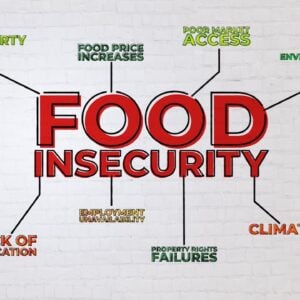
A key outcome of the research is the clear link between financial inclusion and food security. Households with better access to financial services experience improved dietary diversity and reduced levels of food insecurity. Women’s empowerment plays a central role in this relationship, acting as a bridge through which financial access translates into better nutrition and more stable food consumption patterns.
However, the study also identifies persistent challenges that limit the full potential of financial inclusion in Ethiopia. Although many households have access to financial accounts, actual usage remains low. Borrowing from formal institutions is limited, and reliance on informal credit systems remains widespread, particularly in both urban and rural areas. Similarly, savings practices are often informal, with many households relying on traditional methods such as community-based savings groups or keeping cash at home.
The research further points to a range of barriers affecting financial inclusion, including inadequate infrastructure, limited financial literacy, and socio-cultural constraints. Women, in particular, face additional challenges such as restricted decision-making power, lower confidence in managing finances, and limited access to business opportunities. These factors create a cycle that prevents them from fully benefiting from financial services.
Insights from stakeholder interviews reinforce the quantitative findings, emphasizing that financial inclusion can significantly improve women’s livelihoods and household food security. However, the impact varies depending on factors such as loan size, interest rates, and the overall business environment. Small loan amounts, for instance, often limit women to subsistence-level activities rather than enabling meaningful economic growth.
The study also highlights the importance of digital financial services as a promising solution to overcome traditional barriers. Mobile banking and digital payment platforms can expand access, reduce logistical challenges, and enhance security for users. However, these solutions must be supported by improved connectivity and user-friendly systems.
To address these challenges, the study recommends integrating financial inclusion into broader national strategies for economic empowerment and food security. It calls for improved financial products tailored to the needs of underserved populations, expanded physical and digital access to financial services, and the adoption of a “credit-plus” approach that combines financial support with training, business development, and market linkages.
Additionally, strengthening financial literacy programs is essential to ensure that individuals can effectively use financial services. Addressing gender-specific barriers through inclusive policies and innovative lending models is also critical, particularly for rural women who face compounded disadvantages. Finally, fostering partnerships among governments, financial institutions, and development organizations is key to building a more inclusive and sustainable financial ecosystem.
Overall, the findings demonstrate that financial inclusion is not just a financial issue but a powerful development tool that can drive women’s empowerment and improve household food security when supported by the right policies and interventions.