• Skip to primary navigation
  • Skip to main content
  • Skip to primary sidebar

fundsforNGOs News

Grants and Resources for Sustainability

  • Subscribe for Free
  • Premium Support
  • Premium Login
  • Premium Sign up
  • Home
  • Funds for NGOs
    • Agriculture, Food and Nutrition
    • Animals and Wildlife
    • Arts and Culture
    • Children
    • Civil Society
    • Community Development
    • COVID
    • Democracy and Good Governance
    • Disability
    • Economic Development
    • Education
    • Employment and Labour
    • Environmental Conservation and Climate Change
    • Family Support
    • Healthcare
    • HIV and AIDS
    • Housing and Shelter
    • Humanitarian Relief
    • Human Rights
    • Human Service
    • Information Technology
    • LGBTQ
    • Livelihood Development
    • Media and Development
    • Narcotics, Drugs and Crime
    • Old Age Care
    • Peace and Conflict Resolution
    • Poverty Alleviation
    • Refugees, Migration and Asylum Seekers
    • Science and Technology
    • Sports and Development
    • Sustainable Development
    • Water, Sanitation and Hygiene (WASH)
    • Women and Gender
  • Funds for Companies
    • Accounts and Finance
    • Agriculture, Food and Nutrition
    • Artificial Intelligence
    • Education
    • Energy
    • Environment and Climate Change
    • Healthcare
    • Innovation
    • Manufacturing
    • Media
    • Research Activities
    • Startups and Early-Stage
    • Sustainable Development
    • Technology
    • Travel and Tourism
    • Women
    • Youth
  • Funds for Individuals
    • All Individuals
    • Artists
    • Disabled Persons
    • LGBTQ Persons
    • PhD Holders
    • Researchers
    • Scientists
    • Students
    • Women
    • Writers
    • Youths
  • Funds in Your Country
    • Funds in Australia
    • Funds in Bangladesh
    • Funds in Belgium
    • Funds in Canada
    • Funds in Switzerland
    • Funds in Cameroon
    • Funds in Germany
    • Funds in the United Kingdom
    • Funds in Ghana
    • Funds in India
    • Funds in Kenya
    • Funds in Lebanon
    • Funds in Malawi
    • Funds in Nigeria
    • Funds in the Netherlands
    • Funds in Tanzania
    • Funds in Uganda
    • Funds in the United States
    • Funds within the United States
      • Funds for US Nonprofits
      • Funds for US Individuals
      • Funds for US Businesses
      • Funds for US Institutions
    • Funds in South Africa
    • Funds in Zambia
    • Funds in Zimbabwe
  • Proposal Writing
    • How to write a Proposal
    • Sample Proposals
      • Agriculture
      • Business & Entrepreneurship
      • Children
      • Climate Change & Diversity
      • Community Development
      • Democracy and Good Governance
      • Disability
      • Disaster & Humanitarian Relief
      • Environment
      • Education
      • Healthcare
      • Housing & Shelter
      • Human Rights
      • Information Technology
      • Livelihood Development
      • Narcotics, Drugs & Crime
      • Nutrition & Food Security
      • Poverty Alleviation
      • Sustainable Develoment
      • Refugee & Asylum Seekers
      • Rural Development
      • Water, Sanitation and Hygiene (WASH)
      • Women and Gender
  • News
    • Q&A
  • Premium
    • Premium Log-in
    • Premium Webinars
    • Premium Support
  • Contact
    • Submit Your Grant
    • About us
    • FAQ
    • NGOs.AI
You are here: Home / cat / How Natural Farming is Changing Agriculture in Southern India

How Natural Farming is Changing Agriculture in Southern India

Dated: April 21, 2026

The state of Andhra Pradesh in southern India has experienced significant environmental degradation over the past few decades, with an estimated 30 to 40 percent of its forest cover lost due to intensive agricultural expansion. This has contributed to declining soil quality, reduced groundwater levels, and a loss of agroecological biodiversity, making farming increasingly difficult for smallholder communities. As soil health deteriorates, many farmers have become dependent on chemical fertilizers, which has further worsened land quality and created a cycle of rising costs and diminishing returns.

In response, the government launched a sustainable agriculture initiative in 2004 that later evolved into the Andhra Pradesh Community Managed Natural Farming programme. Supported by UNEP, the Global Environment Facility, and the Government of India, the project promotes natural farming practices that integrate traditional knowledge with scientific approaches to restore ecosystems, improve soil health, and diversify crops. Experts involved in the programme emphasize that improving soil and water systems ultimately benefits both farmers and consumers by reducing chemical use and enhancing food quality.

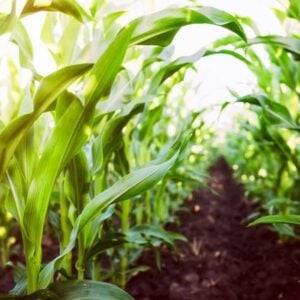
The region’s conventional monocropping system has been identified as a major driver of biodiversity loss and environmental imbalance. Continuous cultivation of single crops has led to soil erosion, nutrient depletion, and increased water runoff, while the heavy use of synthetic inputs has further degraded surrounding ecosystems. This approach has also negatively impacted pollinators and wider ecological systems that are essential for sustainable agriculture.

Natural farming under this initiative eliminates chemical fertilizers and pesticides, instead using organic bio-stimulants made from locally available materials such as cow dung and urine. These inputs activate soil microorganisms that naturally restore fertility by breaking down organic matter and releasing nutrients. Over time, the system aims to reduce dependency on external inputs altogether by strengthening the natural soil ecosystem and promoting biodiversity alongside crop production.

The initiative also emphasizes farmer-to-farmer learning and strong participation from women’s self-help groups, which play a key role in spreading awareness and encouraging adoption of sustainable practices. Many farmers report improved soil quality, reduced input costs, and higher incomes after shifting to natural farming methods. Women participants, in particular, have emerged as community leaders driving behavioural change and knowledge sharing.

To support long-term viability, the programme also connects farmers to markets and introduces certification systems that build consumer trust in sustainably produced goods. These mechanisms help ensure better income stability while promoting transparency and ethical production standards. As a result, farmers can access premium markets while maintaining environmentally responsible practices.

The initiative has reported notable results, including a 30 percent increase in productivity and income for participating farmers, and has already reached more than 3 million farmers across Andhra Pradesh. With plans for further expansion, the model is being positioned as a scalable example of how agriculture can improve livelihoods while restoring ecological balance, demonstrating that food production and biodiversity conservation can work together rather than in opposition.

Related Posts

  • Indonesia and UN Launch Climate Finance Programme to Strengthen Smallholder Resilience
  • Belize Boosts Early Childhood Education with World Bank Support
  • IAEA Urges Restoration of Power at Zaporizhzhia Nuclear Plant Amid Ukraine Conflict
  • Brazil: Calls Grow to Preserve Environmental Safeguards and Defender Rights
  • Global NGOs Slam G20 for Failing to Act on Debt Crisis During South Africa’s Presidency

Primary Sidebar

Latest News

African Union Signs Grants with 13 Think Tanks for Africa Think Tank Platform

How Will £3 Million in Arts and Culture Funding Be Used?

UNIDO Joins ENACT Partnership to Scale Finance for Nature-Based Industrial Solutions

Western Balkans: New Deal to Improve Nature Protection Funding

Books Delivered by Horseback to Children in Vanuatu

Save the Children Warns of Severe Child Malnutrition in Pakistan

Ireland Launches 2026 Shared Island Civic Society Fund Round

New Grant Funding Boost for Charities and Social Enterprises

Burkina Faso: Rising Crackdown on Civil Society Groups

Advancing Gender Justice in the Crimes Against Humanity Convention

Global Human Rights: The Current State of the World

Haiti Hunger Alert: More Than 50% Facing Acute Food Insecurity

EIB Group and MCC Sign €400M Deal for Italian SMEs and Mid-Caps

Ethiopia Secures €110M EIB Funding for Agri Finance and Women-Led SMEs

EIB Global and Zemen Bank Unlock €40M for Ethiopian Agriculture

EIB Group Backs €2.4 Billion Energy and Deep Tech Innovation

European Union Launches Youth Agriculture Skills Programme

Quantum Economy Blueprint in Saudi Arabia: 5 Key Lessons

Empowering Indigenous Peoples: GEF’s Leadership Commitment

Uzbekistan Rangeland Restoration Backed by GEF Funding

5 Facts About Somalia’s Humanitarian Crisis Explained

Youth Empowerment Boosts Social Cohesion in Kyrgyzstan

$10.5 Million Boost to Strengthen Health Systems

Lessons from Ethiopia on Empowering Women and Reducing Hunger

UN Warns Development Goals at Risk as Global Financing Crisis Deepens

Gaza War Sets Development Back 77 Years, $71B Needed for Recovery

UN Forum Highlights Indigenous Healthcare Inequality and Rights

Global News: AI in Healthcare, DR Congo Aid Deal, Belarus Rights Concerns, Ukraine Children Impacted

Canada Summer Jobs 2026: Application Guide and Opportunities

How to Unlock Large-Scale SDG Financing

Protecting EU Health Investments in Heart Disease and Cancer Care

How Natural Farming is Changing Agriculture in Southern India

Peru Boosts Disability Inclusion in Public Sector with ILO Support

Belize Boosts Early Childhood Education with World Bank Support

Libya Transport Reforms Backed by African Development Bank

Commission Releases Emergency Aid for Fisheries and Aquaculture Sector

GrainCorp Announces First 2026 Community Grant Recipients

Boost for Arts and Culture in Tāmaki Makaurau

Acute Food Insecurity in Haiti Affects Over Half the Population

Reducing Food Loss: Inside the Global Food Value Chain

Funds for NGOs
Funds for Companies
Funds for Media
Funds for Individuals
Sample Proposals

Contact us
Submit a Grant
Advertise, Guest Posting & Backlinks
Fight Fraud against NGOs
About us

Terms of Use
Third-Party Links & Ads
Disclaimers
Copyright Policy
General
Privacy Policy

Premium Sign in
Premium Sign up
Premium Customer Support
Premium Terms of Service

©FUNDSFORNGOS LLC.   fundsforngos.org, fundsforngos.ai, and fundsforngospremium.com domains and their subdomains are the property of FUNDSFORNGOS, LLC 1018, 1060 Broadway, Albany, New York, NY 12204, United States.   Unless otherwise specified, this website is not affiliated with the abovementioned organizations. The material provided here is solely for informational purposes and without any warranty. Visitors are advised to use it at their discretion. Read the full disclaimer here. Privacy Policy. Cookie Policy.