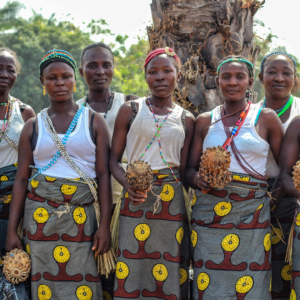
A group of women in Mandera, Kenya, has transformed from struggling individuals facing financial hardship into successful entrepreneurs and community leaders through support provided by the Danish Refugee Council (DRC) under the Supporting Displacement-Affected Communities in Kenya for Entrepreneurship Development (SDACKED) project. Funded by the Swedish Government, the initiative focuses on strengthening economic recovery, entrepreneurship, and resilience among displacement-affected communities.
The group originally consisted of 15 women, including four mothers and eleven young women, who shared a common goal of achieving financial independence and improving their livelihoods. Before joining the programme, the women had no formal business experience, lacked structured savings mechanisms, and had limited access to financing opportunities.
Through the project, the women received intensive training in entrepreneurship, financial literacy, leadership, group management, and the Community Savings and Loans Association (CSLA) approach. As their confidence and organisational capacity grew, they formally registered their collective as a self-help group under the name Washamsi Association with Kenya’s Ministry of Labour and Social Protection, enabling them to open a bank account and engage more effectively with local institutions.
The group adopted an inclusive savings model, initially requiring members to contribute KES 3,000 per month before later reducing the amount to KES 2,000 to ensure broader participation among vulnerable members. Those unable to contribute the full amount were encouraged to buy shares according to their financial ability, helping ensure that no member was excluded from participation.
Through disciplined savings efforts, the women accumulated KES 286,000 within six months, which they invested in two business ventures. The first was a retail shop selling clothing and mineral water, while the second involved investment in a wholesale food business operated by one of the members with existing cross-border supply connections.
The retail business was established to improve efficiency by enabling members to purchase goods in bulk and reduce dependency on wholesalers while maintaining consistent access to essential items. The businesses are managed internally by group leadership members without external staff, reinforcing accountability, ownership, and collective responsibility within the organisation.
The group follows a structured financial strategy in which 50 percent of profits are reinvested into business growth while the remaining 50 percent is retained as savings in Kenya Commercial Bank. This approach has enabled the group to strengthen financial sustainability while continuing to expand operations. According to the group, savings have now increased to approximately KES 298,000.
Members say the initiative has significantly improved their economic stability and leadership skills. Beyond generating income and supporting families, the programme has enabled women to gain practical business management experience and strengthen community engagement.
The success of the initiative has attracted wider community participation, leading the organisation to grow from 15 to 35 members. As ambitions expanded, the women transitioned from a self-help group into a fully registered Community-Based Organization (CBO), creating opportunities for future partnerships and broader development activities.
The group has also established long-term goals focused on expanding business operations, helping members eventually manage their own enterprises, and acquiring land to secure collective economic stability and independence.
Beyond business activities, Washamsi CBO has become actively involved in addressing social challenges within the community. The organization now works to combat gender-based violence while providing mentorship and support to women and youth in Mandera, extending its impact beyond economic empowerment alone.
Group leaders credited the Danish Refugee Council and the Swedish Government for providing the training, guidance, and support needed to achieve sustainable independence and community transformation. What began as a small group seeking financial stability has evolved into a growing network of entrepreneurs and local leaders contributing to economic opportunity and social development in Mandera.