• Skip to primary navigation
  • Skip to main content
  • Skip to primary sidebar

fundsforNGOs News

Grants and Resources for Sustainability

  • Subscribe for Free
  • Premium Support
  • Premium Login
  • Premium Sign up
  • Home
  • Funds for NGOs
    • Agriculture, Food and Nutrition
    • Animals and Wildlife
    • Arts and Culture
    • Children
    • Civil Society
    • Community Development
    • COVID
    • Democracy and Good Governance
    • Disability
    • Economic Development
    • Education
    • Employment and Labour
    • Environmental Conservation and Climate Change
    • Family Support
    • Healthcare
    • HIV and AIDS
    • Housing and Shelter
    • Humanitarian Relief
    • Human Rights
    • Human Service
    • Information Technology
    • LGBTQ
    • Livelihood Development
    • Media and Development
    • Narcotics, Drugs and Crime
    • Old Age Care
    • Peace and Conflict Resolution
    • Poverty Alleviation
    • Refugees, Migration and Asylum Seekers
    • Science and Technology
    • Sports and Development
    • Sustainable Development
    • Water, Sanitation and Hygiene (WASH)
    • Women and Gender
  • Funds for Companies
    • Accounts and Finance
    • Agriculture, Food and Nutrition
    • Artificial Intelligence
    • Education
    • Energy
    • Environment and Climate Change
    • Healthcare
    • Innovation
    • Manufacturing
    • Media
    • Research Activities
    • Startups and Early-Stage
    • Sustainable Development
    • Technology
    • Travel and Tourism
    • Women
    • Youth
  • Funds for Individuals
    • All Individuals
    • Artists
    • Disabled Persons
    • LGBTQ Persons
    • PhD Holders
    • Researchers
    • Scientists
    • Students
    • Women
    • Writers
    • Youths
  • Funds in Your Country
    • Funds in Australia
    • Funds in Bangladesh
    • Funds in Belgium
    • Funds in Canada
    • Funds in Switzerland
    • Funds in Cameroon
    • Funds in Germany
    • Funds in the United Kingdom
    • Funds in Ghana
    • Funds in India
    • Funds in Kenya
    • Funds in Lebanon
    • Funds in Malawi
    • Funds in Nigeria
    • Funds in the Netherlands
    • Funds in Tanzania
    • Funds in Uganda
    • Funds in the United States
    • Funds within the United States
      • Funds for US Nonprofits
      • Funds for US Individuals
      • Funds for US Businesses
      • Funds for US Institutions
    • Funds in South Africa
    • Funds in Zambia
    • Funds in Zimbabwe
  • Proposal Writing
    • How to write a Proposal
    • Sample Proposals
      • Agriculture
      • Business & Entrepreneurship
      • Children
      • Climate Change & Diversity
      • Community Development
      • Democracy and Good Governance
      • Disability
      • Disaster & Humanitarian Relief
      • Environment
      • Education
      • Healthcare
      • Housing & Shelter
      • Human Rights
      • Information Technology
      • Livelihood Development
      • Narcotics, Drugs & Crime
      • Nutrition & Food Security
      • Poverty Alleviation
      • Sustainable Develoment
      • Refugee & Asylum Seekers
      • Rural Development
      • Water, Sanitation and Hygiene (WASH)
      • Women and Gender
  • News
    • Q&A
  • Premium
    • Premium Log-in
    • Premium Webinars
    • Premium Support
  • Contact
    • Submit Your Grant
    • About us
    • FAQ
    • NGOs.AI
You are here: Home / cat / Nepal’s Labour Laws Need Continued Alignment, Says ILO

Nepal’s Labour Laws Need Continued Alignment, Says ILO

Dated: March 24, 2026

The International Labour Organization’s (ILO) Committee of Experts on the Application of Conventions and Recommendations (CEACR) published its 2026 report, marking the 100th anniversary of this independent supervisory body. The report assesses how ILO member states implement ratified international labour standards in national law and practice, promoting accountability, consistency, and progress toward social justice and decent work.

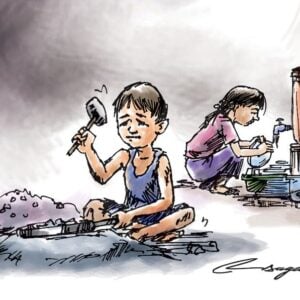
The 2026 report highlights Nepal’s application of key international labour conventions, including the Right to Organise and Collective Bargaining Convention (No. 98), the Minimum Age Convention (No. 138), the Tripartite Consultation Convention (No. 144), and the Worst Forms of Child Labour Convention (No. 182). It urges Nepal to accelerate the elimination of child labour, particularly in hazardous sectors, by strengthening labour inspections, improving data systems, and providing rehabilitation for children affected by bonded labour, trafficking, and exploitation. The Committee acknowledged Nepal’s progress through the National Master Plan on Child Labour (2018–2028), the National Children’s Policy (2024), and enhanced action against trafficking and bonded labour.

On the minimum age for employment, the report encourages further elimination of child labour and alignment of national legislation with international standards, especially in the informal economy. Regarding freedom of association and collective bargaining, the Committee called for stronger legal protections against anti-union discrimination, transparent arbitration processes, and ongoing labour law reforms in consultation with social partners. The report also stresses the importance of effective tripartite dialogue among government, employers, and workers to support law reform and implementation of labour standards.

The Committee encourages Nepal to continue leveraging ILO technical assistance for legislative reform, institutional strengthening, and effective tripartite engagement. Sustained collaboration among government, employers, and workers is essential to translate commitments into measurable improvements in workers’ rights and child protection. The ILO reaffirmed its support to Nepal in strengthening labour rights and eliminating child labour in line with international standards.

The CEACR is composed of 20 independent legal experts who examine how ILO conventions and recommendations are applied by member states. The 2026 report will be submitted to the 114th Session of the International Labour Conference, where governments, employers, and workers will review its findings and discuss implementation strategies.
Related Posts

  • Japan Supports Child Labour Elimination and Formalisation in India
  • ILO Partners with Spanish Labour Centres on Decent Work
  • Zambia Pledges Fast-Track Action on Social Protection Laws
  • Amnesty International Report Warns Crackdown on Palestinian Solidarity in Austria Is Limiting Free Expression
  • ILO Adopts First Global Guidelines on Labour Rights for Professional Athletes

Primary Sidebar

Latest News

Applications Open for TURAQTY JOL 7.0 Youth Eco Camp in Kazakhstan

Human Rights Watch Urges Hungary’s New Government to Restore Rule of Law and Rights

Amnesty International Warns Venezuela Amnesty Law Risks Reinforcing Political Repression

Sudan War Enters Fourth Year as UN Warns of ‘Abandoned Crisis’ and Rising Violence

UNFPA Expands Access to Maternal and Newborn Health Commodities to Prevent Deaths

UK Launches £132 Million Fisheries and Seafood Scheme to Support Coastal Communities

Indonesia and UN Launch Climate Finance Programme to Strengthen Smallholder Resilience

African Agrivoltaics Platform Initiative Launched to Boost Sustainable Energy and Agriculture in Africa

Barbados AMR Response: From Bench to Bedside

Strengthening AMR Surveillance: PAHO ReLAVRA+ Training 2026

Building Stronger AMR Surveillance in Haiti and DR

Strengthening a Caribbean Community of Practice

From Dialogue to Action: Pacific Climate Mobility Shift

Sweden Fossil Fuel Production Ban: Lessons on Symbolic Climate Wins

New Nepal Initiative to Finance Local Climate Action

Closing Ethiopia’s Digital Finance Gap for Women Civil Servants

Building Financial Resilience Amid Funding Pressures

How to Strengthen Youth Rights and Voices in Health

UN Names Ghana’s Gbeho Special Envoy to South Sudan

How Vanuatu’s UN Climate Proposal May Change Climate Accountability

UNDP and Japan Boost Community Resilience in Afghanistan

Mongolia Launches Hazardous Chemicals Elimination Project with UNDP & GEF

2026 UNDP Agriculture Financial Resilience Community Launch

US$5.2M Initiative to Advance Sustainability in Nairobi

Civil Society Organisations Can Access €350K in New Funding

Seaweed and Microalgae Projects Win $6.9M Grant Funding

Powering Healthcare in Nigeria: Community-Led Change

Aid Blockades and Displacement Worsen South Sudan Crisis

IFRC Sends Emergency Medical Aid from Türkiye to Iran

Eswatini Court Ruling Offers Limited Relief to US Deportees

14 Million Displaced as Sudan Conflict Worsens

Urgent Action Needed as Haiti Faces Hunger and Chaos

Ireland Announces €100M Fuel Support for Farmers and Fishers

DRC Expands Social Protection with New Decent Work Initiative

Morocco Gets $500M World Bank Boost for Jobs and Green Economy

Bangladesh Gets $115.8M ADB Boost for Resilient Urban Services

Nigeria Gets $200M AfDB Boost for Fibre Expansion Project

UN Declaration on Enslavement: Three Key Lessons

Norway Boosts Support for Humanitarian Aid Efforts

Sudanese Refugees in Chad Face Aid Funding Crisis

Funds for NGOs
Funds for Companies
Funds for Media
Funds for Individuals
Sample Proposals

Contact us
Submit a Grant
Advertise, Guest Posting & Backlinks
Fight Fraud against NGOs
About us

Terms of Use
Third-Party Links & Ads
Disclaimers
Copyright Policy
General
Privacy Policy

Premium Sign in
Premium Sign up
Premium Customer Support
Premium Terms of Service

©FUNDSFORNGOS LLC.   fundsforngos.org, fundsforngos.ai, and fundsforngospremium.com domains and their subdomains are the property of FUNDSFORNGOS, LLC 1018, 1060 Broadway, Albany, New York, NY 12204, United States.   Unless otherwise specified, this website is not affiliated with the abovementioned organizations. The material provided here is solely for informational purposes and without any warranty. Visitors are advised to use it at their discretion. Read the full disclaimer here. Privacy Policy. Cookie Policy.