• Skip to primary navigation
  • Skip to main content
  • Skip to primary sidebar

fundsforNGOs News

Grants and Resources for Sustainability

  • Subscribe for Free
  • Premium Support
  • Premium Login
  • Premium Sign up
  • Home
  • Funds for NGOs
    • Agriculture, Food and Nutrition
    • Animals and Wildlife
    • Arts and Culture
    • Children
    • Civil Society
    • Community Development
    • COVID
    • Democracy and Good Governance
    • Disability
    • Economic Development
    • Education
    • Employment and Labour
    • Environmental Conservation and Climate Change
    • Family Support
    • Healthcare
    • HIV and AIDS
    • Housing and Shelter
    • Humanitarian Relief
    • Human Rights
    • Human Service
    • Information Technology
    • LGBTQ
    • Livelihood Development
    • Media and Development
    • Narcotics, Drugs and Crime
    • Old Age Care
    • Peace and Conflict Resolution
    • Poverty Alleviation
    • Refugees, Migration and Asylum Seekers
    • Science and Technology
    • Sports and Development
    • Sustainable Development
    • Water, Sanitation and Hygiene (WASH)
    • Women and Gender
  • Funds for Companies
    • Accounts and Finance
    • Agriculture, Food and Nutrition
    • Artificial Intelligence
    • Education
    • Energy
    • Environment and Climate Change
    • Healthcare
    • Innovation
    • Manufacturing
    • Media
    • Research Activities
    • Startups and Early-Stage
    • Sustainable Development
    • Technology
    • Travel and Tourism
    • Women
    • Youth
  • Funds for Individuals
    • All Individuals
    • Artists
    • Disabled Persons
    • LGBTQ Persons
    • PhD Holders
    • Researchers
    • Scientists
    • Students
    • Women
    • Writers
    • Youths
  • Funds in Your Country
    • Funds in Australia
    • Funds in Bangladesh
    • Funds in Belgium
    • Funds in Canada
    • Funds in Switzerland
    • Funds in Cameroon
    • Funds in Germany
    • Funds in the United Kingdom
    • Funds in Ghana
    • Funds in India
    • Funds in Kenya
    • Funds in Lebanon
    • Funds in Malawi
    • Funds in Nigeria
    • Funds in the Netherlands
    • Funds in Tanzania
    • Funds in Uganda
    • Funds in the United States
    • Funds within the United States
      • Funds for US Nonprofits
      • Funds for US Individuals
      • Funds for US Businesses
      • Funds for US Institutions
    • Funds in South Africa
    • Funds in Zambia
    • Funds in Zimbabwe
  • Proposal Writing
    • How to write a Proposal
    • Sample Proposals
      • Agriculture
      • Business & Entrepreneurship
      • Children
      • Climate Change & Diversity
      • Community Development
      • Democracy and Good Governance
      • Disability
      • Disaster & Humanitarian Relief
      • Environment
      • Education
      • Healthcare
      • Housing & Shelter
      • Human Rights
      • Information Technology
      • Livelihood Development
      • Narcotics, Drugs & Crime
      • Nutrition & Food Security
      • Poverty Alleviation
      • Sustainable Develoment
      • Refugee & Asylum Seekers
      • Rural Development
      • Water, Sanitation and Hygiene (WASH)
      • Women and Gender
  • News
    • Q&A
  • Premium
    • Premium Log-in
    • Premium Webinars
    • Premium Support
  • Contact
    • Submit Your Grant
    • About us
    • FAQ
    • NGOs.AI
You are here: Home / cat / 6 Months After Earthquake: 25,000 Afghan Children in Temporary Schools

6 Months After Earthquake: 25,000 Afghan Children in Temporary Schools

Dated: February 26, 2026

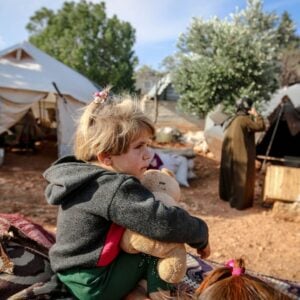
About six months after a devastating earthquake struck eastern Afghanistan, approximately 25,000 children in Kunar province are still living in tents, as homes and schools remain unrepaired and no reconstruction timeline has been established, according to Save the Children. The earthquake on 31 August 2025 killed more than 2,000 people and destroyed or damaged over 8,000 homes, forcing families into temporary shelters, many of which were further compromised by heavy snowfall in the mountainous region. Families rely on wood or coal-burning stoves for warmth, creating significant fire risks, while the scale of destruction in some villages is so extensive that reconstruction may never be possible.

The disaster also caused severe damage to education infrastructure, with over half of nearly 1,300 classrooms assessed being completely or partially destroyed. Even before the earthquake, nearly 50,000 primary school-aged children in Kunar were out of school, making the province particularly vulnerable. Construction of new classrooms has yet to begin, and roughly 17,000 children are attending temporary learning spaces across the affected areas. Maria, a 12-year-old student, shared how the temporary classrooms provided her with a chance to read and write—opportunities that were unavailable in her village, where classes were often held outdoors and disrupted by weather conditions.

Over 6,000 families in Kunar continue to rely on humanitarian aid after losing both homes and livelihoods. Prior to the earthquake, families earned between US$75-120 per month through agriculture, livestock, and small-scale home-based work. Now, cash assistance is their primary source of income. Bujar Hoxha, Save the Children’s Country Director in Afghanistan, emphasized the urgent need for sustained funding, warning that without it, affected communities risk being left behind amid growing humanitarian demands across the country.

The need for aid in eastern Afghanistan remains high, especially as 2025 saw more than 2.9 million Afghans returning from Iran and Pakistan, with many settling in regions devastated by the earthquake. UN estimates indicate that around 4.2 million people across Afghanistan require shelter support this year. Save the Children has been providing immediate assistance in Kunar, establishing 30 temporary learning spaces for nearly 1,500 children and delivering healthcare, water and sanitation services, shelter, hygiene kits, multipurpose cash support, and psychosocial care for children.

Since the earthquake, Save the Children has supported nearly 89,000 people in Kunar, including approximately 34,000 children. Operating in Afghanistan since 1976, the organization runs programs in nine provinces and partners with initiatives in eleven more, delivering services that cover health, nutrition, education, child protection, shelter, water, sanitation, hygiene, and livelihoods. The ongoing crisis underscores the urgent need for coordinated and sustained support to rebuild lives, homes, and schools for the children and families most affected by the disaster.

Related Posts

  • Young People at Risk as Sweden Steps Up Deportations
  • Urgent Shelter Response in Gaza: IOM and Muslim Charity Step In
  • Urgent Shelter Response in Gaza: IOM and Muslim Charity Step In
  • Reaching Nomadic Communities: Measles-Rubella Vaccination in Osun State
  • Closing Immunity Gaps in Enugu Through Independent Child Health Monitors

Primary Sidebar

Latest News

EIB Provides €22.5 Million for Sustainable Fibreboard Production in Germany

European Cooperation Gains Global Reach Through EIB and JEFIC

Two people sign an insurance contract at a desk, with car keys placed nearby on the table.

UNDP and Dhaka University Partner to Build Skilled Inclusive Insurance Professionals

Midwives Play Critical Role in Reducing Maternal Deaths Worldwide

IFC Supports Jobs and Financial Inclusion in Peru

Rows of tall sugarcane plants with green leaves in a field.

FAO and UN Women Promote Climate-Smart Agriculture in Kosovo

ADB, ACWA Fund $116M Uzbekistan Wind Power Project

Maryland Launches $300 Million Affordable Housing Investment Plan for 2026

ADB: Global Value Chains Drive Uneven Growth in Asia-Pacific

WHO Introduces Genomics Costing Tool 2.0 for Stronger Public Health Systems

Three white letter blocks arranged on a pale surface spell 'WHO' (W, H, O).

WHO Supports Ireland in Building a More Inclusive Assistive Technology System

Fresh sugarcane stalks arranged on a wooden surface, with several cut ends and green leaves.

Climate-Smart Sugarcane Farming Gains Momentum in South Africa

EBRD Raises Stake to 18.4% in Sarytogan Graphite Limited

Polish Food Processing Sector Boosted by €13.5 Million EBRD Loan to LeciForce

Landmark Conservation Reform Bill to Boost Economy and Nature

Rows of tall sugarcane plants with green leaves in a field.

Modern Orchard Innovation Boosts Local Agriculture in Montenegro

Hooded figure at a workstation with multiple monitors displaying code in a dark data center, suggesting a hacking scene.

NZ Imposes Sanctions on Russian Cyber Actors

Pink torn paper strip with the word 'CORRUPTION' on a dark, torn-paper background.

EBRD Strengthens Compliance Measures with New Corruption Settlements

New Zealand Boosts Cycling Infrastructure Nationwide

New Efforts Aim to Create Safer Environments for Children

Protections Strengthened to Prevent Abuse in International Adoptions

Costa Rica Communities Transform Food Systems for Nutrition

Zambia Opens New Chapter for Child Protection and Support

Gabon Invests $1.38B to Industrialize Poultry Sector

WFP Expands Nutrition and Emergency Support in Bhutan

Aerial view of a historic Middle Eastern city at sunset, featuring a domed mosque and a tall minaret among sandstone buildings.

UNESCO Strengthens Cultural Emergency Response in Middle East

Colorful letters spelling EDUCATION on a dark desk surrounded by school supplies like a keyboard, notebook, clips, and markers.

UNESCO Supports Tanzania’s Digital Education Transformation

£1.3 Million in Charitable Grants Distributed by Smiths Foundation

IRC Partners with Weiss Foundation on Malnutrition Treatment

Foundations Award $2.6M for Research-Practice Partnerships

Grundfos Jubilee Foundation Expands Funding Support

Zambia’s Revenue Push May Hurt Digital ID Adoption

Hand with index finger pointing at digital flip panels spelling FUNDING on a dark background.

Gulbenkian Prize Winners Share Impact of €1M Funding

Green directional road sign reading 'FUNDING' with a right-pointing arrow against a blue sky backdrop, suggesting funding to the right.

Naturbeads Secures €4.1M EU Funding for Microplastic Alternative

UNESCO Sites Provide Lifeline for Global Biodiversity

Gold-toned scientific apparatus suspended in a metal frame inside a modern laboratory.

One in Three Researchers Lack Access to Quantum Facilities

Zambia Commissions Malombe Irrigation Under Climate Fund Project

Tech-Driven Approach to Electoral Violence Prevention in Honduras

Torn green paper revealing the word Citizenship in red on white background.

Government Introduces Test for Citizenship Grant Reforms

Northland Youth to Receive Improved Crisis Support

Funds for NGOs
Funds for Companies
Funds for Media
Funds for Individuals
Sample Proposals

Contact us
Submit a Grant
Advertise, Guest Posting & Backlinks
Fight Fraud against NGOs
About us

Terms of Use
Third-Party Links & Ads
Disclaimers
Copyright Policy
General
Privacy Policy

Premium Sign in
Premium Sign up
Premium Customer Support
Premium Terms of Service

©FUNDSFORNGOS LLC.   fundsforngos.org, fundsforngos.ai, and fundsforngospremium.com domains and their subdomains are the property of FUNDSFORNGOS, LLC 1018, 1060 Broadway, Albany, New York, NY 12204, United States.   Unless otherwise specified, this website is not affiliated with the abovementioned organizations. The material provided here is solely for informational purposes and without any warranty. Visitors are advised to use it at their discretion. Read the full disclaimer here. Privacy Policy. Cookie Policy.