• Skip to primary navigation
  • Skip to main content
  • Skip to primary sidebar

fundsforNGOs News

Grants and Resources for Sustainability

  • Subscribe for Free
  • Premium Support
  • Premium Sign in
  • Premium Sign up
  • Home
  • Grants & Funding
    • Funds for NGOs
      • Agriculture, Food & Nutrition
      • Animals and Wildlife
      • Arts & Culture
      • Children
      • Civil Society
      • Community Development
      • Democracy and Good Governance
      • Economic Development
      • Education
      • Disability
      • Employment and Labor
      • Environment
      • Family Support
      • Healthcare
      • HIV and AIDS
      • Housing & Shelter
      • Humanitarian Relief
      • Human Rights
      • Human Service
      • Information Technology
      • Livelihood Development
      • LGBTQIA2S+
      • Media and Development
      • Narcotics, Drugs and Crime
      • Old Age Care
      • Peace & Conflict Resolution
      • Poverty Alleviation
      • Refugees, Migration & Asylum Seekers
      • Science & Technology
      • Sports & Development
      • Sustainable Development
      • Water, Sanitation & Hygiene (WASH)
      • Women & Gender
      • Youth & Adolescents
    • Donors & Funders
    • Funds for Companies
      • Accounts & Finance
      • Agriculture, Food and Nutrition
      • AI
      • Education
      • Energy
      • Environment
      • Healthcare
      • Innovation
      • Manufacturing
      • Media
      • Research
      • Startups & Early-Stage
      • Sustainable Development
      • Technology
      • Travel & Tourism
      • Women
      • Youth
    • Funds for Individuals
  • Funds in Your Country
  • Proposal Writing
    • Sample Proposals
    • Agriculture Proposals
    • Business Proposals
    • Child Development Proposals
    • Climate Change & Biodiversity Proposals
    • Community Development Proposals
    • Democracy & Good Governance Proposals
    • Disability Proposals
    • Disaster & Humanitarian Relief Proposals
    • Environment Proposals
    • Education Proposals
    • Healthcare Proposals
    • Housing & Shelter Proposals
    • Human Rights Proposals
    • Livelihood Development Proposals
    • Nutrition & Food Security Proposals
    • Poverty Alleviation Proposals
    • Refugees, Migration & Asylum-Seekers’ Proposals
    • Rural Development Proposals
    • Sustainable Development Proposals
    • Water, Sanitation & Hygiene (WASH) Proposals
    • Women & Gender Proposals
    • Youth Development Proposals
  • Premium
    • Premium Sign-in
    • Premium Grants
    • Premium eBooks
    • Premium Webinars
    • Premium Videos
    • Premium Courses
    • Premium Support
  • NGOs.AI
  • Contact
    • Submit Your Opportunity
    • Learning Lab
    • Q&A
    • News
    • About us
You are here: Home / cat / Indigenous Women Lead Revival of Traditional Water Mills in Mustang

Indigenous Women Lead Revival of Traditional Water Mills in Mustang

Dated: January 29, 2026

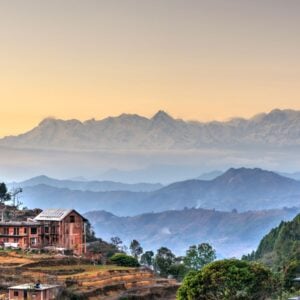
In Mustang, one of Nepal’s most climate-vulnerable districts, Indigenous women in Jomsom are leading a quiet but impactful transformation by reviving a traditional water mill. The initiative addresses multiple challenges, including reducing women’s daily workload, conserving Indigenous knowledge, and strengthening community-based climate adaptation. Mustang’s Indigenous communities, including the Thakali, Gurung, Loba, and Magar, rely heavily on agriculture and tourism, both increasingly affected by climate change. Historically, while women have played a strong role in household decision-making, their influence in community-level planning and governance has been limited. At the same time, traditional knowledge and technologies have been declining, with women’s needs and expertise often absent from local development processes.

To address these gaps, IUCN Nepal, in partnership with Gharapjhong Rural Municipality and supported by the Government of Canada through the Canada Fund for Local Initiatives (CFLI), implemented a project focused on strengthening Indigenous women’s leadership, decision-making, and implementation capacity. Through structured capacity-building, women identified priority needs, planned pilot activities, and led their execution. The restoration of a traditional water mill emerged as the top priority, aiming to conserve Indigenous skills, reduce the physical burden of long-distance grain grinding, and promote climate adaptation through renewable energy and water conservation. A fully women-led execution committee was formed to manage design, operation schedules, maintenance, financial oversight, and equitable access.

The restored water mill has already generated tangible benefits. Women no longer need to travel long distances for milling, saving time, money, and physical effort, while households now have reliable, year-round access to milling services for barley, buckwheat, millet, and maize. The intervention currently benefits 165 households, covering 568 people, including 313 women. Participants like Pramila Gurung have gained confidence in administrative and financial management, documentation, and engagement with local government, fostering broader participation in community planning and decision-making.

The initiative has also shifted community perceptions, recognizing women as not only household providers but also knowledge holders and capable leaders of community infrastructure projects. Women’s group member Bhuwan Sherchan emphasized that the success of the project demonstrates how collective effort and planning can enable women to lead effectively. Local leaders have praised the group’s efficiency, noting that the women completed the restoration in less than one month, compared with six months for similar male-led projects. This marks the first time in Mustang that a community infrastructure project has been entirely executed by a women-led team.

Today, the project reinforces the transmission of traditional knowledge to younger generations, highlighting the relevance of Indigenous technologies for climate adaptation, workload reduction, and cultural continuity. Recognized by local authorities and media, the initiative stands as a strong example of women-led, community-based climate action that delivers social, economic, and environmental benefits.

Related Posts

  • Climate Shocks, Gender Gaps, and Finance: Lessons from Women-Led Enterprises in Nepal
  • Why Community Trust Matters: Key Lessons from the Big Local Programme
  • Microsoft Opens Applications for 2026 Community Fund in South and West Dublin
  • Young Women Transforming Education: Stories of Innovation and Impact
  • Rwanda 2025: People-Centered Conservation and Youth Engagement in a Changing Climate

Primary Sidebar

Latest News

Linux Foundation to Launch Open Health Stack Software Foundation to Advance Digital Health Innovation

Century-Old BCG Vaccine May Offer New Clues in Alzheimer’s Disease Research

The Fight Against Ebola Is a Logistics Challenge as Much as a Medical One

EBRD Launches First Trade Finance Facility in Senegal with €15 Million Support for Ecobank

EBRD and EU Support Women-Led Businesses in the West Bank with €2 Million Loan to Palestine Investment Bank

EBRD and Central Bank of Jordan Strengthen Financial Crime Compliance and Risk Management

EBRD, GCF and EU Support Jordan’s Green Transition with $20 Million Green Finance Facility

EBRD Expands Green and Inclusive Finance Support in Jordan with $25 Million Loan to Bank al Etihad

EBRD Invests $100 Million in Jordan’s First Blue Bond to Support Sustainable Water Projects

EBRD Provides €30 Million Loan to Improve Road Safety and Digital Transport Systems in Montenegro

EBRD Makes First Investment in Senegal to Expand Digital Connectivity Across Africa

Uzbekistan’s Strong Wheat Harvest Highlights Progress Toward Climate-Resilient Agriculture

UNDP Helps 12 Albanian Olive Oil Producers Become Export-Ready Through Business Support Programme

ILO and European Commission Renew Partnership to Advance Social Justice and Quality Jobs

Jordan and ILO Partner to Strengthen Decent Work in the Garment Sector

BISP, WFP, WHO and UNICEF Extend Partnership to Protect 3.3 Million Women and Children from Malnutrition in Pakistan

Egypt Launches Child Employment and Training Code of Conduct for Safer Industrial Practices

WFP Launches South Sudan’s First Drought Anticipatory Action Plan to Protect 65,000 People

Guyana Strengthens Adolescent Health Services Through National Training Initiative

BISP, WFP, WHO and UNICEF Extend Partnership to Protect 3.3 Million Women and Children from Malnutrition

UNDP and Adaptation Fund Launch $5 Million Climate Adaptation Initiative in Western Balkans

Bosnia and Herzegovina Launches $5.8 Million Climate and Biodiversity Initiative

Libya Explores Innovative Financing Solutions to Support Sustainable Development Goals

Green overhead road sign reading 'El Niño Ahead?' against a cloudy sky.

Super El Niño Threatens Global Climate Risks as Africa Offers Lessons in Resilience

Lab technician in a mask and cap uses a pipette to transfer liquid into a test tube, with digital medical icons in the background.

Kyrgyzstan Digitalizes Health Records to Improve Maternal Healthcare

Colombia’s Youth Drive the Country’s Digital Transformation Future

Japan and WFP Expand Support for School Meals and Child Nutrition in Somalia

Global Development Updates: New Initiatives Advance Finance, Health, Climate Action and Social Progress

ILO and Mexican Stakeholders Use Football to Raise Awareness Against Child Labour

UNIDO and Berlin Strengthen Support for Startups Through Global Innovation Initiatives

Close-up of irregular black coal chunks and charcoal fragments on a dark surface.

Africa Dialogue Highlights Pathways for Low-Carbon Cement and Sustainable Industrial Growth

PAHO and Ibero-American Leaders Strengthen Regional Cooperation on Road Safety

WHO Calls for Urgent Global Action as Cancer Cases Expected to Nearly Double by 2050

The Infinite Memory of the Pandemic Exhibition Opens in São Paulo to Preserve COVID-19 Memories

Baramita District Hospital in Guyana Set to Receive Baby-Friendly Hospital Certification

Green overhead road sign reading 'El Niño Ahead?' against a cloudy sky.

PAHO Warns of Potential Health Risks from El Niño Phenomenon in the Americas

White quadcopter drone with a mounted camera flying above a dense city of tall skyscrapers, capturing aerial footage.

Mozambique Completes Drone Project to Strengthen Disaster Management and Climate Resilience

African Development Bank and Germany Strengthen Partnership to Reform Development Finance in Africa

African Development Bank Highlights New Financing Pathways for North Africa’s Economic Transformation

IDB Supports Community Leadership to Strengthen Local Governance in Cartagena de Indias

Funds for NGOs
Funds for Companies
Funds for Media
Funds for Individuals
Sample Proposals

Contact us
Submit a Grant
Advertise, Guest Posting & Backlinks
Fight Fraud against NGOs
About us

Terms of Use
Third-Party Links & Ads
Disclaimers
Copyright Policy
General
Privacy Policy

Premium Sign in
Premium Sign up
Premium Customer Support
Premium Terms of Service

©FUNDSFORNGOS LLC.   fundsforngos.org, fundsforngos.ai, and fundsforngospremium.com domains and their subdomains are the property of FUNDSFORNGOS, LLC 1018, 1060 Broadway, Albany, New York, NY 12204, United States.   Unless otherwise specified, this website is not affiliated with the abovementioned organizations. The material provided here is solely for informational purposes and without any warranty. Visitors are advised to use it at their discretion. Read the full disclaimer here. Privacy Policy. Cookie Policy.