• Skip to primary navigation
  • Skip to main content
  • Skip to primary sidebar

fundsforNGOs News

Grants and Resources for Sustainability

  • Subscribe for Free
  • Premium Support
  • Premium Login
  • Premium Sign up
  • Home
  • Funds for NGOs
    • Agriculture, Food and Nutrition
    • Animals and Wildlife
    • Arts and Culture
    • Children
    • Civil Society
    • Community Development
    • COVID
    • Democracy and Good Governance
    • Disability
    • Economic Development
    • Education
    • Employment and Labour
    • Environmental Conservation and Climate Change
    • Family Support
    • Healthcare
    • HIV and AIDS
    • Housing and Shelter
    • Humanitarian Relief
    • Human Rights
    • Human Service
    • Information Technology
    • LGBTQ
    • Livelihood Development
    • Media and Development
    • Narcotics, Drugs and Crime
    • Old Age Care
    • Peace and Conflict Resolution
    • Poverty Alleviation
    • Refugees, Migration and Asylum Seekers
    • Science and Technology
    • Sports and Development
    • Sustainable Development
    • Water, Sanitation and Hygiene (WASH)
    • Women and Gender
  • Funds for Companies
    • Accounts and Finance
    • Agriculture, Food and Nutrition
    • Artificial Intelligence
    • Education
    • Energy
    • Environment and Climate Change
    • Healthcare
    • Innovation
    • Manufacturing
    • Media
    • Research Activities
    • Startups and Early-Stage
    • Sustainable Development
    • Technology
    • Travel and Tourism
    • Women
    • Youth
  • Funds for Individuals
    • All Individuals
    • Artists
    • Disabled Persons
    • LGBTQ Persons
    • PhD Holders
    • Researchers
    • Scientists
    • Students
    • Women
    • Writers
    • Youths
  • Funds in Your Country
    • Funds in Australia
    • Funds in Bangladesh
    • Funds in Belgium
    • Funds in Canada
    • Funds in Switzerland
    • Funds in Cameroon
    • Funds in Germany
    • Funds in the United Kingdom
    • Funds in Ghana
    • Funds in India
    • Funds in Kenya
    • Funds in Lebanon
    • Funds in Malawi
    • Funds in Nigeria
    • Funds in the Netherlands
    • Funds in Tanzania
    • Funds in Uganda
    • Funds in the United States
    • Funds within the United States
      • Funds for US Nonprofits
      • Funds for US Individuals
      • Funds for US Businesses
      • Funds for US Institutions
    • Funds in South Africa
    • Funds in Zambia
    • Funds in Zimbabwe
  • Proposal Writing
    • How to write a Proposal
    • Sample Proposals
      • Agriculture
      • Business & Entrepreneurship
      • Children
      • Climate Change & Diversity
      • Community Development
      • Democracy and Good Governance
      • Disability
      • Disaster & Humanitarian Relief
      • Environment
      • Education
      • Healthcare
      • Housing & Shelter
      • Human Rights
      • Information Technology
      • Livelihood Development
      • Narcotics, Drugs & Crime
      • Nutrition & Food Security
      • Poverty Alleviation
      • Sustainable Develoment
      • Refugee & Asylum Seekers
      • Rural Development
      • Water, Sanitation and Hygiene (WASH)
      • Women and Gender
  • News
    • Q&A
  • Premium
    • Premium Log-in
    • Premium Webinars
    • Premium Support
  • Contact
    • Submit Your Grant
    • About us
    • FAQ
    • NGOs.AI
You are here: Home / cat / Disaster Recovery Timeline: Steps from Immediate Response to Sustainable Rebuilding

Disaster Recovery Timeline: Steps from Immediate Response to Sustainable Rebuilding

Dated: November 13, 2025

When Hurricane Katrina struck the Gulf Coast in August 2005, it triggered one of the most devastating natural disasters in U.S. history. The recovery process spanned over a decade and involved multiple phases, beginning with emergency response and gradually moving toward long-term rebuilding. Initially, the priority was rescuing stranded residents and delivering immediate aid, which required massive coordination between federal agencies, local responders, and volunteers. This phase lasted several weeks and was crucial for saving lives and addressing urgent needs.

Transitioning from emergency relief to reconstruction took significantly longer. In New Orleans, standing water caused extensive damage and mold, slowing the rebuilding of homes, infrastructure, and communities. While visible recovery to a functional state took approximately five years in many areas, some neighborhoods and individuals faced much longer timelines. Key milestones included debris removal and utility restoration between 2006 and 2007, major infrastructure reconstruction from 2007 to 2010, and ongoing community redevelopment and economic recovery from 2010 onward. Full recovery, however, remained uneven, influenced by social and economic disparities.

The recovery process faced numerous challenges. Bureaucratic confusion among federal, state, and local agencies often delayed aid distribution and rebuilding permits. Extensive damage to roads, levees, power lines, and sewage systems slowed progress. Hundreds of thousands of residents were displaced, with many never returning due to destroyed homes and lost employment. Environmental hazards, including mold and contaminated floodwaters, posed health risks for months. Economic hardship compounded the difficulty for vulnerable communities, highlighting that recovery required more than rebuilding infrastructure—it demanded restoring lives.

Communities played a central role in the rebuilding process. Local residents, nonprofit organizations, and community groups provided critical support through shelters, clean-up drives, counseling, and advocacy. In areas like the Lower Ninth Ward, residents returned despite total devastation, organizing efforts to restore affordable housing, schools, and local services. These grassroots initiatives, combined with local leadership, underscored that recovery was not only physical but also social and emotional, reconnecting communities and rebuilding trust.

Hurricane Katrina revealed significant shortcomings in disaster preparedness and response. Lessons learned included the need for better coordination among agencies, more robust infrastructure investment, attention to marginalized communities, and improved communication with residents. These insights have informed subsequent reforms in disaster management and preparedness, emphasizing a proactive, community-centered approach.

Experts stress that effective disaster recovery blends immediate aid with long-term resilience strategies. Priorities include engaging communities in planning, ensuring flexible and rapid funding, investing in resilient infrastructure, and focusing on equity to support vulnerable groups. Organizations like the National Wildlife Federation highlight that disasters should be treated as ongoing challenges, especially as climate change increases the frequency and severity of extreme events.

The role of government and NGOs was pivotal throughout the recovery. Federal agencies such as FEMA provided substantial funding for emergency relief and rebuilding, but local nonprofits were essential in sustaining long-term recovery programs, offering counseling, legal aid, and hands-on reconstruction support. The combination of top-down resources and grassroots action helped ensure that aid reached the most affected populations, demonstrating that effective recovery requires sustained collaboration between government and civil society.

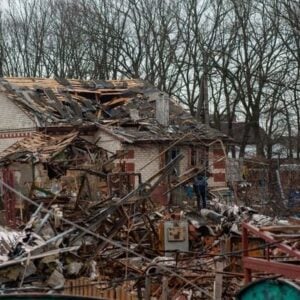
Visual timelines, before-and-after photos, and community stories illustrate the scale of Katrina’s impact and the extensive efforts to rebuild. These visuals highlight both physical reconstruction and emotional healing, emphasizing the resilience of affected communities. Overall, the recovery from Hurricane Katrina shows that rebuilding after a disaster is a prolonged, complex process that involves not just restoring infrastructure, but also strengthening communities, addressing social inequities, and preparing for future crises.
Related Posts

  • Locally Led Adaptation: Building a Climate-Resilient Future from the Ground Up
  • From Preparedness to Action: Turning Planning into Effective Outcomes
  • IOM Mobilizes Rapid Response to Support Victims of Deadly Tornadoes in Southern Brazil
  • From Relief to Recovery: Jordan, ILO, and UNDP Advance Decent Work in Crisis-Hit Areas
  • Clean Water for Dumai: Indonesia’s Journey Toward Sustainable Water Access

Primary Sidebar

Latest News

Bonikro Mine Life Extension Strengthens Côte d’Ivoire’s Gold Production Outlook

FAO Supports Rural Women and Farmers with Climate-Smart Agriculture Inputs in Karbala

Finland-Inspired Teaching Methods Transform Education Approach in Moldova

Ukraine Could Reuse 8.2 Million Tonnes of War Debris for Reconstruction

Ukraine Trains First Web Accessibility Specialists for Government Digital Services

MTN Partners With Ant International to Launch MoMo Super App Across Africa

South Africa and Italy Strengthen Agricultural Cooperation Framework

Financial Inclusion in Asia Pacific Shifts Toward Financial Resilience and Economic Stability

UNHCR Calls for Renewed Global Action as 70% of Refugees Face Long-Term Displacement

UNIDO Launches Foundation to Accelerate Private Sector-Led Sustainable Industrialization

Nigeria Launches Presidential Ebola Preparedness Task Force with $7.3 Million Funding

Global Development Momentum Builds Across Climate, Economy, and Social Impact Initiatives

CFA 4.85 Billion GNOZOU Program Launched to Enhance Local Governance in Togo

World’s Largest Banks Provide $906 Billion to Fossil Fuel Industry in 2025

EU Backs Community Resilience Program in Togo with CFA1.9 Billion Investment

International Buyers Target Namibia’s Expanding Copper Industry

Gilead Foundation and National AIDS Memorial Announce $3M Initiative to Expand HIV Education and Leadership

Minderoo Foundation Backs Startmate Accelerator to Close Gender Gap in Startup Funding

EIB Group Approves €7.9 Billion Package to Boost Innovation, Sustainability and Global Partnerships

TSFE Expands Beyond Egypt with New Africa-Focused Growth Fund

Charles Schwab Foundation Launches $2M Financial Literacy Grant Program

AIF Raises Over $3.8 Million at Annual Gala to Transform Lives Across India

World Bank Highlights Risk Understanding as Key Driver of Jobs and Growth in Pacific Cities

WK Kellogg Co Invests in Battle Creek Housing Fund to Address Local Housing Shortage

Nearly 20 Million People Displaced in West and Central Africa Despite Rising Returns

Sierra Leone Advances Green Energy Transformation Through Major Off-Grid Electrification Initiative

EU-Backed EU4Commerce Project Launched to Modernize Trade Infrastructure in Palestine

Africa’s Clean Cooking Agenda Faces Setback as Nairobi Summit Is Deferred

Rochford Launches Public Consultation to Shape Future of Cherry Orchard Jubilee Country Park

Dianne and Irving Kipnes Foundation Donates $5 Million to Partners In Health Canada

UNDP Unveils New Gender Equality Strategy Focused on Institutional Transformation

Sentnet Joins RES4Africa Foundation to Support Africa’s Clean Energy Transition

UN Launches Global Alliance for Human Rights to Strengthen Global Cooperation

NGOs Demand Greater Transparency as EU Migration Pact Takes Effect

UN Rights Chief Condemns Violence in the UK and Warns Against Hate-Fueled Narratives

Senegal Inaugurates Agropole-Sud Agro-Industrial Park to Boost Farming and Jobs

Mozambique Targets Logistics Hub Status with Major Infrastructure Concessions

Somalia Health Centres Close as Aid Cuts Push Country Toward Famine

World Bank Highlights Climate Adaptation as Key to Long-Term Economic Resilience

Middle East Conflict Sends Global Growth to Lowest Level Since COVID-19, Says World Bank

Funds for NGOs
Funds for Companies
Funds for Media
Funds for Individuals
Sample Proposals

Contact us
Submit a Grant
Advertise, Guest Posting & Backlinks
Fight Fraud against NGOs
About us

Terms of Use
Third-Party Links & Ads
Disclaimers
Copyright Policy
General
Privacy Policy

Premium Sign in
Premium Sign up
Premium Customer Support
Premium Terms of Service

©FUNDSFORNGOS LLC.   fundsforngos.org, fundsforngos.ai, and fundsforngospremium.com domains and their subdomains are the property of FUNDSFORNGOS, LLC 1018, 1060 Broadway, Albany, New York, NY 12204, United States.   Unless otherwise specified, this website is not affiliated with the abovementioned organizations. The material provided here is solely for informational purposes and without any warranty. Visitors are advised to use it at their discretion. Read the full disclaimer here. Privacy Policy. Cookie Policy.