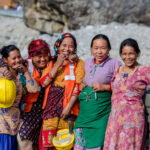
As the world marks World Toilet Day, experiences from Nepal highlight how trust and community ownership are crucial for strengthening resilience against climate-related shocks. Climate change is intensifying water and sanitation crises, with floods damaging toilets and pipelines, droughts limiting hygiene, and failing sanitation systems increasing the spread of diseases such as diarrhoea and cholera…. [Read More]
WHO
Global Hunger Deepens: WFP Plans to Feed 110 Million of the World’s Hungriest in 2026
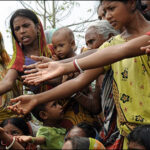
The United Nations World Food Programme (WFP) has warned that the global hunger crisis is intensifying, with far too few resources available to meet growing needs. In its 2026 Global Outlook, WFP projects that 318 million people will face crisis levels of hunger or worse next year—more than double the number recorded in 2019. Despite… [Read More]
FAO: One Health Boosts Public Health via Better Water Management
FAO emphasized that challenges related to water, sanitation and health are complex, but resilient WASH systems combined with the One Health approach provide a strong foundation for protecting public health. This message was delivered during the Seventh Meeting of the Parties to the Protocol on Water and Health in Budapest, marking the twentieth anniversary of… [Read More]
Brazil Expands Community-Led Amazon Conservation Efforts Across 60 Million Acres

The government of Brazil, along with a wide coalition of partners, has launched ARPA Comunidades (ARPA Communities), a major new initiative aimed at strengthening community-led conservation across the Brazilian Amazon. Over the next 15 years, the program will support more than 130,000 people and help reduce deforestation pressure in 60 sustainable-use protected areas covering 58.6… [Read More]
Brazil Partners with Local Communities to Conserve 60 Million Acres of the Amazon

The Government of Brazil, local communities, and a wide coalition of partners have launched the ARPA Comunidades initiative, marking a new phase in Brazil’s long-term commitment to conserving the Amazon. This new effort builds on the success of the original Amazon Region Protected Areas (ARPA) program, which became the largest tropical forest conservation initiative in… [Read More]
The Truth About International Development Volunteering: Not Voluntourism, and Here’s Why

The recent Bond blog by Hayley Still raises valid concerns about voluntourism, but it also blurs the lines between voluntourism and international volunteering in development. This distinction is crucial, especially now, because these two practices have different histories, motivations, and impacts. While voluntourism has expanded into a large commercial industry that prioritises the experience of… [Read More]
Cervical Cancer Vaccination: Over 1 Million Lives Saved in Low-Income Countries
A major global effort led by Gavi, the Vaccine Alliance, alongside lower-income countries, has successfully expanded access to the HPV vaccine and reached its target ahead of schedule. This achievement has helped protect an estimated 86 million girls in the world’s highest-risk countries from cervical cancer and is projected to prevent around 1.4 million future… [Read More]
WHO Partners Launch Comprehensive Learning Initiative on Cervical Precancer Prevention and Care

This World Cervical Cancer Elimination Day, the International Agency for Research on Cancer (IARC) and the World Health Organization (WHO) have launched a free, comprehensive learning programme on the screening, diagnosis, and management of cervical precancer, accessible via the WHO Academy online learning platform. The courses are designed for service providers, including front-line health workers,… [Read More]
Turning Commitments into Action: World AMR Awareness Week 2025

Antimicrobial resistance (AMR) is a growing global threat, undermining decades of medical progress and endangering the health of people, animals, plants, and ecosystems. Antibiotics and other antimicrobial agents that once reliably treated common infections are losing effectiveness, contributing to over a million deaths annually, with projections indicating a worsening impact in the coming decades. The… [Read More]
Samoa, FAO and China Partner to Boost Cocoa Value Chain Development
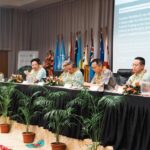
A new global project aimed at strengthening Samoa’s cocoa value chain was launched during an inception workshop jointly hosted by FAO and the Government of Samoa. Funded by China through the FAO-China South-South Cooperation Programme, the initiative positions Samoa as a “demonstration country” whose progress and innovations will guide other Pacific Island nations. The project… [Read More]
Cervical Cancer Elimination Day: Nations Step Up Efforts to End the Disease
Today marks the inaugural World Cervical Cancer Elimination Day, a significant milestone established by the World Health Assembly to advance global efforts against a preventable disease. The day reinforces growing international momentum, as countries and partners intensify vaccination drives, expand screening and treatment services, and commit to eliminating cervical cancer as a public health threat…. [Read More]
Kenya’s Senate Speaker Urges African Researchers to Drive Local Health Solutions
The Speaker of the Kenyan Senate, Rt. Hon. Amason Jeffah Kingi, urged African nations to adopt bold, homegrown strategies to address the continent’s persistent health challenges during the Inaugural Africa Health Summit in Kampala. He stressed that Africa must shift from merely identifying health problems to actively developing and implementing large-scale, African-led solutions. Hon. Kingi… [Read More]
Why Africa Can Win the Fight Against Cervical Cancer – Insights from Dr. Issimouha Dillé

Cervical cancer continues to pose a major public health threat across Africa, despite being almost entirely preventable. On Cervical Cancer Elimination Day of Action, Dr. Issimouha Dillé, Adviser on Cancer Control at the WHO Regional Office for Africa, explained why the disease persists and what is needed to overcome it. Africa accounts for nearly a… [Read More]
Measles and Rubella Eliminated in Cabo Verde, Mauritius and Seychelles

Cabo Verde, Mauritius and Seychelles have achieved a major public health milestone by eliminating measles and rubella, becoming the first countries in sub-Saharan Africa to do so. Their status was confirmed by the African Regional Verification Commission for Measles and Rubella Elimination, which verified that all three nations have interrupted endemic transmission for more than… [Read More]
UN Refugee Agency Seeks Fairness as UK Announces New Asylum Measures
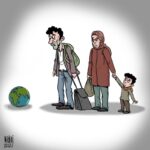
The UK Home Secretary Shabana Mahmood has announced new measures aimed at tightening control over irregular arrivals while maintaining the country’s commitment to providing refuge. Addressing Parliament, she noted that some families with rejected asylum claims were not being removed despite returning to safe home countries being possible. The proposals introduce revised procedures for assessing… [Read More]
UN Plants Flower of Srebrenica as Symbol of Remembrance and Peace
A cold but bright November afternoon in New York brought together more than 100 people to witness the unveiling of the Flower of Srebrenica at the United Nations. Munira Subašić, President of the Association of the Mothers of Srebrenica and Žepa, addressed the gathering, recalling that more than 8,000 Bosniak Muslim men and boys were… [Read More]
UN Security Council Approves Temporary Security Mission to Stabilize Gaza

The UN Security Council adopted Resolution 2803 (2025) with 13 votes in favour and none against, while China and Russia abstained. The resolution endorses the Comprehensive Plan announced by President Trump on 29 September, which paved the way for a ceasefire between Hamas and Israel just days later. The resolution welcomes the creation of a… [Read More]
Ghana Advances Development Goals Through Intelligent De-Risking of Private Sector Finance

Micro, small, and medium enterprises are central to Ghana’s economy, yet many business owners continue to face major barriers to financial inclusion. Although MSMEs generate most of the country’s employment and economic activity, many operate informally, lack financial literacy, and cannot access traditional financial services. As a result, they frequently rely on high-interest digital loans… [Read More]
ILO Supports Ukraine’s Pension Reform With Enhanced Social Protection Initiatives

The International Labour Organization continued its support to Ukraine’s labour and social protection reforms through a mission led by Helmut Schwarzer from the ILO Social Protection Department in Geneva. During his visit to Kyiv, Schwarzer met with national institutions, social partners, and international organizations to advance ongoing analytical work aimed at informing the government’s pension… [Read More]
Road Repair Projects Strengthen Connectivity and Drive Job Growth in Lebanon

Lebanon’s road network has suffered years of deterioration due to prolonged neglect, limited public investment, and the added strain of hosting large numbers of Syrian refugees. Nearly one-third of the country’s 6,500-kilometer main road network is in moderate to poor condition, contributing to safety risks and long travel times. Against this backdrop, the Roads and… [Read More]
Lessons from the Frontlines: Safeguarding Oceans and Their Defenders
CHIRP Maritime recently highlighted lessons learned from an incident involving the illegal disposal of oily waste and plastic from a vessel. A reporter on board observed oily waste being discharged from the engine room under instructions from senior officers and documented the activity through photographs and videos. Concerned about environmental pollution and accountability, the reporter… [Read More]
Polio-Free for 25 Years: Western Pacific Countries Strengthen Commitment to Global Eradication

Leaders from the World Health Organization (WHO) Western Pacific Region convened in Tokyo to celebrate 25 years since the region was certified polio-free. The milestone coincided with the 31st meeting of the Regional Commission for the Certification of Poliomyelitis Eradication in the Western Pacific (RCC), the independent body responsible for verifying that poliovirus transmission remains… [Read More]
Diabetes Crisis in Pakistan: WHO Reports One-Third of Adults Impacted
On 14 November 2025, in Islamabad, the World Health Organization (WHO) and the Government of Pakistan highlighted that diabetes affects 34.5 million people in the country, including one in three adults. Pakistan carries the highest diabetes burden globally in percentage terms and accounts for over 40% of estimated cases in the Eastern Mediterranean Region. To… [Read More]


