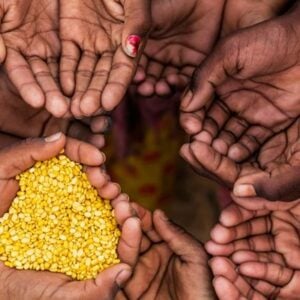
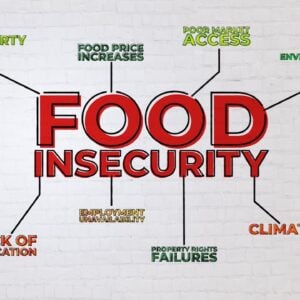
The Global Report on Food Crises 2026 highlights that acute food insecurity and malnutrition remain at alarmingly high levels worldwide, with hunger increasingly concentrated in a small group of countries. The report, released by the Global Network Against Food Crises, shows that acute hunger has doubled over the past decade, and for the first time, two famine situations were confirmed within a single reporting year.
According to the findings, 266 million people across 47 countries faced high levels of acute food insecurity in 2025. The burden is heavily concentrated, with ten countries—including Afghanistan, Bangladesh, the Democratic Republic of the Congo, Myanmar, Nigeria, Pakistan, South Sudan, Sudan, Syria, and Yemen—accounting for two-thirds of all affected people. The most severe crises were recorded in Afghanistan, South Sudan, Sudan, and Yemen.
The report also confirms that famine was identified in Gaza Governorate and parts of Sudan in 2025, marking an unprecedented occurrence of multiple famine declarations in the same year. It attributes the worsening situation primarily to conflict, restricted humanitarian access, and forced displacement, which continue to drive extreme hunger in vulnerable regions.
Acute malnutrition remains a major concern, with 35.5 million children affected in 2025, including nearly 10 million suffering from severe acute malnutrition. Many of the worst-affected countries are also experiencing overlapping nutrition crises, where poor diets, disease, and collapsing services are contributing to high mortality risks, particularly in conflict-affected areas.
Forced displacement further worsens food insecurity, with more than 85 million displaced people living in food crisis contexts. These populations consistently face higher levels of hunger than host communities, reinforcing a cycle of vulnerability and hardship across regions affected by conflict and instability.
Looking ahead, the report warns that conditions are likely to remain severe in 2026 due to ongoing conflicts, climate variability, and global economic pressures. It also notes risks to global food and energy markets, particularly linked to instability in the Middle East, which could further strain already vulnerable populations dependent on imports.
A major concern highlighted is the sharp decline in humanitarian funding and reduced availability of reliable data. The report warns that lower reporting coverage may be masking the true scale of the crisis, as several major food-insecure countries lack recent assessments. This data gap limits effective response planning and coordination.
The report calls for urgent global action, urging governments and partners to shift from short-term responses to long-term investment in resilient food systems, climate adaptation, and rural livelihoods. It emphasizes the need for stronger early warning systems, anticipatory action, and protection of humanitarian access to prevent further escalation of hunger crises, including famine.