The United Nations World Food Programme (WFP), together with the Government of Ethiopia, the German Embassy, and KfW Development Bank, has inaugurated a solar-powered irrigation scheme in Gode, located in Ethiopia’s Somali Region. The initiative aims to strengthen year-round food production and improve the ability of drought-prone communities to withstand climate-related shocks. It is funded by Germany’s Federal Ministry for Economic Cooperation and Development through KfW under the “Climate Proofing Food Security in Ethiopia’s Drought Prone Lowland Areas” (IFTIIN) project.
The IFTIIN project, meaning “Light” or “Hope” in Somali, is implemented by WFP in collaboration with regional authorities, local partners, and communities. It supports around 17,000 pastoral and agro-pastoral families, benefiting approximately 85,000 people. The project focuses on improving water access, strengthening agricultural and livestock production, diversifying incomes, and reinforcing local systems that help communities prepare for and manage climate shocks, with a strong emphasis on women, youth, and farmers.
WFP highlighted that the initiative aligns with Ethiopia’s broader goal of building resilient and self-reliant food systems. Through investments in irrigation, livelihoods, and market access, the programme aims to reduce long-term dependence on humanitarian aid while strengthening community-led resilience approaches.
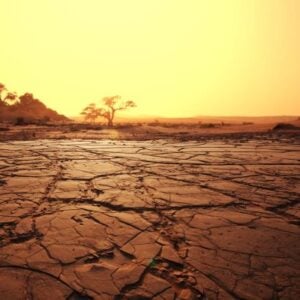
Ethiopia continues to face increasing climate pressures, including recurring droughts and floods that significantly impact agricultural productivity, especially in lowland areas dependent on rain-fed farming. The IFTIIN project addresses these challenges by building infrastructure such as irrigation systems, water-collecting ponds, and flood-protection dykes, while also improving access to agricultural inputs and training to enhance productivity.
The new solar-powered irrigation scheme in Gode draws water from the Shebelle River, enabling reliable, year-round farming. This has allowed local producers to grow a mix of food, fodder, and cash crops, improving both food availability and household incomes. Between 2024 and 2025, the site generated an estimated ETB 17.5 million in production value, reflecting improved yields and stronger market integration.
Representatives from Germany and KfW emphasized that supporting climate-resilient food systems in Ethiopia is essential for long-term development and reducing reliance on emergency aid. The project is presented as a successful example of partnership-driven climate adaptation, with potential for scaling similar solutions across other drought-affected regions in Ethiopia.