• Skip to primary navigation
  • Skip to main content
  • Skip to primary sidebar

fundsforNGOs News

Grants and Resources for Sustainability

  • Subscribe for Free
  • Premium Support
  • Premium Login
  • Premium Sign up
  • Home
  • Funds for NGOs
    • Agriculture, Food and Nutrition
    • Animals and Wildlife
    • Arts and Culture
    • Children
    • Civil Society
    • Community Development
    • COVID
    • Democracy and Good Governance
    • Disability
    • Economic Development
    • Education
    • Employment and Labour
    • Environmental Conservation and Climate Change
    • Family Support
    • Healthcare
    • HIV and AIDS
    • Housing and Shelter
    • Humanitarian Relief
    • Human Rights
    • Human Service
    • Information Technology
    • LGBTQ
    • Livelihood Development
    • Media and Development
    • Narcotics, Drugs and Crime
    • Old Age Care
    • Peace and Conflict Resolution
    • Poverty Alleviation
    • Refugees, Migration and Asylum Seekers
    • Science and Technology
    • Sports and Development
    • Sustainable Development
    • Water, Sanitation and Hygiene (WASH)
    • Women and Gender
  • Funds for Companies
    • Accounts and Finance
    • Agriculture, Food and Nutrition
    • Artificial Intelligence
    • Education
    • Energy
    • Environment and Climate Change
    • Healthcare
    • Innovation
    • Manufacturing
    • Media
    • Research Activities
    • Startups and Early-Stage
    • Sustainable Development
    • Technology
    • Travel and Tourism
    • Women
    • Youth
  • Funds for Individuals
    • All Individuals
    • Artists
    • Disabled Persons
    • LGBTQ Persons
    • PhD Holders
    • Researchers
    • Scientists
    • Students
    • Women
    • Writers
    • Youths
  • Funds in Your Country
    • Funds in Australia
    • Funds in Bangladesh
    • Funds in Belgium
    • Funds in Canada
    • Funds in Switzerland
    • Funds in Cameroon
    • Funds in Germany
    • Funds in the United Kingdom
    • Funds in Ghana
    • Funds in India
    • Funds in Kenya
    • Funds in Lebanon
    • Funds in Malawi
    • Funds in Nigeria
    • Funds in the Netherlands
    • Funds in Tanzania
    • Funds in Uganda
    • Funds in the United States
    • Funds within the United States
      • Funds for US Nonprofits
      • Funds for US Individuals
      • Funds for US Businesses
      • Funds for US Institutions
    • Funds in South Africa
    • Funds in Zambia
    • Funds in Zimbabwe
  • Proposal Writing
    • How to write a Proposal
    • Sample Proposals
      • Agriculture
      • Business & Entrepreneurship
      • Children
      • Climate Change & Diversity
      • Community Development
      • Democracy and Good Governance
      • Disability
      • Disaster & Humanitarian Relief
      • Environment
      • Education
      • Healthcare
      • Housing & Shelter
      • Human Rights
      • Information Technology
      • Livelihood Development
      • Narcotics, Drugs & Crime
      • Nutrition & Food Security
      • Poverty Alleviation
      • Sustainable Develoment
      • Refugee & Asylum Seekers
      • Rural Development
      • Water, Sanitation and Hygiene (WASH)
      • Women and Gender
  • News
    • Q&A
  • Premium
    • Premium Log-in
    • Premium Webinars
    • Premium Support
  • Contact
    • Submit Your Grant
    • About us
    • FAQ
    • NGOs.AI
You are here: Home / cat / Conflict and Drought Push Lebanon into Water Crisis

Conflict and Drought Push Lebanon into Water Crisis

Dated: March 23, 2026

Lebanon is facing a severe and unprecedented water crisis driven by the combined impact of historic drought, ongoing conflict and deepening economic hardship. On World Water Day, humanitarian agencies warned that the country’s water emergency is not simply the result of natural conditions, but a consequence of conflict, poverty and inadequate international support. Reservoir levels have fallen to critical lows due to the worst drought in decades, while renewed military escalation since 2 March 2026 has displaced more than one million people and placed immense pressure on already fragile water infrastructure.

The drought has significantly reduced water availability across the country, putting pressure on both household supply systems and agricultural production, especially in rural areas hosting displaced populations. Lebanon’s national water system is highly vulnerable because it depends heavily on diesel-powered pumps, meaning that without fuel, water distribution quickly stops. This structural weakness has made the country especially susceptible to disruptions caused by both the drought and the ongoing conflict.

The military escalation that began in early March has sharply worsened the situation. Bombardments have reportedly hit infrastructure connected to the South Lebanon Water Establishment, including facilities in the Qennarit area that had already suffered damage from earlier airstrikes in January. Even water systems that remain functional are facing urgent fuel shortages needed to continue pumping water and managing wastewater. Humanitarian groups have warned that if these supplies run out, the consequences will be immediate and severe, with water services halting and the risk of disease outbreaks rising rapidly.

The scale of displacement has further intensified the crisis. In the first 24 hours after the escalation began, around 29,000 people were forced to flee their homes. By 19 March, the number of registered displaced people had surpassed 1,049,000. Many are being hosted in 633 collective shelters, a large number of which are already overcrowded, while others are living in cars, abandoned buildings or open spaces. In these conditions, access to safe water has become one of the most urgent humanitarian needs.

Newly displaced families are often moving into areas that are already under strain from earlier waves of displacement, including Lebanese communities displaced since 2024 and Syrian refugee populations. This is placing additional pressure on water networks that were never designed to serve such large numbers of people. As a result, many families in conflict-affected areas are increasingly dependent on private water trucking services, which are often unregulated and unaffordable for households that have already lost their livelihoods and resources.

Overcrowded shelters and informal settlements are also creating serious public health risks. Poor hygiene and limited access to clean water are increasing the likelihood of waterborne diseases such as cholera, dysentery and intestinal infections. These risks are especially dangerous for young children, pregnant women and people with chronic illnesses, who are more vulnerable to the effects of contaminated water and poor sanitation.

The water crisis is also having major consequences for agriculture and food security. Bombardments have damaged irrigation systems, agricultural equipment and productive farmland, making it harder for farmers to continue working. Many were already struggling due to drought and rising input costs, and now face additional challenges such as unsafe access to fields and the use of water of uncertain quality. This threatens both crop production and public health. Even before the latest escalation, food insecurity in Lebanon was already severe, with an estimated 874,000 people facing crisis or emergency levels of acute food insecurity between November 2025 and March 2026, including 22,000 in emergency conditions. Although inflation eased in 2025, household purchasing power remained weak, especially among displaced communities.

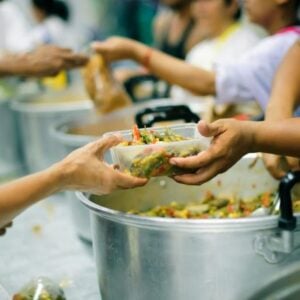
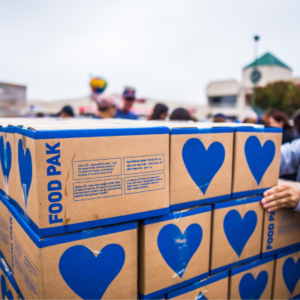
Action Against Hunger, which has operated in Lebanon since 2006, activated emergency response mechanisms immediately after the March escalation. By 19 March 2026, the organisation had reached more than 35,000 people across all eight governorates of Lebanon with multi-sectoral assistance, including in hard-to-reach areas. Its teams have been supporting 139 collective shelters and providing essential water, sanitation, hygiene, health, nutrition and food security assistance. This has included distributing bottled water, trucking in additional water supplies, providing hygiene kits, blankets and mattresses, offering primary healthcare and reproductive health services, supporting hospitals, screening children and pregnant or breastfeeding women for malnutrition, and distributing ready-to-eat food parcels. Despite these efforts, significant needs remain unmet, with humanitarian agencies estimating that up to 40 percent of food needs are still uncovered due to resource shortages.

Humanitarian organisations are calling on the international community to take urgent action, including pushing for an immediate ceasefire, ensuring safe and unrestricted humanitarian access, and increasing financial support for relief operations. They have warned that funding gaps are dangerously high, with UNICEF’s three-month response plan requiring US$48 million and more than 83 percent of that amount still unavailable as of early March 2026. Without rapid and adequate support, thousands of families in Lebanon risk losing access to even the most basic resources needed for survival, including safe drinking water, food and healthcare.

Related Posts

  • Lebanon Crisis Deepens as Regional Violence Surges
  • Why Gender Equity Must Shape Africa’s Water Future
  • 45 Million More at Risk of Acute Hunger in Middle East
  • Aging Pipes and Inequality: Lessons from the Jackson, Mississippi Water Crisis
  • UK Pledges £15 Million in Humanitarian Aid for People Affected by Middle East Conflict

Primary Sidebar

Latest News

EIB Global Expands MSME Support in Azerbaijan

Afghanistan NGOs Urge Respect for Humanitarian Law

Swedfund Commits $600,000 for Maternal Care in Kenya

Peace Journalism Training in CAR: 3 Key Lessons

Environment Agency Seeks Contractors for £6.6bn Framework

How Climate Change Is Driving Youth Innovation

Helmsley Grants $8.6M for CHCC Surgical Expansion

$6.7M Supports Safer First Nations Communities

Where Water Security Begins for Communities

Water Resilience Boosts Gender Equality in Caribbean

Tony Elumelu Foundation Selects 3,200 Africans for 2026

Rockefeller and GEA Cross $100M for Africa Power

Water, Illness and Malnutrition: Breaking the Cycle

Conflict and Drought Push Lebanon into Water Crisis

Luxembourg NGOs Oppose Development Aid Cuts

Technology Driving Change for Nonprofits in Asia-Pacific

Empowering CBPs and Nonprofits with ImpactCollab

Neokred’s Golf for Good Backs Child Nutrition

The Future of Sports and Leisure in Singapore

Over 125,000 Flee Lebanon to Syria, Half Are Children

Case Studies Help Nonprofits Transform Donor Engagement

Gov’t Strengthens Science Reporting Amid Innovation Drive

Free Fertiliser for Farmers Following 2025 Food Glut

Ghana, US Renew Commitment to Boost Trade and Investment

Why Gender Equity Must Shape Africa’s Water Future

Guatemala Joins Americas Primary Health Care Alliance

Boosting Youth Employment in Crops and Livestock

Americas Sees Rising Crackdown Through Anti-NGO Laws

Inside the EU’s Wildfire Frontline Response

Richer Soils, Stronger Futures in Chad

Global Civil Society Unites Across 80 Countries

Guatemala Pushes Local Biofuels Growth

Lord’s Reserve Sees Runs on the Board

Kyrgyzstan’s System for Domestic Violence Survivors

EU-Australia Trade Deal Tests Rules-Based Order

Justice Advances for Abuses in Ukraine

Zambia Unveils Soil Partnership to Boost Agrifood Resilience

Peacebuilding Groups Respond to UK Aid Reforms

EBRD Provides $15.4 Million for UzCarlsberg Expansion

EBRD Grants €30 Million Green Loan to NLB Skopje

Funds for NGOs
Funds for Companies
Funds for Media
Funds for Individuals
Sample Proposals

Contact us
Submit a Grant
Advertise, Guest Posting & Backlinks
Fight Fraud against NGOs
About us

Terms of Use
Third-Party Links & Ads
Disclaimers
Copyright Policy
General
Privacy Policy

Premium Sign in
Premium Sign up
Premium Customer Support
Premium Terms of Service

©FUNDSFORNGOS LLC.   fundsforngos.org, fundsforngos.ai, and fundsforngospremium.com domains and their subdomains are the property of FUNDSFORNGOS, LLC 1018, 1060 Broadway, Albany, New York, NY 12204, United States.   Unless otherwise specified, this website is not affiliated with the abovementioned organizations. The material provided here is solely for informational purposes and without any warranty. Visitors are advised to use it at their discretion. Read the full disclaimer here. Privacy Policy. Cookie Policy.