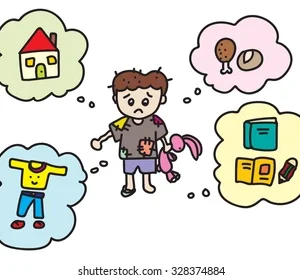
The government has published a child-friendly version of its landmark Child Poverty Strategy to help parents and teachers have important conversations with children about the challenges faced by families living in poverty. The resource provides children with a clear, age-appropriate explanation of what poverty means, why some families struggle, and the concrete steps the government is taking to help. By giving children the language to understand their own experiences and those of their peers, the strategy aims to reduce stigma and foster empathy in the classroom.
Designed to support discussions at home and in schools, the strategy outlines what all families need to thrive, including a warm home, supportive community, and access to healthcare. It highlights government measures to tackle child poverty and encourages dialogue through prompts such as, “what do you think families could do if they had a bit more money every week?” The resource also provides definitions, explanations of interventions, and links to further support, complementing existing lessons on social justice and inequality.
The child-friendly strategy builds on the government’s historic Child Poverty Strategy, published in December 2025, which sets out a decade-long plan to address the root causes of poverty. Early Education Minister Olivia Bailey emphasized that every child deserves to understand the world around them and to feel confident that help is available. Measures such as expanding free school meals to over 500,000 children, rolling out free breakfast clubs, and investing in childcare are designed to ensure children from all backgrounds can come to school ready to learn.
The government also aims to lift approximately 550,000 children out of poverty by the final year of this Parliament through a combination of measures, including removing the two-child limit in Universal Credit, expanding free school meals, and lowering energy bills. Minister for Employment Diana Johnson highlighted that removing the two-child limit alone could lift 450,000 children out of poverty, while additional measures would increase that number further. Tackling child poverty is viewed not only as a moral imperative but also as an investment in the country’s future, improving educational outcomes and future earning potential.
Alongside the child-friendly strategy, a new Children’s Rights Impact Assessment shows that the strategy is expected to positively affect children’s rights to life, development, adequate living standards, health, and education, as assessed against the United Nations Convention on the Rights of the Child. Dr. Philip Goodwin, CEO of UNICEF UK, praised the initiative, noting that ending the two-child limit is one of the most effective ways to lift children out of poverty. He emphasized that supporting families today allows children to thrive and contributes to broader economic benefits. The child-friendly strategy reflects the government’s commitment to putting children at the center of policymaking while making child poverty measures accessible and understandable for young audiences.