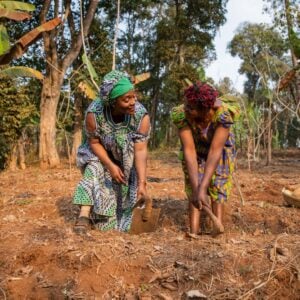
The Food and Agriculture Organization of the United Nations in the Near East and North Africa (FAO NENA) commemorated International Women’s Day 2026 with a regional webinar titled “Women Farmers in the Near East and North Africa Region: Advancing Visibility, Knowledge and Inclusion.” The event brought together over 115 participants, including women farmers, government officials, technical experts, UN partners, and civil society representatives from across the region. The webinar was held under the global theme “Rights. Justice. Action. For ALL Women and Girls” and marked the regional observance of the International Year of the Woman Farmer (IYWF) 2026, highlighting both the contributions of women farmers and the structural barriers limiting their full participation in agrifood systems.
Women play a central role in agrifood systems across the Near East and North Africa, contributing as farmers, entrepreneurs, workers, and custodians of natural resources, and supporting food security, rural livelihoods, and community resilience. Despite this, female labor force participation in the region remains among the lowest globally, and women’s agricultural work is often informal, with limited access to land, finance, technology, services, and decision-making opportunities. Dr Abdulhakim Elwaer, FAO Assistant Director-General and Regional Representative for NENA, emphasized the need to address these inequalities to ensure women farmers can thrive and contribute fully to food security and rural development.
The webinar provided a platform for women farmers, policymakers, and experts to discuss challenges and identify solutions. Leaders from Jordan and Morocco shared experiences in navigating social norms, forming cooperatives, and accessing markets and resources. Ghada Qudah from Jordan highlighted the broader community benefits when women farmers receive knowledge, networks, and resources, while Zakia Majdouli from Morocco emphasized how cooperatives enable women to organize, share knowledge, and expand market opportunities. Discussions also explored gaps in education, extension services, and access to innovation, including climate-smart and labor-saving technologies, with contributions from experts in Egypt, Saudi Arabia, and Lebanon on policy reforms and inclusive service delivery.
Speakers stressed that empowering women farmers requires coordinated policies and targeted support to ensure equal access to training, services, and resources. Dr Nagah El Tallawey from Egypt noted that strengthening women’s participation is essential for building inclusive and resilient rural economies, while Dr Maha Dughreiri from Saudi Arabia highlighted the importance of value addition, skills development, and market access. Dr Rami Zurayk from Lebanon emphasized the need to address technical gaps and improve access to extension services and innovation across the region.
International Women’s Day 2026, aligned with the IYWF, reinforced FAO’s global initiative to elevate women’s roles in agriculture and promote equitable access to land, services, and opportunities. Sophia Ngugi, FAO Gender Officer for NENA, stressed that visibility must translate into actionable empowerment, giving women farmers both voice and power to transform agrifood systems. The webinar reaffirmed FAO’s commitment to advancing equitable, resilient, and sustainable agrifood systems throughout the Near East and North Africa.