The African Development Bank Group has approved $58.04 million in financing to expand access to reliable and clean electricity across three towns in Eritrea’s southwest Gash Barka region. Approved on 18 February, the funding will support the Eritrea Energy Integrated Project targeting Tesseney, Kerkebet, and Berantu, with the aim of strengthening local energy infrastructure and promoting rural economic growth.
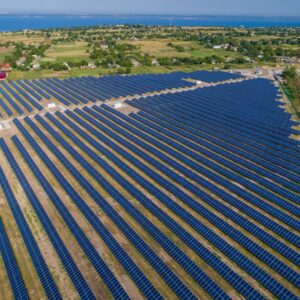
The project will be financed through a $37.31 million grant from the African Development Fund and an additional $20.73 million grant from the Bank’s Transition Support Facility. The investment will fund the deployment of a 34-megawatt solar-powered mini-grid system designed to reinforce distribution networks and expand energy capacity, delivering affordable and reliable electricity to households and businesses in and around the three towns.
Beyond improving electricity access, the initiative will power clean water pumping systems, enhance irrigation, and boost agricultural productivity. It is also expected to support small enterprises and agro-processing businesses by enabling longer operating hours and lowering operational costs. As part of the infrastructure upgrade, approximately 542 kilometres of distribution lines will be constructed or rehabilitated.
The project is anticipated to generate employment opportunities during both construction and operational phases, while also strengthening local technical skills and encouraging the growth of renewable energy-related enterprises. Over time, it is expected to contribute to reducing greenhouse gas emissions and support Eritrea’s transition toward a low-carbon and climate-resilient economy. Overall, the initiative is projected to benefit around 306,000 people.
The Eritrea Energy Integrated Project falls under the Bank Group’s Desert to Power initiative, a flagship renewable energy and economic development programme aimed at harnessing the vast solar potential of eleven Sahel countries, including Eritrea. The initiative aligns with Mission 300, a partnership with the World Bank to provide electricity access to 300 million additional Africans by 2030. Bank officials highlighted that the investment will help stimulate job creation, strengthen local economies, and advance Eritrea’s progress toward a sustainable energy future.