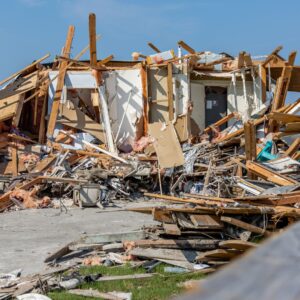
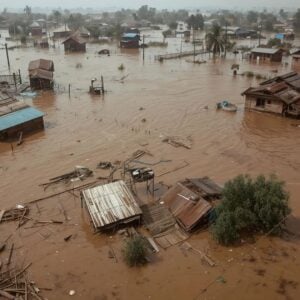
Lola Castro, speaking from Port-au-Prince, emphasized the urgent need for continued support for Haiti and neighboring countries affected by Hurricane Melissa, including Jamaica, Cuba, and the Dominican Republic. The category 5 hurricane claimed over 80 lives and impacted roughly six million people, making it one of the most intense Atlantic storms on record. Haiti, already facing challenges such as gang violence and widespread food insecurity, was particularly hard hit, with 5.7 million people experiencing hunger and 1.4 million displaced nationwide.
Hurricane Melissa brought heavy rains to southern Haiti, affecting 1.2 million people. In Petit-Goâve, overflowing rivers forced residents to flee through “rivers of mud,” resulting in 25 deaths. Castro met with men and women struggling to rebuild after losing loved ones, homes, livelihoods, crops, and livestock. The World Food Programme (WFP), alongside UN agencies, NGOs, and the Haitian government, provided immediate assistance through food distribution and cash transfers, allowing affected populations to meet their urgent needs such as food and hygiene products. Youth groups also played a critical role in supporting community recovery efforts.
The hurricane caused significant damage in western Jamaica and eastern Cuba as well, and WFP has reached more than 725,000 people across the four affected countries. Castro highlighted ongoing recovery and rehabilitation efforts, including school feeding programs and government-supported social protection initiatives aimed at registering all disaster-affected individuals. She stressed that investing in anticipatory action and emergency preparedness is critical to reducing the impact of future disasters.
Ahead of the hurricane, WFP undertook extensive preparedness measures, including warning messages reaching 3.5 million people in Haiti and advance cash transfers to over 50,000 individuals. In Cuba, food aid was pre-positioned from the east to the west of the island. Castro emphasized the need to strengthen simulations, preparedness mechanisms, and anticipatory action across the region to better protect vulnerable populations.
Building community resilience is another key focus, with initiatives such as microinsurance for smallholder farmers in Haiti, enabling them to continue producing food for WFP’s school meals programs. Castro noted that such mechanisms must be expanded throughout the Caribbean to reduce food insecurity and strengthen local resilience against recurring hurricanes and other natural disasters. WFP is seeking $83 million to assist 1.3 million people affected by Hurricane Melissa, with roughly half of the funding already received.