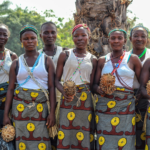
The African Guarantee Fund (AGF) and Women’s World Banking (WWB) have signed a Memorandum of Understanding (MoU) aimed at strengthening women’s role in Africa’s economy by expanding access to finance and support for women-led businesses. The partnership highlights the shared commitment of both organizations to advancing women’s economic empowerment through finance, technical support, and advocacy…. [Read More]
World Bank
Bhutan Can Harness Benefits of Migration Through Strategic Reforms, Says World Bank
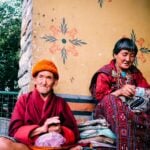
Migration of Bhutan’s educated youth and skilled professionals has become a growing concern for the Royal Government of Bhutan and international partners, according to a new World Bank report released today. Titled Migration Dynamics in Bhutan: Recent Trends, Drivers, and Implications, the report builds on discussions from the South Asia Mobility Conference held in Thimphu… [Read More]
Sarawak Partners with World Bank to Boost Governance and Long-Term Economic Growth

In a landmark initiative to future-proof its economy, Sarawak has signed a strategic agreement with the World Bank and Malaysia’s Federal Government, marking the start of major reforms in State-Owned Enterprise (SOE) governance and public financial management. The three-year partnership aims to enhance the management of public resources by improving SOE governance and aligning budget… [Read More]
World Bank: Digital Transformation Key to Boosting Public Sector Productivity

Malaysia is leveraging GovTech to deliver faster, more trusted public services—a digital transformation the World Bank highlights as central to enabling private sector growth and creating high-quality jobs, accelerating the country’s path toward high-income status. The World Bank’s new report, From Bytes to Benefits: Digital Transformation as a Catalyst for Public Sector Productivity, credits Malaysia’s… [Read More]
Back to Basics: Why Investing in Disaster Risk Management is Crucial for Global Development

On May 8, 1947, the World Bank approved its very first loan of $250 million—equivalent to about $3.5 billion in today’s terms—to the French government to help rebuild its economy after the devastation of the Second World War. Seventy-eight years later, the World Bank is still helping countries recover from disasters, but its mission has… [Read More]
IFAD Achieves Landmark US$1 Billion in Sustainable Bonds to Boost Development

The International Fund for Agricultural Development (IFAD) has surpassed US$1 billion in sustainable bond issuances since its first issuance in June 2022. This milestone was reached with the twelfth bond issued in September 2025, marking a significant expansion of IFAD’s ability to finance rural development projects globally. By the end of 2024, the first US$646… [Read More]
Government Unveils Civil Support Package to Aid Ukraine Amid Ongoing Challenges

The Government of Sweden has announced a new civil support package for Ukraine totaling SEK 1.145 billion for 2025, aimed at addressing the country’s most pressing reconstruction, development, and humanitarian needs ahead of the approaching winter. This package focuses on strengthening Ukraine’s resilience amid ongoing Russian aggression while providing critical assistance to vulnerable populations. Key… [Read More]
Gavi Achieves Unprecedented Success in Vaccination Efforts Worldwide

In 2024, Gavi-supported vaccination programmes saved a record-breaking 1.7 million lives, 400,000 more than in 2023, according to Gavi’s Annual Progress Report. The achievement highlights significant gains in immunising children across lower-income countries, including those facing major humanitarian and conflict-related challenges. Beyond health benefits, Gavi’s programmes generated nearly US$ 20 billion in economic value in… [Read More]
Scaling Up Renewable Energy and Low-Carbon Solutions in East Asia and Pacific

Strong economic growth in the East Asia and Pacific region has been accompanied by increasing fossil fuel consumption and rising greenhouse gas emissions, with the region now responsible for over a third of global emissions. To sustain growth, reduce poverty, and meet nationally determined climate commitments, decarbonizing the power sector is essential. The World Bank… [Read More]
Unlocking Timor-Leste’s Economic Potential Through Land Reform, Says World Bank

Timor-Leste’s economy grew by 4.1 percent in 2024, marking its fastest pace in years. While growth has continued into 2025, sustaining this momentum and ensuring long-term prosperity will require reforms to strengthen land governance, reduce dependence on Petroleum Fund withdrawals, broaden domestic revenues, and enhance the efficiency of public spending. The September 2025 edition of… [Read More]
Enhancing Revenue Collection and Public Spending Efficiency to Strengthen Uganda’s Economy
Uganda’s economy continues to demonstrate strong performance, with real GDP accelerating from 6.1% to 6.8% between July 2024 and March 2025, according to the World Bank’s 25th Uganda Economic Update: Increasing Uganda’s Fiscal Space through Improved Revenue Mobilization and Enhanced Efficiency of Spending and Service Delivery. Growth was primarily driven by the supply side, particularly… [Read More]
Uganda Can Accelerate Economic Growth Through Improved Fiscal Management and Job Creation

Uganda’s economic growth remained strong, with real GDP rising from 6.1% to 6.8% between July 2024 and March 2025, driven largely by agriculture, manufacturing, construction, and household and government consumption, while the services sector experienced a slowdown. Inflation remained moderate at 3.5% in FY2024/2025, below the central bank’s 5% target, supported by stable food supply,… [Read More]
World Bank Supports Costa Rica in Strengthening Public Finances and Employment Opportunities

The World Bank’s Executive Board has approved a US$300 million loan to support Costa Rica in improving fiscal management and promoting sustainable economic activities that generate quality jobs, particularly in rural and coastal areas. The initiative aims to modernize fiscal and environmental policies to enhance service delivery in key sectors such as health, education, and… [Read More]
Rwanda Receives Enhanced World Bank Support to Tackle Natural Disaster Risks

The World Bank Board of Executive Directors has approved a Disaster Risk Management Development Policy Financing (DPF) with a Catastrophe Deferred Drawdown Option (Cat DDO) for Rwanda, aimed at strengthening the country’s ability to anticipate, prepare for, and respond to disasters, protecting both lives and livelihoods. This initiative comes as Rwanda faces increasing vulnerability to… [Read More]
Driving Clean Transport: Rwanda Invests in Energy Infrastructure for E-Mobility

Rwanda’s ambitious plan to electrify 20 percent of its bus fleet by 2030 will require significant investment in energy infrastructure, clear policy frameworks, and innovative financing, according to a new World Bank report. The study, Exploring Enabling Energy Frameworks for Electric Mobility in Rwanda, evaluates the readiness of the power sector to support the transition,… [Read More]
Central Viet Nam to Gain Flood Resilience and Better Connectivity with World Bank Support

The World Bank’s Board of Executive Directors has approved a new project designed to strengthen flood protection and transport connectivity in Da Nang City and Gia Lai Province in central Viet Nam. The initiative will benefit more than 1.2 million people by enhancing flood safety, ensuring reliable evacuation routes, and improving consistent access to markets… [Read More]
New Africa Water Center Launched in West Africa to Tackle Drought Challenges
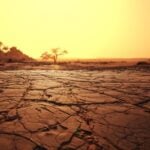
A two-day High-Level Forum on Defying Drought (D2) in West Africa concluded in Ouagadougou with strong commitments to tackle the growing challenges of drought in the region against the backdrop of climate change and population growth. Senior policymakers from Burkina Faso, Chad, Mali, Mauritania, Niger, and Senegal, alongside experts from Morocco, Brazil, and various development… [Read More]
Guatemala Receives World Bank Support to Strengthen Climate and Disaster Resilience

The World Bank’s Executive Board has approved a project to strengthen Guatemala’s resilience to natural hazards and extreme climate events. The initiative aims to enhance institutional capacity to manage risks and protect vulnerable groups, including women heads of household, Indigenous peoples, persons with disabilities, and residents of informal settlements. By targeting areas with high exposure… [Read More]
New World Bank Initiative Aims to Bring Safe Water and Sanitation to Millions in Sierra Leone

The World Bank Board of Executive Directors has approved the Sierra Leone Water Security and WASH Access Improvement Project, supported by a $40 million International Development Association (IDA) grant targeting the Western Area. This initiative marks the first phase of a Multiphase Programmatic Approach, totaling $180 million over the next decade, aimed at improving institutional… [Read More]
How the World Bank Uses Blockchain to Enhance Transparency and Accountability
FundsChain is a blockchain-based platform developed by the World Bank to enhance traceability, accountability, and efficiency in tracking the use of project funds. The platform offers tamper-proof digital records, end-to-end tracking of transactions, and immediate access for project partners, streamlining financial management and operations across diverse systems that are often non-standardized and disconnected. By using… [Read More]
HSTRF: Strengthening Health Systems for Resilience and Transformation

Investments in health are a major driver of economic growth and job creation. By enhancing human capital and supporting productive, resilient populations, health services fuel economies and create millions of jobs, laying the foundation for stronger, more prosperous societies. The World Bank Group has set an ambitious goal to expand health services to 1.5 billion… [Read More]
AfDB Promotes Stronger Economic Cooperation Between Africa and the Mediterranean
The African Development Bank reaffirmed its role as a key bridge between Africa and the world during the 10th Annual Conference on Development Economics, organized by the Italian Society of Development Economists and Fondazione Tor Vergata in Frascati, Italy, on September 15–16, 2025. The conference was held under the theme “Africa and the Mediterranean: Economic… [Read More]
How Organizations Are Supporting Mongolia After the Catastrophic Dzud

A dzud, locally known as the ‘white death,’ is an extreme weather event in Mongolia characterized by a harsh winter following a summer drought. During these events, temperatures can drop below -30 degrees Celsius, and heavy snowfall blankets the country. While traditionally occurring every few years, climate change has increased their frequency, with some regions… [Read More]


