
The World Bank has approved more than $2 billion in new financing for Uganda, ending a two-year suspension imposed after the country enacted anti-LGBTQ legislation. Announced in Kampala by Treasury Secretary Ramathan Ggoobi, the funding will support major infrastructure and energy projects over the next three years. The decision marks the World Bank’s formal resumption… [Read More]
World Bank
New ILO Study Links Climate Change Impacts to Expanding Green Job Potential in Arab Region
The International Labour Organization (ILO) has revealed that climate change is transforming the world of work across the Arab States, disrupting employment patterns and threatening livelihoods in sectors such as agriculture, construction, and energy. At the same time, it is creating new opportunities for green jobs and environmentally sustainable businesses. The findings come from the… [Read More]
Reviving Lake Chad: How Local Communities Are Restoring Livelihoods and Hope

Across the Lake Chad Basin, communities are beginning to witness a revival of livelihoods and hope after years of conflict and climate shocks. In Chad’s Kouloudia Sub-Prefecture, farmers like Achta—once forced to abandon their land—are now harvesting abundant crops thanks to improved irrigation and agricultural support. Her story illustrates how access to water and modern… [Read More]
Haiti’s Agricultural Revolution: Turning Land into a Source of Food Security

Haiti, the poorest country in Latin America and the Caribbean, has long faced extreme rural poverty and acute food insecurity, with 27 percent of rural farmers living in extreme poverty. Agriculture, the primary source of income for these communities, has suffered from chronic under-investment, unsustainable farming practices, and the cumulative impacts of natural disasters. Land… [Read More]
From Policy to Productivity: How Malawi is Transforming Smallholder Farming
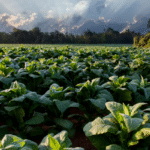
Malawi’s economy heavily relies on agriculture, which contributes nearly a quarter of GDP and employs around three-quarters of the population, primarily through small-scale subsistence farming. In rural areas, 93 percent of Malawians work in the food sector. Despite this, poverty, recurring shocks, and weak livelihoods have intensified food insecurity, with over one in four Malawians… [Read More]
Women Entrepreneurs Driving Job Creation and Economic Growth

In Sub-Saharan Africa, over 80 percent of women are self-employed, managing businesses that range from family farms and market stalls to tech start-ups and film production. At the high-level event Capital to Scale: Supporting Women Entrepreneurs as Job Creators, held during the World Bank-IMF Annual Meetings in Washington, DC, experts discussed how access to capital… [Read More]
Mongolia Enhances Power Grid Reliability and Security with World Bank Support
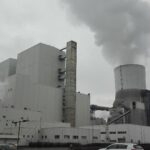
The World Bank has approved a new project to enhance Mongolia’s electricity grid reliability and security while supporting the country’s transition to a low-carbon energy future. The Fourth Energy Sector Project will focus on increasing the capacity and reliability of the Central Energy System’s transmission grid and promoting the integration of renewable energy sources. The… [Read More]
World Bank Backs Moldova’s Initiative to Restore Ecosystems and Combat Pollution

The World Bank’s Board of Executive Directors has approved a US$7.9 million grant for Moldova’s Restoring Ecosystems for Marine Pollution Prevention Project (RE-MAP), financed through the Global Environment Facility (GEF). The project aims to enhance sustainable landscape management within the Dniester River Basin, a critical watershed for both environmental and socio-economic resilience in Moldova. By… [Read More]
Powering Progress: Guinea’s Electricity Surge Supports Small Businesses and Communities

In the mining city of Boké, Guinea, frequent power outages had long stifled productivity, frustrated residents, and fueled social unrest. Entrepreneurs like Safiatou Bangoura struggled to maintain their businesses, relying on costly and polluting generators to keep their workshops running. Daily expenses for fuel consumed much of their earnings, leaving little room for savings or… [Read More]
Enhancing Water, Sanitation, and Hygiene (WASH) Services for Sustainable Development in Ethiopia
Since 2014, the World Bank has supported Ethiopia’s One Water, Sanitation, and Hygiene National Program (OWNP), an integrated platform for sector development, through three major projects expected to benefit over 20 million people by 2027. The Ethiopia Water Supply, Sanitation, and Hygiene Project (2014–2021) provided improved water and sanitation services to over 10.9 million people,… [Read More]
India: Kerala to Benefit from World Bank Initiative Increasing Access to Health Services

The World Bank has approved a $280 million program to enhance health coverage and strengthen health systems for 11 million elderly and vulnerable people in Kerala, India. The initiative aims to improve life expectancy and quality of life by building a more resilient, climate-adaptive health system and expanding access to essential services. Kerala has achieved… [Read More]
Afghanistan Earthquake Inflicts $183 Million in Economic Losses

A 6.0 magnitude earthquake that struck eastern Afghanistan on August 31, 2025, caused an estimated $183 million in direct physical damage to buildings and infrastructure, according to a World Bank report. The disaster, the deadliest in Afghanistan since 1998, claimed around 2,000 lives and severely affected between 500,000 and 1.3 million people. The Afghanistan Global… [Read More]
Asian Development Bank Provides $10 Million to Boost Tonga’s Economic Stability and Recovery
The Asian Development Bank (ADB) has approved a $10 million policy-based grant to strengthen public sector management and improve social and economic resilience in Tonga. The funding supports the Improving Economic Management Program (Subprogram 2), which builds on previous reform initiatives aimed at enhancing fiscal stability and governance in the country. The program focuses on… [Read More]
African Development Bank Deepens Cooperation with Djibouti to Advance Regional Integration
A week-long consultation mission led by African Development Bank Group Executive Director Khaled Sherif reaffirmed the Bank’s strong partnership with Djibouti, emphasizing regional integration, innovative financing, and capacity development as key priorities for future collaboration. Held from 3 to 10 October, the mission aimed to accelerate project delivery, strengthen institutional capacity, and optimize the Bank’s… [Read More]
Climate Hazards Threaten to Reverse South Asia’s Poverty Gains, Affecting 99% of Poor
The Global Multidimensional Poverty Index (MPI) Report 2025, released by the UN Development Programme (UNDP) and the University of Oxford, reveals how the accelerating climate crisis is reshaping global poverty patterns. Despite historic achievements in poverty reduction, millions are now increasingly vulnerable to climate-related threats. The report found that of 6.3 billion people across 109… [Read More]
APGF Initiative: Bridging Investment Gaps for ASEAN’s Regional Power Grid

The ASEAN Power Grid Financing (APGF) Initiative is a major regional effort aimed at creating an integrated transmission network to accelerate renewable energy development across Southeast Asia. Achieving the vision of a fully interconnected ASEAN Power Grid by 2045 is estimated to require around US$800 billion in generation and transmission investments. The initiative brings together… [Read More]
APGF Initiative: Boosting Investment in the ASEAN Power Grid

The ASEAN Power Grid Financing (APGF) Initiative is a major regional program designed to develop an integrated transmission network and accelerate the deployment of renewable energy across Southeast Asia. Achieving the ASEAN Power Grid vision by 2045 will require around US$800 billion in investments in both generation and transmission infrastructure. APGF brings together governments, utilities,… [Read More]
Post-Conflict Syria: Reconstruction Costs Soar to $216 Billion
Syria’s post-conflict reconstruction is estimated to cost $216 billion after more than thirteen years of war, according to a new World Bank report. The Syria Physical Damage and Reconstruction Assessment 2011–2024 evaluated damage across infrastructure, residential, and non-residential buildings nationwide, covering the period from 2011 to 2024. Direct physical damages are estimated at $108 billion,… [Read More]
Congo Basin Forests Worth Trillions: Report Calls for Increased Global Investment

A new World Bank report highlights the immense economic, environmental, and climate value of the Congo Basin forests, home to the world’s second-largest tropical rainforest spanning six countries. The report reveals that the value of forest ecosystem services nearly doubled over two decades, increasing from $590 billion in 2000 to $1.15 trillion in 2020, while… [Read More]
Germany’s Climate Action in Somalia Offers Key Insights Ahead of Berlin Climate Security Talks
Germany’s support for climate action in Somalia is demonstrating how environmental restoration can reduce conflict and strengthen community resilience ahead of the Berlin Climate and Security Conference 2025. Backed by the German government, the UN Environment Programme (UNEP), and the International Organization on Migration (IOM), projects in Somalia are linking climate, peace, and security by… [Read More]
Advancing Global Gateway: €30 Million EIB–Vista Group Deal to Strengthen SMEs and Agri-Business in West Africa

xThe European Investment Bank (EIB), through its development arm EIB Global, has signed two landmark financing agreements with Vista Group — €20 million with Vista Gui in Guinea and €10 million with Vista Bank (SL) in Sierra Leone. These agreements mark the EIB’s first-ever intermediated loans to domestic banks in both countries, with a strong… [Read More]
Bangladesh: EIB Global invests €160 million to enhance Dhaka’s water supply and infrastructure

EIB Global, the development arm of the European Investment Bank, has expanded its support for sustainable water infrastructure in Bangladesh by approving €160 million in new financing for two major projects in Dhaka. These initiatives aim to improve the city’s water supply system and enhance resilience to climate challenges, benefiting more than 10 million residents…. [Read More]
New Health Works Leaders Coalition Aims to Strengthen Health Systems and Drive Job Creation
The World Bank Group, the Government of Japan, and the World Health Organization (WHO) have launched the Health Works Leaders Coalition, a global alliance uniting health and finance ministers, business leaders, philanthropic organizations, global health agency heads, and civil society representatives. The coalition aims to promote investments in health systems as a driver of economic… [Read More]


