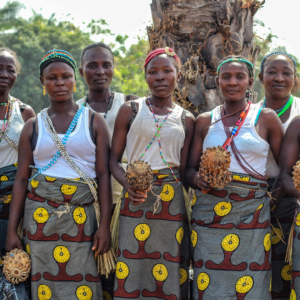
The Indian state of Odisha has emerged as a strong example of how women can be placed at the center of agrifood system transformation. With 85 programs exclusively dedicated to women, 420 gender-sensitive initiatives, and nearly 45% of its state budget incorporating gender-responsive measures, Odisha is actively working toward building an agrifood system that is economically viable, socially inclusive, and environmentally sustainable, with women playing a pivotal and empowering role.
Transforming agrifood systems is a complex process that requires balancing economic growth with social equity and sustainability. Evidence consistently shows that no successful transformation—whether at the national, regional, or global level—has been achieved without the active participation of women. Ignoring gender-related barriers not only limits productivity gains but also weakens structural transformation and equitable development outcomes.
Insights from work conducted with the Gender Responsive Cell (GRC), a policy initiative in Odisha developed with support from International Food Policy Research Institute, highlight how gender considerations can be embedded into agricultural policies, services, and outcomes for women farmers. A key concept emerging from this work is the “gender thoroughfare,” which recognizes the multiple ways gender influences every stage of development—from access to land and labor to productivity and market participation. Despite its critical importance, gender is often overlooked in policy discussions, making it essential to integrate it across all stages of agrifood system transformation.
Different schools of thought on economic development further reinforce the need to incorporate a gender perspective. The structural transformation approach emphasizes shifting resources from low- to high-productivity sectors, but such transitions cannot occur smoothly if gender inequalities persist. Another perspective focuses on strengthening institutions and human capital to drive growth, yet often fails to adequately address gender disparities in planning and implementation. A third approach highlights the role of agrifood systems, particularly the transformation of agricultural value chains, where women frequently contribute significantly, including in leadership roles within food manufacturing and processing sectors.
The importance of gender in development is not a new concept. The Women in Development (WID) movement of the 1970s challenged traditional economic models by recognizing that development impacts men and women differently. This evolved into the Gender and Development (GAD) approach in the 1980s, which focused on addressing systemic inequalities rooted in social structures rather than simply reallocating resources. By the 1990s, the Gender, Environment, and Development (GED) framework further acknowledged that environmental challenges and climate impacts are also shaped by gender, often disproportionately affecting women.
Odisha’s policy landscape offers valuable lessons in translating these ideas into practice. While barriers such as limited land ownership continue to restrict women’s access to subsidies and benefits, the state’s strong network of self-help groups (SHGs) has played a crucial intermediary role. These groups enable women to pool resources, access credit at low interest rates, rent machinery, and participate more actively in markets. By functioning collectively, SHGs help women overcome social norms that often limit mobility and economic participation.
Several flagship initiatives demonstrate Odisha’s commitment to gender-responsive development. The Odisha Millets program promotes traditional crops, improves nutrition, and supports climate-resilient practices while integrating women into value chains through SHGs and farmer-producer organizations. Similarly, the Mushroom Mission and Floriculture Mission focus on building sustainable livelihoods for women through export-quality production, with thousands of SHG members being trained in mushroom cultivation over a five-year period.
The Drone Didi scheme introduces advanced agricultural technology by providing drones to women’s groups, enabling them to diversify income sources and improve farming practices. Meanwhile, the Odisha Integrated Irrigation Project for Climate Resilient Agriculture prioritizes women, small and marginal farmers, and socially disadvantaged groups by supporting activities such as hybrid vegetable cultivation, vermicomposting, greenhouse development, and processing infrastructure. These initiatives collectively aim to strengthen women’s participation across the entire agrifood value chain.
Despite these significant efforts, self-help groups alone cannot address all challenges related to women’s empowerment. Structural reforms, particularly those related to land rights and ownership, remain essential for long-term change. Additionally, vulnerable groups such as elderly or economically disadvantaged women may still face barriers to participating in SHGs or repaying group loans. This underscores the continued role of government in ensuring inclusive policies, addressing social barriers, improving implementation, and collecting gender-disaggregated data to ensure that development benefits reach all women effectively.