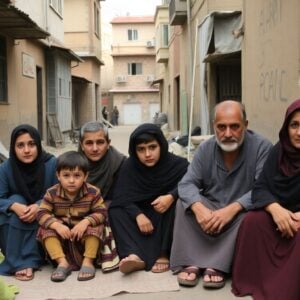
A powerful 6.3 magnitude earthquake struck northern Afghanistan in the early hours of Monday, with the epicentre located in Samangan province, about an hour from Mazar-e-Sharif. The tremors were felt as far away as Kabul and even parts of Pakistan, sending waves of panic through communities as families and children fled their homes in fear. The quake struck as winter temperatures began to drop, further compounding the hardships for those forced to seek shelter outdoors.
According to Save the Children, at least 20 people were killed and around 320 injured, with widespread destruction reported in the affected areas. The organization has dispatched a mobile health team to Samangan to support the emergency response, as rescue operations continue to assess the full extent of the damage.
This disaster comes just two months after another 6.0 magnitude earthquake devastated eastern Afghanistan, killing nearly 2,000 people and destroying more than 8,000 homes. Many of those affected remain displaced, living in tents and makeshift shelters as freezing weather approaches. The repeated earthquakes have left thousands of families vulnerable to cold-related illnesses, especially pneumonia and other respiratory infections among young children.
In addition to the loss of life and homes, recent earthquakes in Kunar and Nangarhar provinces have wiped out livelihoods in rural communities where families depend on livestock and agriculture. Nearly every family assessed by aid agencies reported losing their food supplies when their homes collapsed.
Samira Sayed Rahman, Programme Development and Advocacy Director for Save the Children in Afghanistan, emphasized the psychological toll the disaster is taking on children, who were once again forced to flee into the night in fear. She warned that as winter intensifies, families in both the east and north are facing uncertainty and worsening living conditions. Rahman called for urgent, flexible, and sustainable funding from donors and governments to enable swift emergency responses while supporting long-term community resilience.
Save the Children, which has been operational in Afghanistan since 1976, remains one of the key humanitarian organizations responding to the crisis. It continues to deliver health, nutrition, education, child protection, and livelihood support across 20 provinces, including direct assistance and through local partners. The organization is providing critical services such as healthcare, clean water, hygiene kits, cash support, and childcare facilities for families affected by the ongoing series of devastating earthquakes.