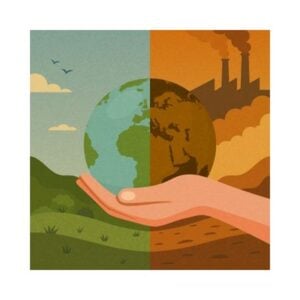
The Pan‑European Commission on Climate and Health has issued a Call to Action, warning that volatile energy prices, strained supply chains, and accelerating global temperature increases are exposing the fragility of fossil fuel dependency. Chaired by former Icelandic Prime Minister Katrín Jakobsdóttir and convened by WHO Regional Director for Europe Dr Hans Henri P. Kluge, the Commission brings together leaders from across the 53‑country WHO European Region. Its message is clear: climate change is not a distant threat but an immediate crisis affecting health, food, water, energy, and national security.
The Commission has delivered 17 recommendations across four domains: treating climate change as a health security threat, transforming health systems, scaling up local action, and reforming economic and financial systems. At the heart of these recommendations is a call to redirect funding away from fossil fuel subsidies toward renewable energy, public transport, sustainable diets, and climate‑resilient health systems. Jakobsdóttir emphasized that climate action is both a necessity and a high‑return investment for a more just and resilient society.
Governments are urged to bring climate and health onto national security agendas, recognizing climate change as a primary security risk already disrupting infrastructure, health systems, and food and water security. Air pollution from fossil fuels continues to kill hundreds of thousands annually, while energy systems remain vulnerable to price shocks. Accelerating the transition to clean energy is presented as both a health imperative and a route to greater energy security.
The Commission also calls on WHO to formally declare climate change a public health emergency of international concern, arguing that current frameworks are inadequate for a threat of this scale. Recommendations for health systems include mandatory training for professionals on climate and health, integrating climate indicators into performance assessments, and adopting climate‑friendly procurement standards to reduce emissions from supply chains.
Local, community‑based solutions are highlighted as essential, with proposals for accountability frameworks that foster knowledge exchange and “learning by doing.” Professor Sir Andrew Haines noted that adaptation and mitigation actions provide opportunities to protect and promote health, but must be implemented at scale.
Finally, the Commission challenges governments to rethink how progress is measured. GDP currently counts fossil fuel consumption as economic output while ignoring the health and economic costs of pollution and climate disasters. New monitoring systems are needed that place health, equity, and sustainability at the core of decision‑making. A Progress Measures Dashboard accompanies the recommendations, offering concrete indicators and accountability mechanisms for all countries.