• Skip to primary navigation
  • Skip to main content
  • Skip to primary sidebar

fundsforNGOs News

Grants and Resources for Sustainability

  • Subscribe for Free
  • Premium Support
  • Premium Login
  • Premium Sign up
  • Home
  • Funds for NGOs
    • Agriculture, Food and Nutrition
    • Animals and Wildlife
    • Arts and Culture
    • Children
    • Civil Society
    • Community Development
    • COVID
    • Democracy and Good Governance
    • Disability
    • Economic Development
    • Education
    • Employment and Labour
    • Environmental Conservation and Climate Change
    • Family Support
    • Healthcare
    • HIV and AIDS
    • Housing and Shelter
    • Humanitarian Relief
    • Human Rights
    • Human Service
    • Information Technology
    • LGBTQ
    • Livelihood Development
    • Media and Development
    • Narcotics, Drugs and Crime
    • Old Age Care
    • Peace and Conflict Resolution
    • Poverty Alleviation
    • Refugees, Migration and Asylum Seekers
    • Science and Technology
    • Sports and Development
    • Sustainable Development
    • Water, Sanitation and Hygiene (WASH)
    • Women and Gender
  • Funds for Companies
    • Accounts and Finance
    • Agriculture, Food and Nutrition
    • Artificial Intelligence
    • Education
    • Energy
    • Environment and Climate Change
    • Healthcare
    • Innovation
    • Manufacturing
    • Media
    • Research Activities
    • Startups and Early-Stage
    • Sustainable Development
    • Technology
    • Travel and Tourism
    • Women
    • Youth
  • Funds for Individuals
    • All Individuals
    • Artists
    • Disabled Persons
    • LGBTQ Persons
    • PhD Holders
    • Researchers
    • Scientists
    • Students
    • Women
    • Writers
    • Youths
  • Funds in Your Country
    • Funds in Australia
    • Funds in Bangladesh
    • Funds in Belgium
    • Funds in Canada
    • Funds in Switzerland
    • Funds in Cameroon
    • Funds in Germany
    • Funds in the United Kingdom
    • Funds in Ghana
    • Funds in India
    • Funds in Kenya
    • Funds in Lebanon
    • Funds in Malawi
    • Funds in Nigeria
    • Funds in the Netherlands
    • Funds in Tanzania
    • Funds in Uganda
    • Funds in the United States
    • Funds within the United States
      • Funds for US Nonprofits
      • Funds for US Individuals
      • Funds for US Businesses
      • Funds for US Institutions
    • Funds in South Africa
    • Funds in Zambia
    • Funds in Zimbabwe
  • Proposal Writing
    • How to write a Proposal
    • Sample Proposals
      • Agriculture
      • Business & Entrepreneurship
      • Children
      • Climate Change & Diversity
      • Community Development
      • Democracy and Good Governance
      • Disability
      • Disaster & Humanitarian Relief
      • Environment
      • Education
      • Healthcare
      • Housing & Shelter
      • Human Rights
      • Information Technology
      • Livelihood Development
      • Narcotics, Drugs & Crime
      • Nutrition & Food Security
      • Poverty Alleviation
      • Sustainable Develoment
      • Refugee & Asylum Seekers
      • Rural Development
      • Water, Sanitation and Hygiene (WASH)
      • Women and Gender
  • News
    • Q&A
  • Premium
    • Premium Log-in
    • Premium Webinars
    • Premium Support
  • Contact
    • Submit Your Grant
    • About us
    • FAQ
    • NGOs.AI
You are here: Home / cat / Protecting Agricultural Heritage in Europe and Central Asia

Protecting Agricultural Heritage in Europe and Central Asia

Dated: March 5, 2026

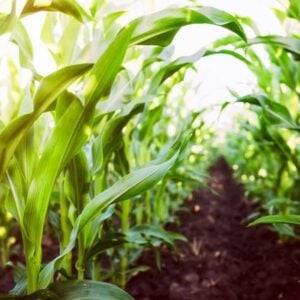
A growing movement across Europe and Central Asia is recognizing the importance of traditional agricultural landscapes not only for what they produce but also for how they are managed and the communities they sustain. From mountain terraces and pastoral grasslands to historic vineyards and salt-harvesting areas, these landscapes represent centuries of interaction between people and nature. A booklet published by the Food and Agriculture Organization of the United Nations highlights how many of these systems are now being recognized as Globally Important Agricultural Heritage Systems (GIAHS), emphasizing their role in building sustainable and resilient agrifood systems.

For generations, farmers, pastoralists and fishers in the region have adapted their agricultural practices to local climates, geography and natural resources. These systems are rich in biodiversity and rooted in knowledge passed down through communities. However, they are increasingly threatened by climate change, land degradation, biodiversity loss and rural depopulation. As younger generations move away from traditional farming and intensive agricultural models expand, valuable knowledge and practices risk disappearing.

Agricultural heritage systems represent dynamic landscapes shaped by the long-term relationship between people and nature. They integrate biodiversity conservation, resilient ecosystems, cultural traditions and local livelihoods while contributing to food security. These systems have demonstrated their ability to adapt to climate variability over centuries, helping reduce environmental risks through practices that maintain agricultural biodiversity. Their knowledge and methods can also guide national and global policies related to climate adaptation, biodiversity conservation and sustainable development.

Recognition as a GIAHS site helps traditional and family farming communities protect their heritage while navigating the pressures of globalization. It also encourages governments to incorporate agricultural heritage into development policies, supporting the sustainable use of biodiversity and strengthening rural communities. Across Europe and Central Asia, several agricultural landscapes have already gained this recognition, with more being identified as potential candidates.

The region has made notable progress in promoting agricultural heritage. A regional roadmap introduced for 2022–2025 has helped countries identify and protect heritage agricultural systems while promoting biodiversity conservation and local economic development. Currently, 15 agricultural systems in the region have been recognized as GIAHS sites, with additional landscapes showing strong potential for future designation.

A major milestone occurred in July 2025 when the first GIAHS site in Central Asia was designated in the Almosi Valley of Tajikistan. Developed over more than 3,000 years, the valley hosts a complex agropastoral system where farmers and herders practice diversified agriculture and seasonal livestock grazing. The cultivation of the Pink Taifi Grape Hisori, along with other traditional practices, supports local livelihoods and food self-sufficiency while preserving biodiversity and ecosystems. Community governance structures also play an important role in managing land and maintaining cultural traditions.

Across the region, several other landscapes demonstrate the potential for future recognition. Agricultural systems in Azerbaijan combine mountain and lowland farming practices that support biodiversity and soil conservation. In the Lower Dniester Valley of Moldova, traditional vineyards, orchards and walnut groves preserve indigenous crop varieties and long-standing agricultural techniques. In Montenegro, the ancient pastoral tradition of seasonal livestock movement helps maintain biodiversity and supports traditional dairy production. Meanwhile, flax farming in the Vitebsk region of Belarus continues to sustain the country’s historic linen industry through environmentally friendly cultivation methods.

These examples illustrate the diversity and richness of agricultural heritage across Europe and Central Asia. They demonstrate how traditional farming systems can combine environmental sustainability, cultural heritage and economic resilience while supporting rural livelihoods.

Looking ahead, efforts will focus on expanding the conservation of these systems through stronger regional cooperation, public–private partnerships, capacity building and improved market access for traditional products. Increasing public awareness and integrating agricultural heritage into national strategies for climate resilience and rural development will also play an important role in protecting these landscapes.

Agricultural heritage systems are not static remnants of the past but evolving systems that continue to adapt and thrive. They function as living laboratories where biodiversity, traditional knowledge, livelihoods and cultural identity intersect. Recognizing and investing in these systems offers an opportunity for Europe and Central Asia to strengthen sustainable agriculture while preserving the unique landscapes and traditions that define the region.

Related Posts

  • Strengthening Traditional Medicine: WHO Launches New Collaborating Centre
  • UNESCO Boosts Living Heritage for Sustainable Urban Development
  • Why Robotics Engineering is Key to Industry 4.0 Careers
  • Nigeria Advances Agri-Finance with UNDP-BOA MoU Signing
  • Morocco Allocates $33 Million to Support Flood-Affected Farms

Primary Sidebar

Latest News

Split image: a smokestack pollution scene on the left and sunny renewable energy with solar panels and wind turbines on the right, connected by arrows indicating transition to clean energy.

Bosnia and Herzegovina Advances System-Level Green Transition

Classical bank facade with tall white columns and a gold BANK sign above the entrance

African Development Bank Strengthens UK Partnership to Scale Investment and Financing in Africa

UNDP, Arab League Launch Disability Inclusion Action Plan

African Development Bank and Germany Collaborate on Modern Railway Expansion in Africa

Agribusiness Accelerators Driving Agricultural Innovation and Growth

Close-up of blue cylindrical lithium battery cells with a square Li tile showing the element symbol and atomic number 3

India-EU Launch €15.2M EV Battery Recycling Initiative

Women’s Solutions Reporting Award 2026 Honors Impactful Stories from the Global South

Yellow crime scene tape reading 'CRIME SCENE DO NOT ENTER' stretched across a scene, with a blurred background vehicle behind it.

Joint INGO Statement on Killing of Wesam Qaid

Sustainable Support Delivered in North Darfur Through Partnerships

PAHO and Suriname Reinforce Strategies to Eliminate Congenital Syphilis

EU and UNDP Launch €50 Million EU4Recovery Phase II Partnership for Ukraine

White paper cutouts of a girl and a boy stand on opposite colored backgrounds (pink left, blue right) with a vertical color split between them, suggesting gender division.

UN Releases Guidance on Ending Gender Stereotypes

UN Raises Alarm Over Indigenous Youth Detention in Australia

Older sister with a red headscarf cradles a smiling baby in pink/purple, against a wooden wall.

Celebrating African Mothers Across East and Southern Africa

Hand holding a red heart erases the word 'CONFLICT,' symbolizing ending conflict or choosing peace.

Ukraine Conflict Escalates as Civilian Casualties Surge in Early May

Security guard on an escalator, viewed from behind, wearing a white shirt with 'SECURITY' on the back.

UN Security Council Draft Resolution Calls on Iran to Halt Hormuz Attacks

Colorful plastic drinking straws stacked together in a vibrant bundle.

Rising Oil Prices May Speed Up the Shift Away from Single-Use Plastics

Namibia Accelerates Employment and Job Creation Goals

Heart-shaped word cloud about humanitarian aid with a hand drawing over words like give, giving, food, life, love, and work.

Gaza, Somalia and Ukraine Face Escalating Humanitarian Challenges, UN Says

Classical bank facade with tall white columns and a gold BANK sign above the entrance

EBRD Introduces Mosaic Programme with €1 Billion Risk Transfer Transaction

Bangladesh Boosts Support for UNDP Core Resources

Commercial airliner parked on the tarmac at sunset, warm orange sky.

Sofia Airport Aims to Become Europe’s First Five-Star Regional Airport by 2030

Government Moves to Create Self-Employment Worker Database

Classical bank facade with tall white columns and a gold BANK sign above the entrance

Jordan’s Aqaba Digital Hub Secures $14.1 Million EBRD Loan for Digital Infrastructure Growth

Close-up of a vintage typewriter typing the word 'Literature' on paper.

EBRD Reveals Finalists for 2026 Literature Prize in Translation

Rural village scene with brick houses and tiled roofs, laundry hanging on a line, and tall coconut palms in a tropical setting.

RAAMP Mission Highlights Jobs and Rural Infrastructure in Nigeria

Wooden letters spell 'SME' on a wooden surface, with handwritten notes 'Medium-Sized' above and 'Small & Enterprises' beside—illustrating the SME acronym.

Armenia SMEs to Benefit from €50 Million EBRD Risk-Sharing Agreement

PAHO Supports São Paulo in Strengthening Emergency Health Preparedness

Virginia Tourism Grants to Generate $6.5 Million in Marketing and Economic Growth

Ireland Praises ILO Support for Vulnerable Communities in Zambia

Local Food Systems in Kenya Support Farmers, Schools, and Child Nutrition

Cheniere Energy Shares Fall After Unexpected $3.5 Billion Q1 Loss

Cheniere Energy Shares Fall After Surprise $3.5 Billion Derivative Loss

Hand erasing the word 'VIOLENCE' crossed out on a chalkboard, signaling anti-violence.

Nepal Strengthens Worker Protections Against Violence and Harassment

€1.6 Million Investment Upgrades Dún Aonghasa Visitor Centre on Aran Islands

France and PAHO Join Forces to Advance Malaria Elimination Efforts

Diverse group forming a circle from above, hands joined in the center to symbolize teamwork and unity.

Ireland Strengthens Rural Communities with €10 Million Investment in Cavan Projects

Major Private-Sector Push to Transform School Meals in East Africa

Close-up of a hand writing on an insurance claim form clipped to a blue clipboard.

SEADRIF and WFP Launch Insurance for Vulnerable Communities in Laos

Wooden blocks form a green eco illustration with wind turbines, trees and a globe.

IFC Launches First-Ever Public Green Wonton Bond

Funds for NGOs
Funds for Companies
Funds for Media
Funds for Individuals
Sample Proposals

Contact us
Submit a Grant
Advertise, Guest Posting & Backlinks
Fight Fraud against NGOs
About us

Terms of Use
Third-Party Links & Ads
Disclaimers
Copyright Policy
General
Privacy Policy

Premium Sign in
Premium Sign up
Premium Customer Support
Premium Terms of Service

©FUNDSFORNGOS LLC.   fundsforngos.org, fundsforngos.ai, and fundsforngospremium.com domains and their subdomains are the property of FUNDSFORNGOS, LLC 1018, 1060 Broadway, Albany, New York, NY 12204, United States.   Unless otherwise specified, this website is not affiliated with the abovementioned organizations. The material provided here is solely for informational purposes and without any warranty. Visitors are advised to use it at their discretion. Read the full disclaimer here. Privacy Policy. Cookie Policy.