• Skip to primary navigation
  • Skip to main content
  • Skip to primary sidebar

fundsforNGOs News

Grants and Resources for Sustainability

  • Subscribe for Free
  • Premium Support
  • Premium Login
  • Premium Sign up
  • Home
  • Funds for NGOs
    • Agriculture, Food and Nutrition
    • Animals and Wildlife
    • Arts and Culture
    • Children
    • Civil Society
    • Community Development
    • COVID
    • Democracy and Good Governance
    • Disability
    • Economic Development
    • Education
    • Employment and Labour
    • Environmental Conservation and Climate Change
    • Family Support
    • Healthcare
    • HIV and AIDS
    • Housing and Shelter
    • Humanitarian Relief
    • Human Rights
    • Human Service
    • Information Technology
    • LGBTQ
    • Livelihood Development
    • Media and Development
    • Narcotics, Drugs and Crime
    • Old Age Care
    • Peace and Conflict Resolution
    • Poverty Alleviation
    • Refugees, Migration and Asylum Seekers
    • Science and Technology
    • Sports and Development
    • Sustainable Development
    • Water, Sanitation and Hygiene (WASH)
    • Women and Gender
  • Funds for Companies
    • Accounts and Finance
    • Agriculture, Food and Nutrition
    • Artificial Intelligence
    • Education
    • Energy
    • Environment and Climate Change
    • Healthcare
    • Innovation
    • Manufacturing
    • Media
    • Research Activities
    • Startups and Early-Stage
    • Sustainable Development
    • Technology
    • Travel and Tourism
    • Women
    • Youth
  • Funds for Individuals
    • All Individuals
    • Artists
    • Disabled Persons
    • LGBTQ Persons
    • PhD Holders
    • Researchers
    • Scientists
    • Students
    • Women
    • Writers
    • Youths
  • Funds in Your Country
    • Funds in Australia
    • Funds in Bangladesh
    • Funds in Belgium
    • Funds in Canada
    • Funds in Switzerland
    • Funds in Cameroon
    • Funds in Germany
    • Funds in the United Kingdom
    • Funds in Ghana
    • Funds in India
    • Funds in Kenya
    • Funds in Lebanon
    • Funds in Malawi
    • Funds in Nigeria
    • Funds in the Netherlands
    • Funds in Tanzania
    • Funds in Uganda
    • Funds in the United States
    • Funds within the United States
      • Funds for US Nonprofits
      • Funds for US Individuals
      • Funds for US Businesses
      • Funds for US Institutions
    • Funds in South Africa
    • Funds in Zambia
    • Funds in Zimbabwe
  • Proposal Writing
    • How to write a Proposal
    • Sample Proposals
      • Agriculture
      • Business & Entrepreneurship
      • Children
      • Climate Change & Diversity
      • Community Development
      • Democracy and Good Governance
      • Disability
      • Disaster & Humanitarian Relief
      • Environment
      • Education
      • Healthcare
      • Housing & Shelter
      • Human Rights
      • Information Technology
      • Livelihood Development
      • Narcotics, Drugs & Crime
      • Nutrition & Food Security
      • Poverty Alleviation
      • Sustainable Develoment
      • Refugee & Asylum Seekers
      • Rural Development
      • Water, Sanitation and Hygiene (WASH)
      • Women and Gender
  • News
    • Q&A
  • Premium
    • Premium Log-in
    • Premium Webinars
    • Premium Support
  • Contact
    • Submit Your Grant
    • About us
    • FAQ
    • NGOs.AI
You are here: Home / cat / Why Ghana’s Fight Against Illegal Mining Is Failing

Why Ghana’s Fight Against Illegal Mining Is Failing

Dated: August 22, 2025

Early in his tenure, in 2017, then Ghanaian President Nana Akufo-Addo declared a moratorium on all small-scale gold mining to combat severe environmental degradation caused by illegal mining, known locally as “galamsey.” He established an inter-ministerial committee on illegal mining and launched a joint military-police taskforce, Operation Vanguard, to enforce the ban. Initially intended to last six months, the moratorium continued for 20 months until December 2018, when it was lifted for newly registered miners. Despite these measures, illegal mining continued unabated, with official records showing that gold production from small-scale mining actually increased during the period of the ban.

To understand why the government’s campaign failed, political scientists conducted field visits to mining communities in Ghana’s western and central regions. They interviewed miners, local residents, and affected individuals, and reviewed official reports, scientific studies, and media coverage. Their findings indicate that the involvement of government officials and business elites in illegal mining—what they term “democracy capture”—was central to the failure of the interventions. Ghana’s democratic institutions, despite being highly regarded electorally, had been co-opted by political and economic elites for personal enrichment, undermining state enforcement efforts.

Corruption scandals highlighted the depth of the problem. By mid-2023, investigations revealed that military-seized mining machinery had gone missing, and some military personnel assigned to protect forests were implicated in protection rackets. In April 2023, a leaked report by Kwabena Frimpong-Boateng, former chair of the inter-ministerial committee, detailed involvement of high-level government and ruling party officials in illegal mining activities during the ban. The report, submitted in 2021, was initially suppressed and attempts were made to discredit its findings. The continued high levels of gold production—1.5 million ounces in 2017 and nearly 2 million ounces in 2018, when the moratorium was in place—demonstrate that enforcement was ineffective.

The study identifies “democracy capture” as a systematic appropriation of state benefits by political and business elites for personal enrichment. This phenomenon goes beyond isolated acts of corruption, involving coordinated efforts by party-affiliated elites to protect illicit operations while extracting financial gains. The researchers argue that democracy capture in Ghana extends beyond the Akufo-Addo administration to encompass both major political parties, undermining governance and accountability.

The mechanisms of democracy capture include control of state operations by the presidency and ruling party officials, party influence over key regulatory agencies like the Forestry Commission, protection of elite members from prosecution, and complicity of military and law enforcement personnel in illicit activities. The case of Charles Bissue, a senior inter-ministerial committee official caught in an undercover investigation yet still unresolved after six years, exemplifies these dynamics.

The consequences of democracy capture are profound. Elites can act with impunity, socio-economic development is sidelined, wealth is concentrated at the top, and inequalities intensify. Combating this entrenched system requires active civil society engagement, robust media exposure, and a strengthened legal and judicial framework committed to prosecuting offenders. While the current Attorney General has ordered an investigation into the leaked report, meaningful action remains uncertain. The study underscores that without addressing the structural capture of Ghana’s democratic institutions, efforts to curb illegal mining and achieve equitable development are likely to continue failing.

Related Posts

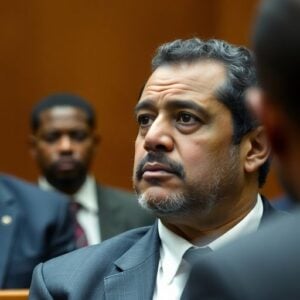
  • Chad opposition leader Succès Masra in a courtroom.
    Chad's Opposition Leader Succès Masra Sentenced to 20 Years Amidst Political Crackdown
  • U.S. Education Department Bars Federal Funding for Political Activism on College Campuses
  • African map highlighting electricity access and modern energy solutions.
    Empowering Africa: The Mission to Connect 300 Million to Electricity by 2030
  • Diverse students participating in community service at Villanova.
    Villanova University Champions Social Change Through Opus Prize Foundation
  • Diverse group collaborating in a creative workspace.
    Unlocking Opportunities: The Cultural Innovation Fund Application Process

Primary Sidebar

Latest News

Africa’s Clean Cooking Gap Leaves Nearly 1 Billion Without Access

Australians for Mental Health Welcomes $517 Million Disability Support Program

Malawi Flood Crisis: Heavy Rains Displace Tens of Thousands

Falconer Unveils Fresh Aid for Displaced Communities in Lebanon (EN/AR)

Sudan: NGOs Urge Action as Conflict Impacts Worsen Regionally

Lower-Income Countries Set Record Investment in Immunisation Programmes

UAE Plans Thousands of Jobs in Non-Profit Sector with Dh100M Fund

Funding Boost for Hundreds of Grassroots Groups to Unite Communities

EU Supports Ukrainian Civil Society Project to Strengthen Justice Reforms

UK and IFC Partner to Boost Agribusiness and Job Creation in the DRC

IFC, Santander Brazil Join Forces to Expand Eco Invest Sustainable Financing in Brazil

Africa Vaccine Manufacturing Boost: IFC, EIB Group and EU Support Biovac Expansion

FAO Hosts Indigenous Consultation in Suriname for REDD+ Climate Finance Readiness

FAO Urges Faster Action to Close Global Water and Sanitation Gaps

Food Value Chain Losses: Where Food Is Wasted and How to Save It

Senegal Tackles Food Waste with FAO-Supported Touba Project

FAO Report Highlights Women’s Role in Africa’s Agrifood Systems

Senegal: FAO Boosts Efforts to Cut Post-Harvest Losses

Ghana Boosts Vaccine Manufacturing Ambition with Clinical Trials

World Health Day 2026: How Nigeria Focused on People and Evidence

Amnesty Calls on Maldives to Scrap Death Penalty Bill

Amnesty Warns India’s Digital Media Rules May Enable Abusive Powers

Over 100 NGOs Dissolved in Burkina Faso Crackdown on Civil Society

Ontario Invests $57M in Indigenous Postsecondary Institutes

Her Voice Fund Evaluation Launched by Womankind

Learnings from a Trilateral Climate-Smart Agriculture Programme

New Funding Announced for Displaced Communities in Lebanon

Climate Change and Work: ILO Urges Stronger Social Protection

Japan SMEs Gain New ILO Business and Human Rights Case Studies

WFP Launches HungerMap Live for Real-Time Hunger Intelligence

KSrelief and WFP Provide Nutrition Aid to Families in Somalia

Bhutan School Nutrition Programme Launched by KOICA and WFP

Japan Donates $2 Million for Disaster Relief in Pakistan

Africa’s Growth at Risk as Middle East Crisis May Reduce GDP by 0.2%

Key Lessons from US Inflation Reduction Act for Future Clean Energy Tax Policy

EU and Partners Pledge €811 Million to Address Sudan Humanitarian Crisis

UK Awards £2 Million to Community Groups to Strengthen Unity Across England

Sudan Food Crisis 2026: Key Facts on Hunger, Agriculture Collapse, and Urgent Aid Needs

Measles Vaccines Save Nearly 20 Million Lives in Africa Since 2000

IFAD Joins World Bank’s Water Forward Initiative to Boost Water Security for 1 Billion People

Funds for NGOs
Funds for Companies
Funds for Media
Funds for Individuals
Sample Proposals

Contact us
Submit a Grant
Advertise, Guest Posting & Backlinks
Fight Fraud against NGOs
About us

Terms of Use
Third-Party Links & Ads
Disclaimers
Copyright Policy
General
Privacy Policy

Premium Sign in
Premium Sign up
Premium Customer Support
Premium Terms of Service

©FUNDSFORNGOS LLC.   fundsforngos.org, fundsforngos.ai, and fundsforngospremium.com domains and their subdomains are the property of FUNDSFORNGOS, LLC 1018, 1060 Broadway, Albany, New York, NY 12204, United States.   Unless otherwise specified, this website is not affiliated with the abovementioned organizations. The material provided here is solely for informational purposes and without any warranty. Visitors are advised to use it at their discretion. Read the full disclaimer here. Privacy Policy. Cookie Policy.