
The head of UN Peacekeeping, Jean-Pierre Lacroix, addressed the UN Security Council, highlighting the critical role of UN Police (UNPOL) in peace operations at a time of declining financial resources and increasing operational pressures. He emphasized that UNPOL officers serve with professionalism and courage in challenging environments marked by insecurity, political volatility, and complex risks…. [Read More]
UNFPA Highlights Community Action and Fatwas Against FGM in Africa

Olivia Albert, a 19-year-old from Tanzania, experienced female genital mutilation (FGM) at age 14, a practice once considered a normal rite of passage in her community. Speaking to UNFPA, she emphasized the lasting physical and emotional pain she endured and highlighted how survivor-led initiatives are helping shift attitudes. By participating in community dialogues, she now… [Read More]
Ireland Collects €8.5B in January Taxes Amid €9.7B Spending
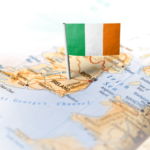
In January 2026, Ireland collected €8.5 billion in tax revenue, representing a 0.6% increase compared to the same month in 2025. Income tax receipts reached €3.0 billion, up €30 million (1.0%), while VAT collections rose by €0.1 billion (3.3%) to €4.2 billion, reflecting strong post-Christmas consumer activity. Excise duties declined by €37 million (6.9%) to… [Read More]
New Local Partnerships to Boost Public Safety Nationwide

Minister for Justice, Home Affairs and Migration Jim O’Callaghan has announced significant progress in the rollout of Local Community Safety Partnerships (LCSPs) across Ireland. Members have been appointed to 34 Safety Partnerships, with 31 having held their inaugural meetings and elected their Chair and Vice Chair. The remaining partnerships are expected to be established by… [Read More]
Ireland Publishes Draft National Drugs Strategy 2026–2029

The Minister for Public Health, Wellbeing and the National Drugs Strategy, Jennifer Murnane O’Connor TD, has published the draft National Drugs Strategy for 2026-2029. This strategy presents an equitable and evidence-based response to drug use, reflecting the government’s commitment to reducing harms through a health-led approach. The draft has been informed by an independent evaluation… [Read More]
Ireland Activates National Emergency Group Amid Flood Risk
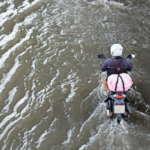
Ireland’s National Emergency Co-ordination Group (NECG) met on Thursday to continue coordinating the national response to ongoing and forecast flooding, as severe weather conditions raise the risk of further impacts across multiple counties. The group has warned that flooding is likely today and tomorrow, with orange rain warnings in place for Dublin, Louth, Waterford and… [Read More]
FAO Launches Online Training on Land Consolidation

The Food and Agriculture Organization of the United Nations (FAO) has launched a free online learning course aimed at improving understanding and application of land consolidation and land banking, two key land policy instruments that support sustainable and efficient farming. The course was introduced during a webinar in Budapest and developed by the FAO Regional… [Read More]
WHO/Europe Shares Lessons on Affordable Mental Health Care

Mental health care needs are rising across the WHO European Region, placing growing strain on health systems already affected by long waiting times, workforce shortages and gaps in coverage. To help countries improve affordable access to mental health services, WHO/Europe has published four new policy briefs that examine how health financing reforms can reduce barriers… [Read More]
UNESCO Boosts Regional Tsunami Early Warning Capacity

The South China Sea Tsunami Advisory Center completed its 2025 short-term secondment programme, a two-month initiative aimed at strengthening regional cooperation on tsunami early warning and response. Organized by the Intergovernmental Oceanographic Commission of UNESCO and hosted by China’s National Marine Environmental Forecasting Center in Beijing, the programme brought together tsunami warning specialists from Malaysia,… [Read More]
How Renewable Energy Can Drive East Asia’s Economic Growth

East Asia stands at a turning point in its energy and economic development. After decades of coal-driven industrial growth, the region now faces rising emissions, energy security risks and growing pressure to remain competitive in a low-carbon global economy. A new World Bank Group report, Green Horizon: East Asia’s Sustainable Energy Future, finds that the… [Read More]
GEF Funds $9.45M Climate-Resilient Water Project in Zambezi Basin
The Global Environment Facility has approved a $9.45 million grant to support climate-resilient water governance in the Zambezi River Basin, a critical transboundary water system in Southern Africa. The regional project, led by the African Development Bank Group, aims to strengthen ecosystem protection, climate adaptation and cooperative water management across one of Africa’s most important… [Read More]
How Bangladesh Is Building a Youth Voice Mechanism

Young people across Bangladesh are eager to contribute to decisions that affect their lives, yet many—particularly those from marginalized communities—lack safe, trusted and effective channels to be heard. To address this gap, UNESCO has led a nationwide initiative to strengthen youth participation and embed it more systematically into public decision-making. Working closely with the Ministry… [Read More]
Key Lessons from the AWESOME Programme’s Feminist Work

The Advancing Women’s Engagement: Strengthening Opportunities to Mobilize for Equality (AWESOME) Programme concluded in December 2025 after five years of feminist consortium work across Ethiopia, Kenya and Uganda. Funded by the Ministry of Foreign Affairs of the Netherlands, the programme brought together women’s rights organisations and disability rights organisations to strengthen feminist organising, advance women’s… [Read More]
Finland and Åland Boost Nordic Crisis Readiness

Finland and Åland jointly led the Nordic Council of Ministers in 2025, with a strong focus on children and youth, and on strengthening societal security across the Nordic region. The Co-Presidency advanced the shared Nordic vision of becoming the world’s most sustainable and integrated region by 2030 through close coordination among governments, ministries and regional… [Read More]
ILO Pilot Builds Job-Ready Skills in Bangladesh
Bangladesh continues to face a persistent mismatch between technical education outcomes and labour market needs, limiting productivity and employment opportunities for diploma graduates. To address this challenge, a re-modelled industrial attachment pilot supported by the International Labour Organization has demonstrated how stronger collaboration between industries and polytechnic institutions can significantly improve workplace readiness and employability… [Read More]
How Rapid CERF Support Helped Contain Cholera in Amhara, Ethiopia
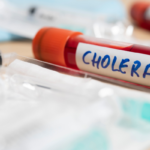
Ethiopia’s Amhara Region has faced persistent public health pressures caused by disease outbreaks, displacement linked to conflict, and limited access to clean water and sanitation. Cholera has been among the most serious threats, spreading rapidly in settings where hygiene awareness and surveillance capacity are weak. In response, support from the United Nations Central Emergency Response… [Read More]
Why Effective Public Finance Reform Still Warrants Optimism

Public finance systems worldwide are under growing strain as governments confront climate shocks, rising inequality, and increasing demand for public services amid shrinking fiscal space and rising debt. While reform fatigue is widespread, recent experience shows that effective public finance reform is still possible—when it focuses less on new technical tools and more on how… [Read More]
GSS Invites Sponsors to Shape Africa’s Development at iCAD 2026

The Ghana Scholarly Society (GSS) has opened a call for sponsors for the International Conference on African Development (iCAD) 2026, scheduled for 17–19 June 2026. The event will bring together policymakers, researchers, financiers, and industry leaders to examine how finance can drive Africa’s green industrialisation and long-term development. Hosted by Anglia Ruskin University, iCAD 2026… [Read More]
SEC Caps Foreign Securities Exposure for Investment Schemes
Ghana’s Securities and Exchange Commission (SEC) has issued a new directive limiting the level of foreign securities exposure permitted for Collective Investment Schemes (CIS), citing the need to protect investors and safeguard financial market stability. Under the directive, CIS licensed to invest domestically may allocate no more than 20% of their assets to foreign securities…. [Read More]
Ghana Accelerates Irrigation for Rice and Food Security

Ghana is scaling up irrigation infrastructure to strengthen food security, increase rice production, and reduce its reliance on food imports, government and World Bank officials have said. The initiative was highlighted during a joint field visit by Finance Minister Cassiel Ato Forson and World Bank Division Director Robert Taliercio to the Kpong Irrigation Scheme, part… [Read More]
World Bank: Ghana Leads Region in Financial Readiness Despite Gaps

Ghana has emerged as a regional frontrunner in financial services readiness, but operational inefficiencies in public services, trade, and market competition could constrain its growth and ability to attract investment, according to the World Bank’s Business Ready (B-READY) 2025 report. The findings were presented at a dissemination event in Accra, where policymakers, private sector representatives,… [Read More]
How Türkiye’s Forests Help France Adapt to Climate Change

A unique forestry partnership between Türkiye and France is providing valuable insights into how European forests may adapt to climate change in the decades ahead. Supported by Agence Française de Développement (AFD) between 2019 and 2022, the programme brought together Turkish and French forestry institutions to strengthen sustainable forest management, protect biodiversity and build resilience… [Read More]
UK Export Credit Support Delivers £23B Economic Impact
A new study by Oxford Economics has highlighted the significant contribution of UK Export Finance (UKEF) to the national economy, revealing that exports backed by the government’s export credit agency added £23 billion to UK economic output over the past five years. The research shows that UKEF-supported exports sustained an average of 66,000 full-time equivalent… [Read More]


