• Skip to primary navigation
  • Skip to main content
  • Skip to primary sidebar

fundsforNGOs News

Grants and Resources for Sustainability

  • Subscribe for Free
  • Premium Support
  • Premium Sign in
  • Premium Sign up
  • Home
  • Grants & Funding
    • Funds for NGOs
      • Agriculture, Food & Nutrition
      • Animals and Wildlife
      • Arts & Culture
      • Children
      • Civil Society
      • Community Development
      • Democracy and Good Governance
      • Economic Development
      • Education
      • Disability
      • Employment and Labor
      • Environment
      • Family Support
      • Healthcare
      • HIV and AIDS
      • Housing & Shelter
      • Humanitarian Relief
      • Human Rights
      • Human Service
      • Information Technology
      • Livelihood Development
      • LGBTQIA2S+
      • Media and Development
      • Narcotics, Drugs and Crime
      • Old Age Care
      • Peace & Conflict Resolution
      • Poverty Alleviation
      • Refugees, Migration & Asylum Seekers
      • Science & Technology
      • Sports & Development
      • Sustainable Development
      • Water, Sanitation & Hygiene (WASH)
      • Women & Gender
      • Youth & Adolescents
    • Donors & Funders
    • Funds for Companies
      • Accounts & Finance
      • Agriculture, Food and Nutrition
      • AI
      • Education
      • Energy
      • Environment
      • Healthcare
      • Innovation
      • Manufacturing
      • Media
      • Research
      • Startups & Early-Stage
      • Sustainable Development
      • Technology
      • Travel & Tourism
      • Women
      • Youth
    • Funds for Individuals
  • Funds in Your Country
  • Proposal Writing
    • Sample Proposals
    • Agriculture Proposals
    • Business Proposals
    • Child Development Proposals
    • Climate Change & Biodiversity Proposals
    • Community Development Proposals
    • Democracy & Good Governance Proposals
    • Disability Proposals
    • Disaster & Humanitarian Relief Proposals
    • Environment Proposals
    • Education Proposals
    • Healthcare Proposals
    • Housing & Shelter Proposals
    • Human Rights Proposals
    • Livelihood Development Proposals
    • Nutrition & Food Security Proposals
    • Poverty Alleviation Proposals
    • Refugees, Migration & Asylum-Seekers’ Proposals
    • Rural Development Proposals
    • Sustainable Development Proposals
    • Water, Sanitation & Hygiene (WASH) Proposals
    • Women & Gender Proposals
    • Youth Development Proposals
  • Premium
    • Premium Sign-in
    • Premium Grants
    • Premium eBooks
    • Premium Webinars
    • Premium Videos
    • Premium Courses
    • Premium Support
  • NGOs.AI
  • Contact
    • Submit Your Opportunity
    • Learning Lab
    • Q&A
    • News
    • About us
You are here: Home / cat / Closing Africa’s Agriculture Financing Gap: Billion-Dollar Solutions

Closing Africa’s Agriculture Financing Gap: Billion-Dollar Solutions

Dated: March 12, 2026

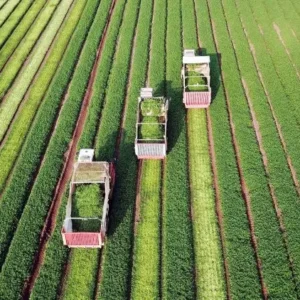
Agriculture remains the backbone of many African economies, employing roughly half of the continent’s workforce, even as urbanization and the services sector grow rapidly. Despite its economic importance, agriculture consistently receives less than 5 percent of commercial lending, creating an annual financing gap estimated between $75–200 billion. Traditional donor funding has declined, and African governments face budget constraints due to rising debt service, highlighting the urgent need for new sources of domestic capital and scalable financing mechanisms.

Closing this gap requires market-based solutions capable of mobilizing billions rather than small-scale productivity projects. One promising approach is debt-for-food security swaps, which can reduce debt service costs while generating substantial savings for agricultural investment. Kenya’s planned $1 billion transaction with the U.S. International Development Finance Corporation exemplifies the potential of such mechanisms when combined with African guarantees and commercial implementation models.

Securitization of agricultural and SME loan portfolios offers another avenue for unlocking capital. By pooling existing loans, banks and microfinance institutions can free up balance sheets for new lending and attract institutional investors. Successful examples in Côte d’Ivoire, Benin, and pay-go solar financing illustrate how this strategy can generate hundreds of millions in new financing for agriculture-related interventions.

Commodity-linked bonds and syndicated loans also present significant opportunities, leveraging Africa’s steady export flows of commodities like cocoa, coffee, and cashews to support cooperatives and value-added processing investments. When transparently structured, these instruments can facilitate long-term investments in productive, climate-resilient crops.

Sovereign wealth funds are emerging as major anchor investors in African agriculture. With over $100 billion in assets under management, funds such as Ethiopia Investment Holdings can co-invest with global partners in projects like fertilizer manufacturing, agro-processing, and large-scale irrigation, scaling investment in essential agricultural infrastructure.

Guarantees serve as high-impact capital multipliers, enabling financial institutions to invest in riskier segments of the agriculture value chain. Programs like Nigeria’s NIRSAL and donor initiatives such as ACELI and the AGRI3 Fund demonstrate how guarantees can mobilize hundreds of millions in additional capital, enhancing both portfolio-level and individual project investments.

Finally, fund-of-funds structures can attract institutional investment by pooling multiple agriculture-focused funds and managing risks across geographies and lenders. Platforms like the Financing for Agricultural SMEs in Africa and Mastercard Foundation vehicles reduce foreign exchange and credit risks, making it possible for both international investors and local institutional capital to enter the sector.

Incremental solutions or traditional donor approaches alone cannot close Africa’s agriculture financing gap. Scalable, market-driven mechanisms—including debt swaps, securitization, commodity-linked finance, sovereign wealth fund investment, guarantees, and fund-of-funds structures—are critical to mobilizing billions in capital and supporting the livelihoods of hundreds of millions of Africans dependent on agriculture.

Related Posts

  • EIF Backs DaVinci Growth Capital Fund with €20M for Italian Innovation
  • African Big Ocean States Advance Agrifood Systems Transformation
  • IFC and Fasanara Partner to Expand Finance for MSMEs in Emerging Economies
  • Mozambique, AfDB and UNDP Launch Cabo Delgado Recovery Initiative
  • Government of Canada Boosts Youth Jobs in Agriculture

Primary Sidebar

Latest News

AI Robotics Startup Physical Intelligence Targets $1 Billion Funding Round at $11 Billion Valuation

Western Australia Offers More Than $142,000 in Grants to Support Youth Week WA 2027 Events

UNDP and European Union Launch €15 Million Project to Support Debris Management and Recovery Efforts in Gaza

Three women stand together on a sunny park path, smiling at the camera, one holding papers.

UNDP Launches Women’s Leadership Academy Programme in Morocco to Advance Digital-Era Leadership

Four young women sit on outdoor steps, collaborating with a laptop and a tablet.

EBRD Launches SME Support Programme to Boost Private Sector Growth in Senegal

PAHO and OAS Launch New School Guidelines to Promote Healthy Eating and Physical Activity

African Economic Conference Launches Chief Economists Network to Strengthen Policy Leadership

African Economic Conference 2026 Opens in Abidjan to Shape Africa’s Role in a Multipolar World

Europe Launches €80 Billion Investment Alliance to Scale Up Tech Leaders

World Bank Approves US$77.2 Million Project to Boost Tourism and Jobs in Peru

EIB Completes €290 Million Financing Package for Lithuania’s Rūdninkai Military Base

Europe Launches €80 Billion Investment Alliance to Scale Up Technology Leaders

€100 Million European Investment Supports Future-Proof Drinking Water Network in North Holland

High Recruitment Costs Continue to Burden Nepali Migrant Workers, New Survey Finds

New Financing Initiative Helps Bangladesh Return Migrants Build Businesses

Female healthcare worker in a white coat sits at a table with medical supplies; another clinician in blue scrubs and a scrub cap leans over to review papers outdoors at a community health event, with bystanders in the background.

Aid Cuts Could Accelerate Shift Toward Local Civil Society Funding

Linux Foundation to Launch Open Health Stack Software Foundation to Advance Digital Health Innovation

Century-Old BCG Vaccine May Offer New Clues in Alzheimer’s Disease Research

The Fight Against Ebola Is a Logistics Challenge as Much as a Medical One

EBRD Launches First Trade Finance Facility in Senegal with €15 Million Support for Ecobank

EBRD and EU Support Women-Led Businesses in the West Bank with €2 Million Loan to Palestine Investment Bank

EBRD and Central Bank of Jordan Strengthen Financial Crime Compliance and Risk Management

EBRD, GCF and EU Support Jordan’s Green Transition with $20 Million Green Finance Facility

EBRD Expands Green and Inclusive Finance Support in Jordan with $25 Million Loan to Bank al Etihad

EBRD Invests $100 Million in Jordan’s First Blue Bond to Support Sustainable Water Projects

EBRD Provides €30 Million Loan to Improve Road Safety and Digital Transport Systems in Montenegro

EBRD Makes First Investment in Senegal to Expand Digital Connectivity Across Africa

Uzbekistan’s Strong Wheat Harvest Highlights Progress Toward Climate-Resilient Agriculture

UNDP Helps 12 Albanian Olive Oil Producers Become Export-Ready Through Business Support Programme

ILO and European Commission Renew Partnership to Advance Social Justice and Quality Jobs

Jordan and ILO Partner to Strengthen Decent Work in the Garment Sector

BISP, WFP, WHO and UNICEF Extend Partnership to Protect 3.3 Million Women and Children from Malnutrition in Pakistan

Egypt Launches Child Employment and Training Code of Conduct for Safer Industrial Practices

WFP Launches South Sudan’s First Drought Anticipatory Action Plan to Protect 65,000 People

Guyana Strengthens Adolescent Health Services Through National Training Initiative

BISP, WFP, WHO and UNICEF Extend Partnership to Protect 3.3 Million Women and Children from Malnutrition

UNDP and Adaptation Fund Launch $5 Million Climate Adaptation Initiative in Western Balkans

Bosnia and Herzegovina Launches $5.8 Million Climate and Biodiversity Initiative

Libya Explores Innovative Financing Solutions to Support Sustainable Development Goals

Green overhead road sign reading 'El Niño Ahead?' against a cloudy sky.

Super El Niño Threatens Global Climate Risks as Africa Offers Lessons in Resilience

Funds for NGOs
Funds for Companies
Funds for Media
Funds for Individuals
Sample Proposals

Contact us
Submit a Grant
Advertise, Guest Posting & Backlinks
Fight Fraud against NGOs
About us

Terms of Use
Third-Party Links & Ads
Disclaimers
Copyright Policy
General
Privacy Policy

Premium Sign in
Premium Sign up
Premium Customer Support
Premium Terms of Service

©FUNDSFORNGOS LLC.   fundsforngos.org, fundsforngos.ai, and fundsforngospremium.com domains and their subdomains are the property of FUNDSFORNGOS, LLC 1018, 1060 Broadway, Albany, New York, NY 12204, United States.   Unless otherwise specified, this website is not affiliated with the abovementioned organizations. The material provided here is solely for informational purposes and without any warranty. Visitors are advised to use it at their discretion. Read the full disclaimer here. Privacy Policy. Cookie Policy.