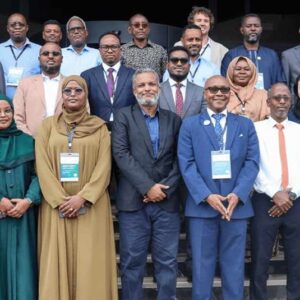
African policymakers, development institutions, and leading economists have launched the African Chief Economists Network (ACE-Network), a continent-wide platform aimed at strengthening evidence-based policymaking and helping African countries develop coordinated responses to complex global economic challenges.
The launch was one of the key outcomes of the African Economic Conference 2026, held in Abidjan, Côte d’Ivoire, under the theme “Strengthening Africa’s Geopolitical Agency and Trade Resilience in a Multipolar World.” The conference brought together government officials, economists, researchers, development experts, private-sector representatives, and financial institutions to discuss strategies for improving Africa’s role in the global economy.
The new network comes at a time when African economies are facing growing challenges, including geopolitical tensions, trade disruptions, climate-related risks, rising debt pressures, and changes in the global financial system. The ACE-Network aims to strengthen cooperation among Africa’s leading economic thinkers by promoting research exchange, policy coordination, early risk identification, and practical recommendations for governments.
The platform will bring together chief economists from African development finance institutions, multilateral organizations, central banks, government advisory bodies, research institutions, universities, and the private sector. Rather than creating a new formal institution, the network will operate as a collaborative platform with annual meetings alongside the African Economic Conference, quarterly virtual discussions, and rapid-response sessions during major economic challenges.
African Development Bank Group Chief Economist and Vice-President for Economic Governance and Knowledge Management, Prof Kevin Urama, emphasized the importance of strengthening Africa’s knowledge systems to help the continent influence global economic and financial reforms. He highlighted the need for greater investment in research, data systems, and knowledge institutions to support better decision-making.
The ACE-Network will focus on improving Africa’s knowledge sovereignty, increasing research capacity, reducing duplication among institutions, strengthening economic forecasting, and ensuring that policy decisions are based on analysis that reflects African realities. The initiative also aims to bridge the gap between academic research and government action.
UNDP Regional Bureau for Africa Chief Economist Dr Raymond Gilpin described the network as a platform that can help transform economic research into practical solutions. He said it could support efforts to mobilize domestic resources, strengthen regional trade through the African Continental Free Trade Area, address climate and fiscal challenges, and promote sustainable development.
The launch reflects growing recognition that African countries need stronger cooperation and shared expertise to navigate an increasingly interconnected global economy. Experts noted that no country can address today’s economic challenges alone and that coordinated policy responses will be essential for improving resilience and achieving inclusive growth.
The conference also explored Africa’s opportunities, including its young population, renewable energy potential, critical mineral resources, expanding digital economy, and the world’s largest free trade area. Participants highlighted that stronger institutions, improved policy coordination, and high-quality economic analysis will be crucial to turning these advantages into long-term economic transformation.
The African Chief Economists Network is expected to become an important platform for strengthening Africa’s policy leadership and supporting the continent’s efforts to play a more influential role in global economic decision-making.