• Skip to primary navigation
  • Skip to main content
  • Skip to primary sidebar

fundsforNGOs News

Grants and Resources for Sustainability

  • Subscribe for Free
  • Premium Support
  • Premium Login
  • Premium Sign up
  • Home
  • Funds for NGOs
    • Agriculture, Food and Nutrition
    • Animals and Wildlife
    • Arts and Culture
    • Children
    • Civil Society
    • Community Development
    • COVID
    • Democracy and Good Governance
    • Disability
    • Economic Development
    • Education
    • Employment and Labour
    • Environmental Conservation and Climate Change
    • Family Support
    • Healthcare
    • HIV and AIDS
    • Housing and Shelter
    • Humanitarian Relief
    • Human Rights
    • Human Service
    • Information Technology
    • LGBTQ
    • Livelihood Development
    • Media and Development
    • Narcotics, Drugs and Crime
    • Old Age Care
    • Peace and Conflict Resolution
    • Poverty Alleviation
    • Refugees, Migration and Asylum Seekers
    • Science and Technology
    • Sports and Development
    • Sustainable Development
    • Water, Sanitation and Hygiene (WASH)
    • Women and Gender
  • Funds for Companies
    • Accounts and Finance
    • Agriculture, Food and Nutrition
    • Artificial Intelligence
    • Education
    • Energy
    • Environment and Climate Change
    • Healthcare
    • Innovation
    • Manufacturing
    • Media
    • Research Activities
    • Startups and Early-Stage
    • Sustainable Development
    • Technology
    • Travel and Tourism
    • Women
    • Youth
  • Funds for Individuals
    • All Individuals
    • Artists
    • Disabled Persons
    • LGBTQ Persons
    • PhD Holders
    • Researchers
    • Scientists
    • Students
    • Women
    • Writers
    • Youths
  • Funds in Your Country
    • Funds in Australia
    • Funds in Bangladesh
    • Funds in Belgium
    • Funds in Canada
    • Funds in Switzerland
    • Funds in Cameroon
    • Funds in Germany
    • Funds in the United Kingdom
    • Funds in Ghana
    • Funds in India
    • Funds in Kenya
    • Funds in Lebanon
    • Funds in Malawi
    • Funds in Nigeria
    • Funds in the Netherlands
    • Funds in Tanzania
    • Funds in Uganda
    • Funds in the United States
    • Funds within the United States
      • Funds for US Nonprofits
      • Funds for US Individuals
      • Funds for US Businesses
      • Funds for US Institutions
    • Funds in South Africa
    • Funds in Zambia
    • Funds in Zimbabwe
  • Proposal Writing
    • How to write a Proposal
    • Sample Proposals
      • Agriculture
      • Business & Entrepreneurship
      • Children
      • Climate Change & Diversity
      • Community Development
      • Democracy and Good Governance
      • Disability
      • Disaster & Humanitarian Relief
      • Environment
      • Education
      • Healthcare
      • Housing & Shelter
      • Human Rights
      • Information Technology
      • Livelihood Development
      • Narcotics, Drugs & Crime
      • Nutrition & Food Security
      • Poverty Alleviation
      • Sustainable Develoment
      • Refugee & Asylum Seekers
      • Rural Development
      • Water, Sanitation and Hygiene (WASH)
      • Women and Gender
  • News
    • Q&A
  • Premium
    • Premium Log-in
    • Premium Webinars
    • Premium Support
  • Contact
    • Submit Your Grant
    • About us
    • FAQ
    • NGOs.AI
You are here: Home / cat / Boosting Youth Employment in Crops and Livestock

Boosting Youth Employment in Crops and Livestock

Dated: March 23, 2026

Pakistan’s rapid population growth, which continues at more than 2.5 percent annually, is steadily reshaping the country’s agricultural landscape by accelerating the fragmentation of inherited farmland. With no effective legal restrictions on excessive subdivision, agricultural land is being divided among family members generation after generation, leading to a growing number of farms but a sharp decline in average farm size. The 7th Agricultural Census of Pakistan 2024 reflects this trend clearly, showing how landholdings once measured in large units have gradually been reduced to acres and even fractions of an acre, raising serious concerns about the long-term economic viability of millions of tiny farms.

In response to shrinking landholdings, many view high-value horticulture such as fruits, vegetables, flowers, and medicinal plants as a possible way for small farmers to earn better incomes. However, this option remains limited because Pakistan’s domestic market is not large enough to absorb significant increases in production, while export potential is constrained by weak compliance with international sanitary and phytosanitary standards. Even modest increases in cultivated area can therefore trigger oversupply and price crashes. This vulnerability became evident over the past two years when many farmers, discouraged by poor wheat prices, shifted to vegetables and potatoes but suffered heavy losses due to supply-demand imbalances and the closure of the Afghan border. The absence of a strong agro-processing industry has worsened the situation, as surplus produce cannot easily be absorbed through value addition, which could otherwise also create rural employment.

The shrinking size of farms raises an even deeper concern about the future of young people from micro-scale farming families. This issue is particularly serious in light of Pakistan’s weak education system, where a large share of children from rural and landless households remain out of school. For many years, poorly educated and unskilled rural youth could still find seasonal work in villages during the sowing and harvesting of major crops such as wheat, rice, and maize. However, rapid mechanisation has dramatically changed this reality. The increasing use of combine harvesters, rice harvesters, transplanters, maize machinery, drones, and other specialised equipment has improved productivity for farmers but has also reduced the demand for seasonal labourers and daily wage workers, cutting off a traditional source of income for rural households.

Migration to cities has historically offered another path for rural youth, especially through jobs in construction and industry as unskilled workers. Yet recent inconsistent and ineffective government policies have slowed the growth of these sectors and weakened their capacity to generate employment. In some cases, even existing workers are facing layoffs. At the same time, Pakistan adds nearly two million young people to the labour market every year, but the economy lacks the strength to absorb them productively. While some attempt to seek work abroad, poorly educated and unskilled rural youth often do not meet the qualifications needed for overseas employment, leaving them with very limited options.

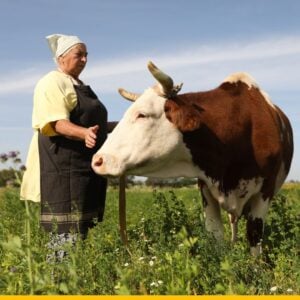
As a result, a growing portion of Pakistan’s rural population is now caught between shrinking farms, falling rural employment, and weak non-farm job opportunities. This helps explain why the country is experiencing some of its highest unemployment levels in years. In this difficult environment, many rural families are increasingly turning to livestock, especially milk and meat production, as a way to supplement income and provide work for their young family members. Livestock has therefore become an increasingly important part of rural survival and economic adaptation.

This shift is reflected in the sector’s 4.72 percent growth in FY25 and its expanding contribution to agricultural GDP, where livestock now accounts for 63.6 percent, far surpassing the crop sector. Despite this growing importance, livestock continues to receive far less public and policy attention than crops. At the same time, the sector faces several serious challenges, including long-standing government price controls on milk and meat that distort the market, rising input costs, low productivity per animal, poor feed conversion, imports of cheap low-quality dairy substitutes, and restricted export opportunities caused by transboundary animal diseases such as foot-and-mouth disease.

Given these realities, the article argues that government policy must urgently adapt to the ongoing fragmentation of farmland and the rapid rise of livestock-based smallholders. With the right policy support and a more enabling business environment, livestock could become a major driver of economic growth and large-scale employment for illiterate and unskilled rural youth. Strengthening this sector could not only improve rural livelihoods but also help reduce the social risks associated with rising unemployment and growing economic frustration in Pakistan’s countryside.

Related Posts

  • Albania Boosts Rural Jobs Through Digital Skills
  • FAO Report: Agriculture Remains a Lifeline for Rural Families in War-Affected Ukraine
  • Poland’s Pension Reform: Lessons for Future Labour Supply
  • New ILO Employment Programme to Boost Jobs in Moldova
  • Innovation Drives Jobs and Growth in Central and Eastern Europe

Primary Sidebar

Latest News

Africa’s Clean Cooking Gap Leaves Nearly 1 Billion Without Access

Australians for Mental Health Welcomes $517 Million Disability Support Program

Malawi Flood Crisis: Heavy Rains Displace Tens of Thousands

Falconer Unveils Fresh Aid for Displaced Communities in Lebanon (EN/AR)

Sudan: NGOs Urge Action as Conflict Impacts Worsen Regionally

Lower-Income Countries Set Record Investment in Immunisation Programmes

UAE Plans Thousands of Jobs in Non-Profit Sector with Dh100M Fund

Funding Boost for Hundreds of Grassroots Groups to Unite Communities

EU Supports Ukrainian Civil Society Project to Strengthen Justice Reforms

UK and IFC Partner to Boost Agribusiness and Job Creation in the DRC

IFC, Santander Brazil Join Forces to Expand Eco Invest Sustainable Financing in Brazil

Africa Vaccine Manufacturing Boost: IFC, EIB Group and EU Support Biovac Expansion

FAO Hosts Indigenous Consultation in Suriname for REDD+ Climate Finance Readiness

FAO Urges Faster Action to Close Global Water and Sanitation Gaps

Food Value Chain Losses: Where Food Is Wasted and How to Save It

Senegal Tackles Food Waste with FAO-Supported Touba Project

FAO Report Highlights Women’s Role in Africa’s Agrifood Systems

Senegal: FAO Boosts Efforts to Cut Post-Harvest Losses

Ghana Boosts Vaccine Manufacturing Ambition with Clinical Trials

World Health Day 2026: How Nigeria Focused on People and Evidence

Amnesty Calls on Maldives to Scrap Death Penalty Bill

Amnesty Warns India’s Digital Media Rules May Enable Abusive Powers

Over 100 NGOs Dissolved in Burkina Faso Crackdown on Civil Society

Ontario Invests $57M in Indigenous Postsecondary Institutes

Her Voice Fund Evaluation Launched by Womankind

Learnings from a Trilateral Climate-Smart Agriculture Programme

New Funding Announced for Displaced Communities in Lebanon

Climate Change and Work: ILO Urges Stronger Social Protection

Japan SMEs Gain New ILO Business and Human Rights Case Studies

WFP Launches HungerMap Live for Real-Time Hunger Intelligence

KSrelief and WFP Provide Nutrition Aid to Families in Somalia

Bhutan School Nutrition Programme Launched by KOICA and WFP

Japan Donates $2 Million for Disaster Relief in Pakistan

Africa’s Growth at Risk as Middle East Crisis May Reduce GDP by 0.2%

Key Lessons from US Inflation Reduction Act for Future Clean Energy Tax Policy

EU and Partners Pledge €811 Million to Address Sudan Humanitarian Crisis

UK Awards £2 Million to Community Groups to Strengthen Unity Across England

Sudan Food Crisis 2026: Key Facts on Hunger, Agriculture Collapse, and Urgent Aid Needs

Measles Vaccines Save Nearly 20 Million Lives in Africa Since 2000

IFAD Joins World Bank’s Water Forward Initiative to Boost Water Security for 1 Billion People

Funds for NGOs
Funds for Companies
Funds for Media
Funds for Individuals
Sample Proposals

Contact us
Submit a Grant
Advertise, Guest Posting & Backlinks
Fight Fraud against NGOs
About us

Terms of Use
Third-Party Links & Ads
Disclaimers
Copyright Policy
General
Privacy Policy

Premium Sign in
Premium Sign up
Premium Customer Support
Premium Terms of Service

©FUNDSFORNGOS LLC.   fundsforngos.org, fundsforngos.ai, and fundsforngospremium.com domains and their subdomains are the property of FUNDSFORNGOS, LLC 1018, 1060 Broadway, Albany, New York, NY 12204, United States.   Unless otherwise specified, this website is not affiliated with the abovementioned organizations. The material provided here is solely for informational purposes and without any warranty. Visitors are advised to use it at their discretion. Read the full disclaimer here. Privacy Policy. Cookie Policy.