• Skip to primary navigation
  • Skip to main content
  • Skip to primary sidebar

fundsforNGOs News

Grants and Resources for Sustainability

  • Subscribe for Free
  • Premium Support
  • Premium Sign in
  • Premium Sign up
  • Home
  • Grants & Funding
    • Funds for NGOs
      • Agriculture, Food & Nutrition
      • Animals and Wildlife
      • Arts & Culture
      • Children
      • Civil Society
      • Community Development
      • Democracy and Good Governance
      • Economic Development
      • Education
      • Disability
      • Employment and Labor
      • Environment
      • Family Support
      • Healthcare
      • HIV and AIDS
      • Housing & Shelter
      • Humanitarian Relief
      • Human Rights
      • Human Service
      • Information Technology
      • Livelihood Development
      • LGBTQIA2S+
      • Media and Development
      • Narcotics, Drugs and Crime
      • Old Age Care
      • Peace & Conflict Resolution
      • Poverty Alleviation
      • Refugees, Migration & Asylum Seekers
      • Science & Technology
      • Sports & Development
      • Sustainable Development
      • Water, Sanitation & Hygiene (WASH)
      • Women & Gender
      • Youth & Adolescents
    • Donors & Funders
    • Funds for Companies
      • Accounts & Finance
      • Agriculture, Food and Nutrition
      • AI
      • Education
      • Energy
      • Environment
      • Healthcare
      • Innovation
      • Manufacturing
      • Media
      • Research
      • Startups & Early-Stage
      • Sustainable Development
      • Technology
      • Travel & Tourism
      • Women
      • Youth
    • Funds for Individuals
  • Funds in Your Country
  • Proposal Writing
    • Sample Proposals
    • Agriculture Proposals
    • Business Proposals
    • Child Development Proposals
    • Climate Change & Biodiversity Proposals
    • Community Development Proposals
    • Democracy & Good Governance Proposals
    • Disability Proposals
    • Disaster & Humanitarian Relief Proposals
    • Environment Proposals
    • Education Proposals
    • Healthcare Proposals
    • Housing & Shelter Proposals
    • Human Rights Proposals
    • Livelihood Development Proposals
    • Nutrition & Food Security Proposals
    • Poverty Alleviation Proposals
    • Refugees, Migration & Asylum-Seekers’ Proposals
    • Rural Development Proposals
    • Sustainable Development Proposals
    • Water, Sanitation & Hygiene (WASH) Proposals
    • Women & Gender Proposals
    • Youth Development Proposals
  • Premium
    • Premium Sign-in
    • Premium Grants
    • Premium eBooks
    • Premium Webinars
    • Premium Videos
    • Premium Courses
    • Premium Support
  • NGOs.AI
  • Contact
    • Submit Your Opportunity
    • Learning Lab
    • Q&A
    • News
    • About us
You are here: Home / cat / Mongolia’s Path to a Just Energy Transition: Challenges and Opportunities

Mongolia’s Path to a Just Energy Transition: Challenges and Opportunities

Dated: February 13, 2026

In winter, temperatures in Ulaanbaatar, the world’s coldest capital, often drop below –30°C, bringing not only extreme cold but also heavy, toxic coal smoke that endangers residents’ health and livelihoods. For families living in the ger areas, traditional felt tents, coal-driven air pollution poses severe risks, especially for children and pregnant women, increasing rates of respiratory illnesses, preterm births, and other complications. Ms. Gantuya, a mother of three in Chingeltei District, described how coal smoke worsened her daughter’s dust allergies and made daily life difficult.

A brighter chapter is emerging through Mongolia’s renewable energy initiatives. Ms. Gantuya is among 68 households participating in the UNDP Mongolia Solar Facility Project, which provides solar-powered heating systems as a clean alternative to coal. These photovoltaic systems, equipped with smart meters, reduce emissions, improve air quality, and withstand Mongolia’s harsh winters, while saving households time and money previously spent on coal. She noted improvements in her children’s health and more time for her son to study.

UNICEF Mongolia is also supporting the transition from coal to low-carbon and renewable energy. Through the CHIP package, over 25,000 people now live in warm, coal-free homes, and more than 6,000 ger households across Ulaanbaatar and 13 provinces have received electric heaters, modern appliances, and improved insulation. Renewable energy solutions have also been implemented in rural schools and health centres, and solar-enabled WASH facilities now reach nearly 37,500 people across ten provinces. Beneficiaries such as Amaasuren, an elderly man, report reduced physical strain and increased safety from switching to electric heating.

Despite Mongolia’s abundant renewable energy potential exceeding 2,600 GW, coal still accounts for over 90% of energy use, and only 18.3% of installed capacity comes from renewables. Pilot projects by UNDP and UNICEF have demonstrated tangible results in reducing coal consumption and improving quality of life. Building on these successes, the government is expanding renewable heating and energy solutions while exploring carbon market opportunities for long-term sustainability. Some households are already supplying surplus electricity to the central grid, generating income and demonstrating scalable models for the future.

These initiatives have informed national policy and regulatory frameworks, including Mongolia’s Just Energy Transition Framework (JETF), developed with UN support and the Joint SDG Fund. The framework balances environmental, social, and economic priorities, promotes clean energy, green infrastructure, and SME growth, and ensures vulnerable communities benefit from the energy transition. UN Resident Coordinator Jaap van Hierden emphasized that the Framework puts people at the center, fostering decent work, resilience, and equitable opportunities.

By 2035, the JETF is expected to guide Mongolia toward a national, equitable, and resilient energy transition. UNDP Resident Representative Matilda Dimovska highlighted the need for a green and just energy future that leaves no household or region behind, while the Ministry of Energy reaffirmed its commitment to implementing the Framework in alignment with national and international climate goals.

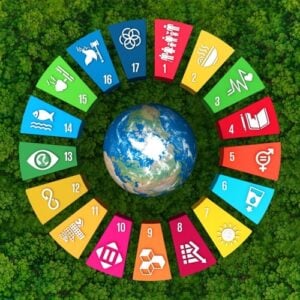
The joint UN programmes are supported by the European Union and multiple international partners, advancing Mongolia’s movement toward achieving the Sustainable Development Goals by 2030.
Related Posts

  • New SDG Fund II Investment Catalyses $300 Million for India’s Growing Solar Market
  • How Renewable Energy Can Drive East Asia’s Economic Growth
  • European Investment Bank and Solas Capital Join Forces to Drive Business Energy Savings
  • Harnessing 280 Days of Sunlight: North Macedonia’s Path to Energy Self-Sufficiency
  • How Community Energy Projects Build Local Wealth and Influence

Primary Sidebar

Latest News

German Researchers Warn EU Carbon Market Reforms Could Threaten Climate Targets

Germany Plans Renewable Energy Support Cuts to Reduce Grid Pressure and Costs

Nigeria Launches AI-Powered Agricultural Monitoring Platform Using Satellite Data

Large beige industrial pipeline with a bolted flange, valves, and metal catwalks on a gravel site under a blue sky.

ECOWAS Approves Nigeria-Morocco Gas Pipeline Project as Financing Challenges Remain

Kenya Attracts $3.95 Million Investment for Geothermal-Powered Aquafeed Plant

Ghana’s $60 Billion Jomoro Petroleum Hub Delayed by Land Compensation Issues

Somalia Launches National Network to Strengthen Startup Ecosystem and Support Entrepreneurs

Zambia Launches Project to Support Green Businesses and Formal E-Waste Recycling

African Development Bank Supports Launch of Côte d’Ivoire’s Digital Private Investment Reporting Platform

African Development Bank Approves $13 Million to Support Ebola Response in DRC, South Sudan and Uganda

Belize Joins Regional Public Health Network to Strengthen Essential Health Functions

Guyana Advances Access to Assistive Technology to Build a More Inclusive Future

Disability Inclusion in Health Systems Remains Uneven Across Latin America and the Caribbean, Report Finds

Ireland Approves Over €204,500 to Support Cross-Border Cultural Projects in 2026

UN Report Shows Global Hunger Declined for Third Straight Year, but Regional Gaps Remain

ILO Workshop Highlights India–EU Labour Mobility Opportunities in Telangana

IFC Launches First Catalytic First Loss Guarantee Investment to Support Uzbekistan’s Small Businesses

ADB and Japan Launch New Water Security Fund with $10 Million Initial Contribution

IOM and KSrelief Sign USD 2.5 Million Agreement to Strengthen WASH Services in Cox’s Bazar

Kenya Strengthens Public Sector Leadership for AI and Digital Transformation

Female healthcare worker in a white coat sits at a table with medical supplies; another clinician in blue scrubs and a scrub cap leans over to review papers outdoors at a community health event, with bystanders in the background.

Young Pastoralists in Kyrgyzstan Unite to Promote Sustainable Rangeland Management

New Zealand Advances Planning Reform to Support Growth and Environmental Protection

Unitaid Leadership Search Begins Amid Funding Crisis and Calls for Global Health Reform

Young People Build Their Futures Through Skills, Innovation and New Opportunities

WFP Warns El Obeid Becomes Centre of Sudan’s Growing Displacement and Hunger Crisis

El Obeid Emerges as New Epicentre of Sudan’s Displacement and Hunger Crisis, WFP Warns

Smart Water Technology Transforms Access to Clean Water in Ethiopia

UNFPA and Moldcell Partner to Promote Family-Friendly Workplaces and Employee Well-Being in Moldova

IUCN Members Advance Citizen Science as a Global Conservation Tool

Awaaz Afghanistan Strengthened to Expand Humanitarian Support and Community Access

BIREME Highlights Digital Health Innovation at Brazil’s 39th CONASEMS Congress

Latin American Countries Launch 24 Initiatives to Strengthen Food Safety Systems

UNDP and Spain Establish New Madrid Office to Strengthen Global Development Partnerships

UNDP and South Korea Launch $50 Million Initiative to Help Crisis-Affected Communities Recover

Three white ambulances with red stripes and blue emergency lights parked under a covered driveway, with green trees in the background.

The Gambia Receives 10 Ambulances and Medical Equipment to Strengthen Emergency Healthcare

African Development Bank and Japan Strengthen Partnership to Boost Private Investment in Africa

Victoria Foundation Distributes $6.19 Million to Support Local Charities and Community Programs

Kenya Launches $264 Million Program to Build Climate-Resilient Agriculture

Dangote Refinery Raises $2.5 Billion Ahead of Major Nigeria IPO

African Development Bank Approves CFA833.8 Billion in New Financing for Cameroon Since 2023

Funds for NGOs
Funds for Companies
Funds for Media
Funds for Individuals
Sample Proposals

Contact us
Submit a Grant
Advertise, Guest Posting & Backlinks
Fight Fraud against NGOs
About us

Terms of Use
Third-Party Links & Ads
Disclaimers
Copyright Policy
General
Privacy Policy

Premium Sign in
Premium Sign up
Premium Customer Support
Premium Terms of Service

©FUNDSFORNGOS LLC.   fundsforngos.org, fundsforngos.ai, and fundsforngospremium.com domains and their subdomains are the property of FUNDSFORNGOS, LLC 1018, 1060 Broadway, Albany, New York, NY 12204, United States.   Unless otherwise specified, this website is not affiliated with the abovementioned organizations. The material provided here is solely for informational purposes and without any warranty. Visitors are advised to use it at their discretion. Read the full disclaimer here. Privacy Policy. Cookie Policy.