• Skip to primary navigation
  • Skip to main content
  • Skip to primary sidebar

fundsforNGOs News

Grants and Resources for Sustainability

  • Subscribe for Free
  • Premium Support
  • Premium Login
  • Premium Sign up
  • Home
  • Funds for NGOs
    • Agriculture, Food and Nutrition
    • Animals and Wildlife
    • Arts and Culture
    • Children
    • Civil Society
    • Community Development
    • COVID
    • Democracy and Good Governance
    • Disability
    • Economic Development
    • Education
    • Employment and Labour
    • Environmental Conservation and Climate Change
    • Family Support
    • Healthcare
    • HIV and AIDS
    • Housing and Shelter
    • Humanitarian Relief
    • Human Rights
    • Human Service
    • Information Technology
    • LGBTQ
    • Livelihood Development
    • Media and Development
    • Narcotics, Drugs and Crime
    • Old Age Care
    • Peace and Conflict Resolution
    • Poverty Alleviation
    • Refugees, Migration and Asylum Seekers
    • Science and Technology
    • Sports and Development
    • Sustainable Development
    • Water, Sanitation and Hygiene (WASH)
    • Women and Gender
  • Funds for Companies
    • Accounts and Finance
    • Agriculture, Food and Nutrition
    • Artificial Intelligence
    • Education
    • Energy
    • Environment and Climate Change
    • Healthcare
    • Innovation
    • Manufacturing
    • Media
    • Research Activities
    • Startups and Early-Stage
    • Sustainable Development
    • Technology
    • Travel and Tourism
    • Women
    • Youth
  • Funds for Individuals
    • All Individuals
    • Artists
    • Disabled Persons
    • LGBTQ Persons
    • PhD Holders
    • Researchers
    • Scientists
    • Students
    • Women
    • Writers
    • Youths
  • Funds in Your Country
    • Funds in Australia
    • Funds in Bangladesh
    • Funds in Belgium
    • Funds in Canada
    • Funds in Switzerland
    • Funds in Cameroon
    • Funds in Germany
    • Funds in the United Kingdom
    • Funds in Ghana
    • Funds in India
    • Funds in Kenya
    • Funds in Lebanon
    • Funds in Malawi
    • Funds in Nigeria
    • Funds in the Netherlands
    • Funds in Tanzania
    • Funds in Uganda
    • Funds in the United States
    • Funds within the United States
      • Funds for US Nonprofits
      • Funds for US Individuals
      • Funds for US Businesses
      • Funds for US Institutions
    • Funds in South Africa
    • Funds in Zambia
    • Funds in Zimbabwe
  • Proposal Writing
    • How to write a Proposal
    • Sample Proposals
      • Agriculture
      • Business & Entrepreneurship
      • Children
      • Climate Change & Diversity
      • Community Development
      • Democracy and Good Governance
      • Disability
      • Disaster & Humanitarian Relief
      • Environment
      • Education
      • Healthcare
      • Housing & Shelter
      • Human Rights
      • Information Technology
      • Livelihood Development
      • Narcotics, Drugs & Crime
      • Nutrition & Food Security
      • Poverty Alleviation
      • Sustainable Develoment
      • Refugee & Asylum Seekers
      • Rural Development
      • Water, Sanitation and Hygiene (WASH)
      • Women and Gender
  • News
    • Q&A
  • Premium
    • Premium Log-in
    • Premium Webinars
    • Premium Support
  • Contact
    • Submit Your Grant
    • About us
    • FAQ
    • NGOs.AI
You are here: Home / cat / Combating Rabies in Haiti: How Vaccines and Awareness Save Lives

Combating Rabies in Haiti: How Vaccines and Awareness Save Lives

Dated: October 6, 2025

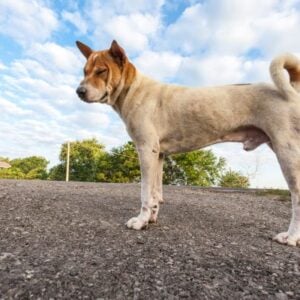
Last July, in the remote locality of Butête in southern Haiti, nine-year-old Jonas lost his life to rabies. The boy had been bitten on the leg by a stray dog, and the wound initially seemed minor. Living far from health facilities, his mother was unaware that immediate medical care was critical. Within a week, Jonas became weak and refused to eat, and by the time he reached the nearest hospital, he exhibited the hallmark symptoms of rabies, including severe muscle spasms and hydrophobia. Despite efforts to save him, he died surrounded by his family. His death marks the most recent among four rabies fatalities in Haiti this year, highlighting the lethal but entirely preventable nature of the disease amid the country’s political, economic, and health challenges.

Data collected between 2022 and 2024 indicates that rabies continues to pose a serious public health threat in Haiti. Over 8,000 suspected cases in dogs were investigated, with more than 1,100 considered probable and 46 confirmed in laboratories. During the same period, there were 24 suspected human cases likely caused by dog bites, resulting in eight confirmed deaths. These figures underscore the ongoing risk of rabies, particularly in rural and underserved areas with limited access to health services.

After Jonas was admitted to the hospital, Haiti’s Ministry of Public Health’s National Surveillance Network was quickly alerted. Supported by the Pan American Health Organization (PAHO), the network deployed field staff, including locally-based epidemiology assistants and “labo-moto” health workers, to Butête. The team ensured no one else in the community had been exposed, monitored Jonas’s family, and inspected the area where the dog and her puppies had died. The investigation recommended a canine vaccination campaign, strengthened surveillance, and improved access to human rabies vaccines for post-exposure treatment.

To curb rabies, a nationwide dog vaccination campaign was launched in August targeting around 140,000 dogs, both stray and community animals, alongside public awareness efforts. Training was provided to departmental and communal coordinators and over 480 veterinary auxiliary agents, who worked in 240 teams across priority departments. The campaign also used a mobile app to register vaccinated dogs, enabling real-time data collection and monitoring. Health officials emphasized that large-scale vaccination of dogs directly protects human communities, particularly children, since rabies is entirely preventable with proper measures.

The campaign aims to achieve approximately 80 percent vaccination coverage among the target dog population, which is expected to significantly reduce rabies transmission. It also promotes awareness of preventive measures and appropriate responses to potential rabid animal bites. Despite security and stability challenges, Haitian authorities and health partners consider the campaign a significant success, strengthening community resilience against the disease.

Globally, rabies remains one of the deadliest zoonotic diseases, causing an estimated 59,000 deaths annually, 40 percent of which are children. In the Americas, a 98 percent reduction in human rabies cases transmitted by dogs has been achieved over the past decades, illustrating the effectiveness of coordinated vaccination and public health strategies. Haiti’s ongoing efforts aim to replicate this success and protect vulnerable populations from a completely preventable disease.

Related Posts

  • Towards a Rabies-Free World: Aligning Rabies Control with National Health Priorities
  • Yemen: Second Polio Vaccination Campaign Begins with WHO, UNICEF, and MoPHP Support
  • WHO Partners with Zamfara State to Combat Cholera Through Vaccination Campaign
  • World Rabies Day 2025: Minister Heydon Urges Continued Vigilance Against Rabies
  • PAHO Recognizes Peruvian Physician for Outstanding Health Services Leadership

Primary Sidebar

Latest News

PAHO Steps Up Ebola Preparedness Across the Americas Amid Outbreak in Africa

Countries in the Americas Report Strong Progress Toward Eliminating Trachoma

DR Congo Launches Digital System to Track Medicines and Vaccines in Real Time

Traxtion Raises $86 Million to Expand Rail Fleet Ahead of South African Rail Reforms

Cameroon Launches $163 Million Digital Transformation Program for Local Governments

Gabon Invests $8.9 Million to Develop Local Digital Talent Pipeline

Ghana’s Guitarfish Conservation Efforts Gain Momentum Through Community-Led Action

African Development Bank Launches €1.25 Billion Social Bond Due 2033

Ebola Outbreak in DRC: What You Need to Know and How to Help

Study Shows Offshore Wind Could Cover 11% of North Sea by 2050

African Development Bank Approves $16.7 Million for Liberia to Strengthen Fiscal and Mining Governance

New Research Highlights Lessons from Past Marine Energy Transitions for Coastal Communities

Ebola Outbreak in DRC Further Strains Underfunded Health System, CARE Warns

Uzbekistan Launches Nature4Health Scoping Phase to Strengthen Preventive One Health Approaches

World Bank Launches Ten-Year Strategy to Drive Jobs and Prosperity in Uganda

IUCN Secures US$23 Million GEF Portfolio to Tackle Biodiversity Loss and Boost Climate Resilience

Limerick and Clare ETB Join National Youth Food Poverty Conversation

Moldova Advances EU Integration and Economic Reforms with World Bank Support

Resilience Boost for Daintree Coast Access Links

Bulgarian businesses to get €340 million financing boost under new agreement between EIB Group and Allianz Bank Bulgaria

Golden Beach Seawall Project Completed to Protect Coastline and Community

EIB Partners with Ireland to Drive Electric Vehicle Charging Revolution

Bhutan Restarts WTO Accession, Learning from Global South Peers

UK Property Sector Shelves Digital Identity Scheme Amid Policy Concerns

EIB Ireland Financing Group Strengthens Investment Partnership Across Key Sectors

EIB and Roma Capitale Launch Advisory Partnership to Expand Affordable Housing in Rome

UAE Launches National Cryptography Discovery Platform for Post-Quantum Security

EIB and UN Green Climate Fund Sign First Agreement to Boost Climate Finance in Developing Countries

€5.7 Million Awarded for Research on Data Sharing in the Energy Transition

WFP and KOICA Complete Programme Supporting Refugees and Host Communities in Egypt

Two Research Projects to Develop Safe Plastics

Ten Research Projects to Develop Defence Materials

ILO Launches Decent Work Country Programme to Support Ukraine’s Labour Market Recovery

Participatory Storytelling and Decolonising Narratives in Humanitarian Communications

Waihi Refuse Transfer Station Upgrade to Cut Waste and Boost Recycling in New Zealand

Government Changes in India and Bangladesh Could Reset River Cooperation

New Zealand Invests $20 Million to Strengthen Parenting Support Services

New Zealand Government Invests $10 Million to Expand Predator Free Auckland Initiative

Capita Pension Scheme Site Launched Without Basic Web Security

WHO and Japan Launch Initiative to Close Indonesia’s Immunization Gaps

Funds for NGOs
Funds for Companies
Funds for Media
Funds for Individuals
Sample Proposals

Contact us
Submit a Grant
Advertise, Guest Posting & Backlinks
Fight Fraud against NGOs
About us

Terms of Use
Third-Party Links & Ads
Disclaimers
Copyright Policy
General
Privacy Policy

Premium Sign in
Premium Sign up
Premium Customer Support
Premium Terms of Service

©FUNDSFORNGOS LLC.   fundsforngos.org, fundsforngos.ai, and fundsforngospremium.com domains and their subdomains are the property of FUNDSFORNGOS, LLC 1018, 1060 Broadway, Albany, New York, NY 12204, United States.   Unless otherwise specified, this website is not affiliated with the abovementioned organizations. The material provided here is solely for informational purposes and without any warranty. Visitors are advised to use it at their discretion. Read the full disclaimer here. Privacy Policy. Cookie Policy.