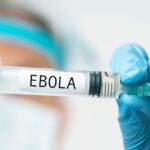
Uganda’s Ministry of Health, in collaboration with the World Health Organization (WHO) and partners, has intensified efforts to strengthen Ebola outbreak preparedness amid the ongoing outbreak in Kasai Province, Democratic Republic of the Congo (DRC). The measures include enhanced surveillance, traveler screening, and updated contingency planning to reduce the risk of cross-border transmission. Using WHO’s… [Read More]
cat
Mauritius Advances Climate-Resilient Health Systems with WHO Support and Institutional Framework Validation

Mauritius has reached a strategic milestone in building a climate-resilient health system through the validation of its Gap Analysis Report, the draft Institutional Framework, and the Terms of Reference (ToR) for establishing a Climate and Health Technical Unit (CHTU). This progress is part of the project “Building Health Systems Resilience to Climate Change,” funded by… [Read More]
Dr. Moses Ongom on Why Mental Health Is Essential for Overall Health in South Sudan

This year’s World Mental Health Day, themed “Mental health in humanitarian emergencies,” highlights the pressing realities faced by people in South Sudan. For many, life is shaped by conflict, displacement, floods, disease outbreaks, and daily survival challenges, all of which take a profound toll on mental well-being. Humanitarian workers, often living under the same conditions,… [Read More]
Ecuador Leads Migration Governance with New GCM Implementation Strategy

The UN Network on Migration and the Government of Ecuador convened a high-level dialogue on 9 October 2025 with GCM champion countries, donors, and partners to discuss the implementation of the Global Compact for Safe, Orderly and Regular Migration (GCM) through National Implementation Plans. The forum highlighted how cooperation, partnerships, and targeted support are helping… [Read More]
First IOM Humanitarian Flight Returns Syrians from Libya Safely
The International Organization for Migration (IOM) facilitated the voluntary return of 152 Syrians in vulnerable situations from Libya to Damascus on 8 October 2025, marking the first Voluntary Humanitarian Return (VHR) flight to Syria organized by IOM this year. The operation, departing from Tripoli, was conducted at the request of the Syrian Ministry of Foreign… [Read More]
When Progress Meets Nature: The Stork Dilemma in Kazakhstan
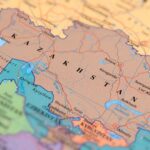
Every year, white storks (Ciconia ciconia) return to their nests along the road between Mirzakent and Zhetisay in Kazakhstan, perching atop aging power line poles to raise their chicks. Their presence is a cherished sight for local residents, symbolizing harmony, renewal, and the enduring rhythm of nature. These towering nests have become an integral part… [Read More]
How Nepal’s Farmers Are Reaching Markets and Driving Economic Growth
Across Nepal, women farmers are transitioning from subsistence agriculture to income-generating enterprises, signaling a quiet yet powerful transformation in rural livelihoods. This shift is being driven by agricultural cooperatives, grants for modern equipment, improved technologies, and better market linkages that empower women to become entrepreneurs and job creators within their communities. In Madhesh Province, farmer… [Read More]
As Flood Threat Rises, WFP Scales Up Early Action Efforts in Northeast Nigeria

As floodwaters continue to rise across parts of Nigeria, the World Food Programme (WFP) is scaling up its Anticipatory Action (AA) efforts in Adamawa State to reduce the humanitarian impact of flooding and support early recovery for vulnerable communities. The Nigerian government has reported rapidly increasing water levels in several riverine areas, with downstream communities… [Read More]
Afghanistan to Receive ADB Grants for Food Security, Health Services, and Community Resilience
The Asian Development Bank (ADB) has approved two major grants to strengthen food security, deliver vital health services, and enhance resilience against natural hazards in Afghanistan. These initiatives aim to provide essential support to Afghan communities facing ongoing humanitarian and environmental challenges. The first grant, valued at $370 million, will sustain the delivery of critical… [Read More]
Central Virginia Receives $1.1 Million to Protect and Celebrate BIPOC Heritage

Seven projects focused on preserving Black, Indigenous, and People of Color (BIPOC) history in Virginia have been awarded a total of $2.5 million in grant funding, with two key projects located in Central Virginia. The Virginia Department of Historic Resources (DHR) and the Virginia Board of Historic Resources (VBHR) announced the recipients under the Virginia… [Read More]
An Open Letter from Nonprofits Rejecting Presidential Threats to Civil Society

Human Rights Watch, along with more than 3,700 nonprofit and nonpartisan organizations across the United States, signed an open letter condemning the Trump administration’s recent attacks on civil society. The signatories—representing groups that protect the environment, voting rights, labor rights, human rights, and public welfare—united in response to a September 25 presidential memorandum that targeted… [Read More]
Death Penalty in Tunisia: Social Media Posts Lead to Capital Punishment

A Tunisian court sentenced 51-year-old Saber Ben Chouchane to death for peaceful Facebook posts, marking the first known death sentence for nonviolent expression in Tunisia. Although he received a presidential pardon days later following widespread public outrage, the ruling represents an alarming escalation in Tunisia’s crackdown on free speech. Human Rights Watch urged authorities to… [Read More]
Bangladesh Implements Stricter Measures Under Anti-Terrorism Legislation
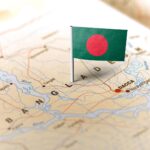
Bangladesh’s interim government, led by Nobel laureate Muhammad Yunus, is increasingly using the recently amended Anti-Terrorism Act to arrest alleged supporters of the ousted Awami League government, according to Human Rights Watch. The organization urged the United Nations human rights team in Bangladesh to intervene for the release of those arbitrarily detained and to ensure… [Read More]
Adapting Aquatic Food Systems to Climate Change: Lessons from Timor-Leste’s Seaweed Farms
In Timor-Leste, climate change is placing severe stress on aquatic food systems, with floods, cyclones, droughts, and deforestation threatening the livelihoods of fishing and fish farming communities. Even minor shocks can push households below subsistence levels, highlighting the urgent need for locally appropriate adaptation measures. The IkanAdapt project, funded by the Global Environment Facility and… [Read More]
Fish Consumption in Africa, East Asia, and the Pacific: How Much is Too Much?

The diets of the wealthiest 30% of the global population are responsible for over 70% of the environmental pressures from food systems, yet only 1% of people currently live within a safe and just space. Achieving a just transition requires high-income populations to shift toward diets with lower environmental impact, while ensuring that the majority… [Read More]
How Solar-Dried Fish Transformed Premalata’s Livelihood in Odisha
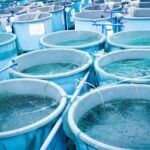
Premalata Behera, a 40-year-old member of the Maa Women Self Help Group, hails from Dalimbapur, a coastal fishing village in Odisha, India. Her community has relied on the dried fish trade for generations, but Premalata and her fellow group members faced persistent challenges in running their businesses. Traditional open-air sun drying left fish vulnerable to… [Read More]
Building an Inclusive Blue Economy: Aquaculture Opportunities for Women and Youth in Kenya

WorldFish, through the Asia-Africa BlueTech Superhighway (AABS) project, is investigating how aquaculture, particularly Integrated Multi-Trophic Aquaculture (IMTA), can create sustainable livelihoods for women and youth in Kenya’s coastal counties of Kilifi, Kwale, and Mombasa. Despite living near abundant marine resources, women and young people often face exclusion from stable employment, while traditional sectors such as… [Read More]
AI for Growth: New Support for U.S. Small Business Innovation and Training

Small businesses play a vital role in communities and are increasingly embracing technology to drive growth and efficiency. Over half of small business leaders recognize AI tools as critical to their operations, with businesses like Chicago-based Heritage Bikes & Coffee leveraging AI platforms such as Gemini and NotebookLM for tasks ranging from cost estimation to… [Read More]
The Coconut Sector Reinvented: How AI is Driving Circular Economy Solutions

In the Philippines, where coconut palms shape both landscapes and livelihoods, a transformative initiative is underway to modernize the coconut sector using artificial intelligence (AI) and circular economy principles. Announced at the World Coconut Congress 2025 in Manila by the International Labour Organization (ILO), this vision aims to make coconut farming a driver of inclusive,… [Read More]
Golo Mori Coffee Culture: A Key to Forest and Komodo Dragon Conservation
Golo Mori, a scenic village in southern Labuan Bajo, West Manggarai, East Nusa Tenggara, is renowned for its rich coffee traditions. Nestled amid rolling hills and coastal winds, the village blends culture and nature, producing coffee through rituals passed down for generations. Visitors to Golo Mori experience the rhythmic pounding of coffee beans by local… [Read More]
From Sun to Socket: Decentralized Solar Transforms Rural Life in Mauritania
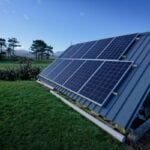
make an informative summary paragraph wise excluding all the sub headings bullet points and internal links: Millions of sunny hours do not help if the lights still don’t come on. In Mauritania, national access to electricity is about 52 percent, in rural areas it falls to just 6 percent. That gap shapes community’ lives day… [Read More]
Building Resilient Cities: Climate-Ready Health Systems for Extreme Heat in Asia-Pacific
In 2024, Asia and the Pacific experienced record-breaking heat, with temperatures in parts of South and Southeast Asia reaching 53°C. Between December 2024 and February 2025, six of the eleven global cities experiencing prolonged extreme heat were located in this region, highlighting the reality of climate change and its intensifying impacts on urban populations. This… [Read More]
$3.2 Million Funding Secured by UNDP for Afghanistan’s Climate and Health Programs
The United Nations Development Programme (UNDP) has secured a $3.2 million investment from the Global Fund to Fight AIDS, Tuberculosis and Malaria’s Climate and Health Catalytic Fund. This funding will strengthen Afghanistan’s response to the health impacts of climate change, with a focus on vulnerable groups such as internally displaced persons and returnees, benefiting over… [Read More]


