• Skip to primary navigation
  • Skip to main content
  • Skip to primary sidebar

fundsforNGOs News

Grants and Resources for Sustainability

  • Subscribe for Free
  • Premium Support
  • Premium Login
  • Premium Sign up
  • Home
  • Funds for NGOs
    • Agriculture, Food and Nutrition
    • Animals and Wildlife
    • Arts and Culture
    • Children
    • Civil Society
    • Community Development
    • COVID
    • Democracy and Good Governance
    • Disability
    • Economic Development
    • Education
    • Employment and Labour
    • Environmental Conservation and Climate Change
    • Family Support
    • Healthcare
    • HIV and AIDS
    • Housing and Shelter
    • Humanitarian Relief
    • Human Rights
    • Human Service
    • Information Technology
    • LGBTQ
    • Livelihood Development
    • Media and Development
    • Narcotics, Drugs and Crime
    • Old Age Care
    • Peace and Conflict Resolution
    • Poverty Alleviation
    • Refugees, Migration and Asylum Seekers
    • Science and Technology
    • Sports and Development
    • Sustainable Development
    • Water, Sanitation and Hygiene (WASH)
    • Women and Gender
  • Funds for Companies
    • Accounts and Finance
    • Agriculture, Food and Nutrition
    • Artificial Intelligence
    • Education
    • Energy
    • Environment and Climate Change
    • Healthcare
    • Innovation
    • Manufacturing
    • Media
    • Research Activities
    • Startups and Early-Stage
    • Sustainable Development
    • Technology
    • Travel and Tourism
    • Women
    • Youth
  • Funds for Individuals
    • All Individuals
    • Artists
    • Disabled Persons
    • LGBTQ Persons
    • PhD Holders
    • Researchers
    • Scientists
    • Students
    • Women
    • Writers
    • Youths
  • Funds in Your Country
    • Funds in Australia
    • Funds in Bangladesh
    • Funds in Belgium
    • Funds in Canada
    • Funds in Switzerland
    • Funds in Cameroon
    • Funds in Germany
    • Funds in the United Kingdom
    • Funds in Ghana
    • Funds in India
    • Funds in Kenya
    • Funds in Lebanon
    • Funds in Malawi
    • Funds in Nigeria
    • Funds in the Netherlands
    • Funds in Tanzania
    • Funds in Uganda
    • Funds in the United States
    • Funds within the United States
      • Funds for US Nonprofits
      • Funds for US Individuals
      • Funds for US Businesses
      • Funds for US Institutions
    • Funds in South Africa
    • Funds in Zambia
    • Funds in Zimbabwe
  • Proposal Writing
    • How to write a Proposal
    • Sample Proposals
      • Agriculture
      • Business & Entrepreneurship
      • Children
      • Climate Change & Diversity
      • Community Development
      • Democracy and Good Governance
      • Disability
      • Disaster & Humanitarian Relief
      • Environment
      • Education
      • Healthcare
      • Housing & Shelter
      • Human Rights
      • Information Technology
      • Livelihood Development
      • Narcotics, Drugs & Crime
      • Nutrition & Food Security
      • Poverty Alleviation
      • Sustainable Develoment
      • Refugee & Asylum Seekers
      • Rural Development
      • Water, Sanitation and Hygiene (WASH)
      • Women and Gender
  • News
    • Q&A
  • Premium
    • Premium Log-in
    • Premium Webinars
    • Premium Support
  • Contact
    • Submit Your Grant
    • About us
    • FAQ
    • NGOs.AI
You are here: Home / cat / World Bank: Ghana Leads Region in Financial Readiness Despite Gaps

World Bank: Ghana Leads Region in Financial Readiness Despite Gaps

Dated: February 6, 2026

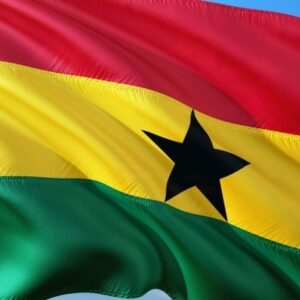
Ghana has emerged as a regional frontrunner in financial services readiness, but operational inefficiencies in public services, trade, and market competition could constrain its growth and ability to attract investment, according to the World Bank’s Business Ready (B-READY) 2025 report.

The findings were presented at a dissemination event in Accra, where policymakers, private sector representatives, and development partners reviewed Ghana’s performance under the B-READY framework. The assessment evaluates economies across three pillars: Regulatory Framework, Public Services, and Operational Efficiency.

Ghana recorded an overall 72 percent score in financial services, placing it ahead of many sub-Saharan African peers. The country scored 69 in Regulatory Frameworks, 50 in Public Services, and 52 in Operational Efficiency, highlighting a widening gap between strong rules and the speed and effectiveness of implementation.

Financial services and labour emerged as Ghana’s strongest-performing areas. The report commended the country’s regulatory environment for secured transactions and electronic payments, while Ghana ranked within the top 20 percent of economies globally in labour, with a score of 71. Solid performance was also noted in business entry and utility services, particularly in transparency around tariffs and access procedures.

Regionally, Ghana’s regulatory framework ranked the strongest among its peers, while its public services score trailed only Togo’s. However, the World Bank stressed that regulatory strength alone is insufficient without efficient service delivery.

Robert Taliercio, World Bank Division Director for Ghana, Liberia, and Sierra Leone, said Ghana had performed well “in World Cup terms” but still faced a significant delivery gap. He noted that Ghana’s gross capital formation is around 10 percent of GDP, compared with roughly 30 percent in industrialising economies such as Morocco.

“The gap between strong rules and slower delivery affects how investors assess risk, cost, and predictability,” Mr. Taliercio said, linking the findings to the government’s proposed 24-Hour Economy programme. He emphasised that the initiative is less about extended working hours and more about system readiness, including efficient ports, utilities, and regulators.

Kyle Kelhofer, Senior Country Manager for the International Finance Corporation (IFC) for Ghana and Liberia, described the engagement as action-oriented and urged businesses to help identify inefficiencies and propose practical solutions to reduce delays and bottlenecks. He said the World Bank Group is focused on supporting reforms that improve firm productivity and unlock private investment needed for job creation.

The report identified market competition as a major weakness, with a low score of 34 percent, alongside deficiencies in business insolvency and dispute resolution systems. International trade was cited as a key example of operational inefficiency: despite a strong regulatory framework, import clearance in Ghana takes an average of 23 days, compared with eight days in peer economies such as Cameroon.

To unlock its full growth potential, the World Bank recommended streamlining export restrictions, improving transparency in licensing systems, and clarifying penalty procedures.

Despite these challenges, the report expressed optimism about Ghana’s reform trajectory, highlighting the recent introduction of a Trusted Trader programme, which is expected to significantly improve border efficiency and strengthen Ghana’s performance in future B-READY assessments.
Related Posts

  • Transforming Remittances into Investments: Ghana’s Push for Sustainable Development
  • Stories from Northern Syria: How Women and Girls Are Surviving Conflict and Displacement
  • Strengthening Ghana–Korea Trade Ties: GIPC Showcases Gateway Market Potential
  • Displacement in Yemen Surges, IOM Issues Urgent Alert
  • €1,000 Grants Awarded to Community Employment Scheme Sponsors, Says Minister Calleary

Primary Sidebar

Latest News

How the Joint SDG Fund Mobilizes Investments to Accelerate SDG Delivery

Cambodia Launches Technical Group to Boost Jobs and Social Protection

UK Government Supports Scotland’s Farmers and Rural Communities

UK Defence SMEs Showcase Innovations in First-Ever ‘Dragons’ Den’ Event

CNC Supports Major Cannabis Bust Worth £7.1M in Scotland

OHCHR Warns of Funding Shortfalls, Launches $400 Million Global Appeal

UN Welcomes $6 Billion US Funding Boost to End HIV/AIDS Globally

UN Warns of Severe Food Crisis in North Darfur and Greater Kordofan

UN Reports Diplomatic Gains in DRC, Stresses Ongoing Security Risks

UN Calls for Stronger Support for International Police in Peacekeeping

UNFPA Highlights Community Action and Fatwas Against FGM in Africa

Ireland Collects €8.5B in January Taxes Amid €9.7B Spending

New Local Partnerships to Boost Public Safety Nationwide

Ireland Publishes Draft National Drugs Strategy 2026–2029

Ireland Activates National Emergency Group Amid Flood Risk

FAO Launches Online Training on Land Consolidation

WHO/Europe Shares Lessons on Affordable Mental Health Care

UNESCO Boosts Regional Tsunami Early Warning Capacity

How Renewable Energy Can Drive East Asia’s Economic Growth

GEF Funds $9.45M Climate-Resilient Water Project in Zambezi Basin

How Bangladesh Is Building a Youth Voice Mechanism

Key Lessons from the AWESOME Programme’s Feminist Work

Finland and Åland Boost Nordic Crisis Readiness

ILO Pilot Builds Job-Ready Skills in Bangladesh

How Rapid CERF Support Helped Contain Cholera in Amhara, Ethiopia

Why Effective Public Finance Reform Still Warrants Optimism

GSS Invites Sponsors to Shape Africa’s Development at iCAD 2026

SEC Caps Foreign Securities Exposure for Investment Schemes

Ghana Accelerates Irrigation for Rice and Food Security

World Bank: Ghana Leads Region in Financial Readiness Despite Gaps

How Türkiye’s Forests Help France Adapt to Climate Change

UK Export Credit Support Delivers £23B Economic Impact

New Pilot Scheme Supports Landowners in the MacGillycuddy Reeks

EBRD 2025 Finance for Ukraine Rises to Record €2.9 Billion

EBRD Invested Over €800 Million in Serbia in 2025

€20M EBRD Financing Backs Green Aluminium in Türkiye

Irish Aid Supports Ukraine with €3M in NGO-Led Aid

Irish Government Allocates €42M to Palestine in 2026

Ireland Approves €25 Million to Support Ukraine’s Energy Infrastructure

Iraq Pledges $30 Million in Multi-Year Strategic Partnership with UNRWA

Funds for NGOs
Funds for Companies
Funds for Media
Funds for Individuals
Sample Proposals

Contact us
Submit a Grant
Advertise, Guest Posting & Backlinks
Fight Fraud against NGOs
About us

Terms of Use
Third-Party Links & Ads
Disclaimers
Copyright Policy
General
Privacy Policy

Premium Sign in
Premium Sign up
Premium Customer Support
Premium Terms of Service

©FUNDSFORNGOS LLC.   fundsforngos.org, fundsforngos.ai, and fundsforngospremium.com domains and their subdomains are the property of FUNDSFORNGOS, LLC 1018, 1060 Broadway, Albany, New York, NY 12204, United States.   Unless otherwise specified, this website is not affiliated with the abovementioned organizations. The material provided here is solely for informational purposes and without any warranty. Visitors are advised to use it at their discretion. Read the full disclaimer here. Privacy Policy. Cookie Policy.