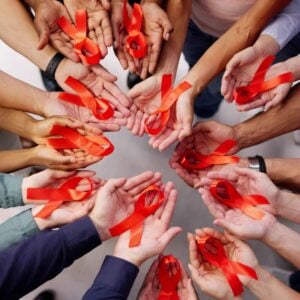
On World AIDS Day, Frontline AIDS released its first country reports from the Transition Initiative, offering the clearest evidence so far of the impact of major international HIV funding cuts across Africa. The reports cover eight countries, five of which are active participants in the initiative. They reveal that Africa faced the steepest drop in HIV financing globally in 2025, with reductions of 30–70% in prevention budgets, leading to severe gaps in services.
The consequences of these cuts have been immediate and severe. Many communities are experiencing disruptions to HIV treatment, widespread loss of prevention services, and early increases in new infections and AIDS-related deaths. Despite this, the reports also point to encouraging examples of governments working with communities to protect and redesign their HIV responses.
Launched in May 2025, the Transition Initiative aims to support communities and civil society in shaping the shift from donor-funded programmes to sustainable, government- and community-led HIV services. Its long-term goal is to ensure that local communities remain central to prevention, treatment and care, supported by accountable and adequately financed public systems.
The reports were prepared by networks of people living with HIV, young people, key populations and civil society groups in Angola, Kenya, Malawi, Mozambique, Nigeria, Tanzania, Uganda and Zimbabwe. Across these countries, more than 2.7 million people are at risk of losing essential HIV prevention services, especially among key populations. Access to PrEP is collapsing, with Nigeria reporting an 85% drop in use and Kenya seeing numbers fall by half. Trials of newer PrEP methods have halted, leaving many without any prevention options.
Treatment access is also declining. Mozambique has seen a 40% drop in people receiving antiretroviral therapy, while some countries are reporting rising infections and AIDS-related deaths. Zimbabwe has recorded its first increase in AIDS-related deaths in five years, and Kenya has reported 24,000 additional new infections, reversing earlier progress. Women are facing heightened rights violations as tailored support programmes disappear. In Tanzania, nearly a third of women with HIV had their status disclosed without consent, and many were denied care. Stigma is also rising for key populations, with Uganda documenting daily human rights violations under the Anti-Homosexuality Act.
These findings underscore a critical turning point in the global HIV response. Yet, Frontline AIDS notes signs of hope as governments and communities begin to collaborate on more sustainable approaches. While challenges remain enormous, there are early indications that political commitment and targeted investment could help rebuild resilient national responses.
With donor support shrinking, national governments are under increasing pressure to sustain HIV programmes. Some countries are exploring new financing pathways. Uganda has doubled its health budget, Tanzania is proposing new health-related levies, and Zimbabwe is using ringfenced taxes such as its mobile airtime levy and AIDS levy to stabilise parts of the response. Zimbabwe is also expanding social contracting, enabling community-led groups to receive direct funding to support testing and treatment efforts.