• Skip to primary navigation
  • Skip to main content
  • Skip to primary sidebar

fundsforNGOs News

Grants and Resources for Sustainability

  • Subscribe for Free
  • Premium Support
  • Premium Login
  • Premium Sign up
  • Home
  • Funds for NGOs
    • Agriculture, Food and Nutrition
    • Animals and Wildlife
    • Arts and Culture
    • Children
    • Civil Society
    • Community Development
    • COVID
    • Democracy and Good Governance
    • Disability
    • Economic Development
    • Education
    • Employment and Labour
    • Environmental Conservation and Climate Change
    • Family Support
    • Healthcare
    • HIV and AIDS
    • Housing and Shelter
    • Humanitarian Relief
    • Human Rights
    • Human Service
    • Information Technology
    • LGBTQ
    • Livelihood Development
    • Media and Development
    • Narcotics, Drugs and Crime
    • Old Age Care
    • Peace and Conflict Resolution
    • Poverty Alleviation
    • Refugees, Migration and Asylum Seekers
    • Science and Technology
    • Sports and Development
    • Sustainable Development
    • Water, Sanitation and Hygiene (WASH)
    • Women and Gender
  • Funds for Companies
    • Accounts and Finance
    • Agriculture, Food and Nutrition
    • Artificial Intelligence
    • Education
    • Energy
    • Environment and Climate Change
    • Healthcare
    • Innovation
    • Manufacturing
    • Media
    • Research Activities
    • Startups and Early-Stage
    • Sustainable Development
    • Technology
    • Travel and Tourism
    • Women
    • Youth
  • Funds for Individuals
    • All Individuals
    • Artists
    • Disabled Persons
    • LGBTQ Persons
    • PhD Holders
    • Researchers
    • Scientists
    • Students
    • Women
    • Writers
    • Youths
  • Funds in Your Country
    • Funds in Australia
    • Funds in Bangladesh
    • Funds in Belgium
    • Funds in Canada
    • Funds in Switzerland
    • Funds in Cameroon
    • Funds in Germany
    • Funds in the United Kingdom
    • Funds in Ghana
    • Funds in India
    • Funds in Kenya
    • Funds in Lebanon
    • Funds in Malawi
    • Funds in Nigeria
    • Funds in the Netherlands
    • Funds in Tanzania
    • Funds in Uganda
    • Funds in the United States
    • Funds within the United States
      • Funds for US Nonprofits
      • Funds for US Individuals
      • Funds for US Businesses
      • Funds for US Institutions
    • Funds in South Africa
    • Funds in Zambia
    • Funds in Zimbabwe
  • Proposal Writing
    • How to write a Proposal
    • Sample Proposals
      • Agriculture
      • Business & Entrepreneurship
      • Children
      • Climate Change & Diversity
      • Community Development
      • Democracy and Good Governance
      • Disability
      • Disaster & Humanitarian Relief
      • Environment
      • Education
      • Healthcare
      • Housing & Shelter
      • Human Rights
      • Information Technology
      • Livelihood Development
      • Narcotics, Drugs & Crime
      • Nutrition & Food Security
      • Poverty Alleviation
      • Sustainable Develoment
      • Refugee & Asylum Seekers
      • Rural Development
      • Water, Sanitation and Hygiene (WASH)
      • Women and Gender
  • News
    • Q&A
  • Premium
    • Premium Log-in
    • Premium Webinars
    • Premium Support
  • Contact
    • Submit Your Grant
    • About us
    • FAQ
    • NGOs.AI
You are here: Home / cat / Zimbabwe’s New NGO Law Sparks Fears of Shrinking Civic Space and Silencing of Rights Groups

Zimbabwe’s New NGO Law Sparks Fears of Shrinking Civic Space and Silencing of Rights Groups

Dated: November 25, 2025

More than seven months after the Private Voluntary Organizations (PVO) Amendment Act came into force in Zimbabwe on 11 April 2025, its impact on the country’s civil society has become increasingly visible. NGOs and rights groups have warned that the law represents an unprecedented assault on civic space and threatens to undermine fundamental freedoms. The Act imposes stricter registration and reporting requirements on charities and civil society organisations while significantly expanding executive powers to control their operations. It introduces criminal penalties for organisational leaders deemed non-compliant and grants authorities broad discretion to restrict foreign funding, audit organisations, freeze assets, suspend leadership or replace boards. In addition, the accompanying government guidelines demanded that all existing PVOs re-register within 90 days.

The government has defended the legislation as a necessary step to strengthen compliance with global frameworks on anti-money laundering and terrorist financing. In a state-run publication, government spokesperson Nick Mangwana stated that the amendment will safeguard the financial system, protect citizens and support sustainable development. However, the law mirrors a global pattern in which governments use regulatory reforms to constrain civic actors, prompting Amnesty International and others to argue that countries are attempting to silence organisations that hold power to account.

The new law has arrived at a time when Zimbabwe’s NGO sector is already struggling with external funding gaps, particularly due to the freeze in US foreign aid affecting health, agriculture and HIV/Aids programmes. According to Marvelous Khumalo of the Crisis in Zimbabwe Coalition, the PVO Act has severely crippled the capacity of civil society to monitor, document and report rights violations. He argues that democratic accountability has suffered since NGOs are now restricted in their ability to scrutinise the government, forcing many organisations to halt operations or close down entirely.

Although no verified statistics exist on the number of NGOs shut down since the Act took effect—partly because organisations monitoring civic space now fear doing so—many civic actors report major disruptions. One NGO director describes previously approved donor funding being abruptly withdrawn, forcing their organisation to operate on a shoestring budget. Smaller grassroots organisations face overwhelming administrative demands and compliance costs, while legal experts warn that the re-registration and reporting obligations will continue to impose prolonged financial and bureaucratic burdens.

Legal and media analyst Mlondolozi Ndlovu says the law is not only slowing programme delivery across health, education and human rights sectors but is also censoring organisations that once served as independent watchdogs. In his words, many NGOs now feel compelled to behave like “lapdogs rather than watchdogs” for fear of shutdown. Human rights bodies share these concerns. International legal and advocacy groups, including Human Rights Watch and the International Federation for Human Rights, have strongly criticised the Act, saying it undermines Zimbabwe’s constitutional and international human rights obligations. Critics argue that vaguely worded offences—such as bans on undefined “political lobbying” and funding from “illegitimate sources”—open the door to selective prosecutions and intimidation.

The case of journalist Blessing Mhlanga, arrested after interviewing a government critic, has been cited as an example of the state’s growing intolerance toward scrutiny. Analysts say the same environment of hostility now hangs over NGOs. Civic leaders speaking publicly warn that mandatory security vetting of PVO board members creates surveillance risks and allows authorities to deny licences based on political bias. They also point out that the Act gives the Minister of Public Service, Labour and Social Welfare sweeping powers to suspend activities or dissolve boards without judicial oversight, fostering a climate of fear and self-censorship.

Labour bodies have echoed resistance. The Zimbabwe Congress of Trade Unions (ZCTU) has denounced the law as a tool to suppress dissent and says it was crafted without meaningful consultation. The organisation calls for its repeal, warning that the law threatens thousands of jobs in the NGO sector and jeopardises essential services that CSOs provide across the country.

Since the Act’s enactment, rights groups report an increase in state inspections, financial disclosure demands and administrative sanctions against NGO leaders. Analysts caution that if donors continue to retreat due to legal uncertainty, communities relying on NGO-run clinics, schools, food programmes and legal aid will be the most harmed. Equally troubling is the risk that human rights abuses will go undocumented if organisations reduce monitoring and advocacy to avoid prosecution.

Civil society networks and international actors are urging the government to revise the law through consultative processes, clarify ambiguous provisions and reduce punitive elements. Meanwhile, legal challenges are underway. On 7 October 2025, the Crisis in Zimbabwe Coalition filed a case at the Bulawayo High Court seeking to declare several provisions of the PVO Act unconstitutional.

As implementation of the law intensifies, Zimbabwe’s civic landscape stands at a crossroads. The coming months will determine whether government responds to calls for reform or tightens enforcement—an outcome that will shape the future of NGO operations and the survival of democratic oversight in the country.

Related Posts

  • Hungary: Pécs Pride Organiser Géza Buzás-Hábel Faces Risk of Prosecution
  • Human Rights Priorities the New Thai Government Cannot Ignore
  • Ireland Bids for Human Rights Council Seat with Official Campaign Launch
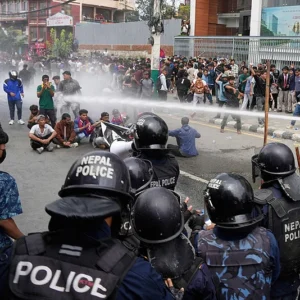
  • Nepal Police Accused of Excessive Force Against ‘Gen Z’ Demonstrators
  • US Says Global Diversity Policies Breach Human Rights Standards

Primary Sidebar

Latest News

World Birth Defects Day Urges Stronger Health Policies and Systems

€235,000 Funding Approved by Dara Calleary for Language Planning

Women Drive Montenegro’s Agriculture Yet Own Little Land

World Birth Defects Day: Strengthening Public Health Support

IDB Backs Colombia’s Territorial Legal Defense Reform

Unlocking Africa’s $29.5T Minerals Through Industrial Development

UN Security Council: UK Calls for Safe and Inclusive Education for Children

$39.5M Boost for SolarAfrica CESA from Vantage Capital

Moldova’s Energy Shift from Russia Challenges Europe’s Energy Union

Rising Family Numbers Drive Child Cancer Foundation Street Appeal Call

Kenyan Startups Shine with Three Major African Innovation Wins

Menstrual Hygiene: Women, Youth, and PWDs Seek Clear Standards

Japan and Uzbekistan Join UNDP to Boost Aral Sea Water Sustainability

UNDP & ILGA World Honour LGBTIQ+ Heroes at Pride Awards 2026

R1.138 Billion Funding Boost for NGOs from Western Cape DSD

Why Robotics Engineering is Key to Industry 4.0 Careers

AUF Partners with Coursera to Expand Online Learning in Africa

Cameroon Eyes Bvmac Return with CFA150 Billion Bond Plan

BGFIBank Cameroon Boosts Capital to CFA50B Ahead of New Banking Rules

EIB Finances €3.1 Billion in African Projects in 2025

New Pan-African Financial Infrastructure Initiative Launched

Southern Africa Energy Outlook at SAOGC 2026

Africa Targets $3 Billion for Green Growth Projects

AfDB Backs Saviu II with $7.6M to Support Francophone Startups

AfDB, UNDP Partner on $10B AI Project to Boost Jobs Across Africa

$4 Million Funding Boost for Platinum Credit Uganda to Support MSMEs

Fundraisers Across America Inspire Communities in 2026

Rimutaka Boosts Capabilities with $11,000 Grant Support

Government Launches New Accessibility Grants Programme

Latest UK Funding Round Awards £16M to Key Projects

Latin America’s Small Businesses Get Boost from New Investment

How the India–US Trade Deal Affects South Asia

$2 Million eID Equipment Rebates Now Available for Applicants

Kaduna Association Partners with UNICEF on Health and Child Protection

$5.7 Million Investment to Improve Water Supply in Dewitt

New York Governor Hochul Launches $10M Program for Kids’ Dental Health

New $10M Funding to Improve Children’s Dental Care in NY

£1M Community Fund to Support Northern Ireland Groups

Major £1.4M Funding Boost Announced for Top UK Music Acts

Deadly Iran School Bombing Called Violation of Humanitarian Law by UNESCO

Funds for NGOs
Funds for Companies
Funds for Media
Funds for Individuals
Sample Proposals

Contact us
Submit a Grant
Advertise, Guest Posting & Backlinks
Fight Fraud against NGOs
About us

Terms of Use
Third-Party Links & Ads
Disclaimers
Copyright Policy
General
Privacy Policy

Premium Sign in
Premium Sign up
Premium Customer Support
Premium Terms of Service

©FUNDSFORNGOS LLC.   fundsforngos.org, fundsforngos.ai, and fundsforngospremium.com domains and their subdomains are the property of FUNDSFORNGOS, LLC 1018, 1060 Broadway, Albany, New York, NY 12204, United States.   Unless otherwise specified, this website is not affiliated with the abovementioned organizations. The material provided here is solely for informational purposes and without any warranty. Visitors are advised to use it at their discretion. Read the full disclaimer here. Privacy Policy. Cookie Policy.