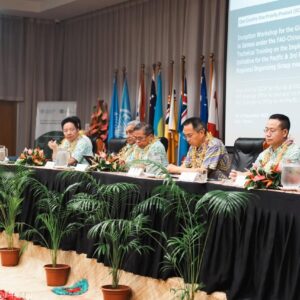
Partners and stakeholders under the Green Commodities Programme convened for a Hotspot Intervention Area Dialogue to discuss the implementation of the Modified Taungya System and Ghana’s evolving Tree Tenure and Benefit Sharing framework. Supported by funding from the Swiss State for Economic Affairs, the meeting focused on strengthening sustainable forest management and building resilient cocoa-forest landscapes across the six intervention areas of the Ghana Cocoa Forest REDD+ Programme.
The United Nations Development Programme and the Forestry Commission organized the dialogue as a platform to enhance policy awareness, foster collaboration, and share practical lessons among stakeholders in Ghana’s forestry and cocoa sectors. Insights from the discussions will inform the development of a Joint Action Agenda to guide the establishment of multi-stakeholder governance structures for hotspot intervention areas.
Forestry Commission officials highlighted the timeliness of the dialogue and emphasized the importance of the Modified Taungya System and private sector plantation development in advancing inclusive, community-led forest restoration. UNDP representatives underscored that MTS remains a proven model capable of restoring degraded forests while improving livelihoods, reaffirming their commitment to supporting Ghana in scaling up innovative approaches and promoting tenure security.
During the event, the Director of Plantations at the Forestry Commission provided a detailed overview of the Modified Taungya System, tracing its evolution as a more inclusive alternative to previous plantation models. She explained that MTS integrates forest restoration with livelihood opportunities by allowing farmers to grow food crops alongside trees in forest reserves, creating tangible benefits for both communities and the environment. Despite its success, she noted that challenges such as sustainability, fair benefit sharing, and consistent policy support still need attention.
The Forestry Commission’s Director of Climate Change emphasized that MTS offers a practical solution to forest degradation by encouraging farmers to protect forests while maintaining productive agricultural activities. He added that the system’s carbon payment incentives further motivate communities to adopt sustainable practices and contribute to climate action.
Participants agreed that the Modified Taungya System has demonstrated significant value in restoring degraded forests and supporting rural livelihoods, but acknowledged that continued effort and improved governance are required to maximize its long-term impact. The dialogue reaffirmed a strong commitment among stakeholders to strengthen MTS implementation and advance secure tree tenure as key elements of sustainable cocoa-forest landscapes in Ghana.