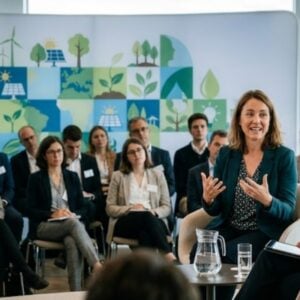
Civil society organizations from Cambodia, Indonesia, Malaysia, and Thailand have strengthened regional cooperation to improve protection for women migrant workers and children, addressing persistent gaps in support that often arise as migrants move across national borders.
The collaboration was reinforced during the PROTECT Regional Civil Society Forum, held in Jakarta, Indonesia, where nearly 50 representatives from frontline organizations developed practical strategies to improve cross-border protection. The forum was supported by the European Union (EU) and jointly implemented by the International Labour Organization (ILO), UN Women, UNICEF, and the United Nations Office on Drugs and Crime (UNODC).
Participants agreed on measures to improve cooperation, including the development of cross-border referral pathways, a shared directory of support services, and secure communication channels to help ensure that migrant workers and children continue to receive protection throughout the migration process.
Discussions emphasized the critical role of community-based organizations and migrant-led networks in supporting vulnerable women, particularly domestic workers who often face barriers such as language differences, fear of losing employment, or concerns about immigration status. Participants noted that peer networks built on shared experiences frequently succeed in reaching migrants who may not access formal support systems.
The forum also highlighted emerging risks linked to technology, including online recruitment scams, artificial intelligence-generated non-consensual images, misuse of digital recruitment platforms, and cases in which migrants are deceived into forced criminal activities. Participants called for stronger victim identification procedures, greater access to justice, and consistent application of the non-punishment principle for trafficking survivors.
Another key focus was the need to strengthen protection throughout the entire migration cycle, including support for children left behind, trauma-informed assistance for returning migrants, and improved reintegration services such as legal aid, psychosocial care, and family support. Participants stressed that many migrants continue to face significant challenges after returning home, particularly those affected by debt, family separation, or exploitation.
Representatives also highlighted the importance of long-term investment in civil society organizations, noting that short-term project funding often limits their ability to retain experienced staff and provide consistent support to survivors. They called for more flexible funding that covers operational costs, staff well-being, leadership development, and organizational sustainability.
The forum concluded with commitments to strengthen practical cross-border cooperation through formal referral mechanisms, secure case coordination systems, and bilateral agreements between organizations in different countries. The PROTECT project will continue supporting regional partnerships aimed at preventing trafficking, exploitation, and violence while ensuring that the experiences of women migrant workers and children help shape future migration policies across Southeast Asia.