Egypt has secured €690 million, equivalent to about $800.2 million, from the European Investment Bank to modernize and expand its electricity transmission network. The financing will support Egypt’s efforts to strengthen power infrastructure, integrate more renewable energy, and improve the reliability of electricity supply across the country.
The funding will support a national program led by the Egyptian Electricity Transmission Company. The project is designed to help Egypt connect up to 22 GW of renewable energy capacity to the national grid by 2030, enough to supply electricity to nearly 10 million households.
The financing forms part of the Trans-Mediterranean Renewable Energy and Clean Technology Cooperation Initiative, which aims to mobilize up to €25 billion in investments by 2035. The initiative focuses on renewable energy, green hydrogen, and clean technologies across the Mediterranean region.
According to the European Investment Bank, the project is expected to reduce transmission losses, improve electricity reliability, strengthen energy security, and support sustainable economic development. It will also contribute to regional electricity cooperation and future clean-energy trade across the Mediterranean.
The announcement comes as Egypt accelerates its renewable energy ambitions. President Abdel Fattah al-Sisi recently announced a new target to raise the share of renewable energy in the country’s electricity mix to 45% by 2028.
The government also plans to expand grid-connected energy storage facilities and develop standalone storage projects. These measures are intended to support the integration of renewable generation and make the electricity system more flexible.
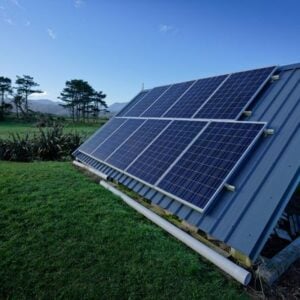
Egypt is already one of Africa’s leading renewable energy markets. By the end of 2025, the country had 9,258 MW of installed renewable energy capacity, supported by major solar and wind investments, including the Benban solar complex and the Gulf of Suez wind corridor.
Despite this progress, Egypt’s power sector remains heavily dependent on fossil fuels. Conventional fuels account for about 87% of national electricity generation, while solar and wind together contribute around 7% of the energy mix.
The EIB financing is expected to address one of the main challenges in Egypt’s energy transition by ensuring that transmission infrastructure keeps pace with expanding renewable energy capacity. By strengthening the grid, the project could help Egypt achieve its clean energy targets and reinforce its position as a regional energy hub.