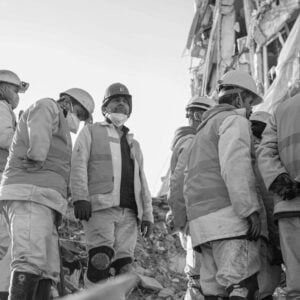
Concern Worldwide reached 23 million people across 27 countries in 2025, despite rising humanitarian needs, funding cuts, and growing instability in many of the world’s poorest countries. The organisation’s annual report highlights both the scale of global suffering and the achievements made possible through the work of its teams, donors, and supporters.
Concern Chief Executive Officer Dominic Crowley said the environments in which the organisation works are becoming increasingly fragile. He noted that humanitarian needs continued to rise in 2025 while official development assistance declined, multilateral cooperation weakened, and geopolitical instability increased. Conflict, displacement, poverty, hunger, and malnutrition all contributed to worsening conditions for vulnerable communities.
The report highlights Concern’s emergency response work across 22 countries, where the organisation responded to 45 emergencies during the year. In Sudan, Concern reached more than 744,000 people through support for health and nutrition centres, mobile clinics, medical and nutrition supplies, and cash assistance for vulnerable households. In Gaza, working through partner CESVI, the organisation provided 75,000 litres of clean water each month to people in displacement camps. In the Democratic Republic of the Congo, Concern managed 11 emergency responses amid escalating conflict in the east of the country.
Concern also expanded food security and livelihood programmes, directly supporting 951,000 people and indirectly reaching 1.7 million more across 16 countries. In Pakistan, the organisation helped connect 1,800 women-led businesses to national and international markets for products such as handicrafts, honey, and dried or pickled fruits. In Niger, Concern supported land rehabilitation, peaceful resource management, climate-sensitive agriculture, eco-stoves, and equipment for peanut oil production to help farming and pastoral communities improve their livelihoods.
Health and nutrition remained a major area of work, with Concern reaching 639,000 people directly and more than 2.3 million indirectly across nine countries. In Somalia, the organisation used the CMAM Surge approach to identify and treat malnutrition risks early, reaching more than 295,000 people and treating over 85,000 people for acute malnutrition. In Yemen, Concern established a reproductive health unit in Lahj and supported six health facilities that provided outpatient consultations to 43,000 people. In Afghanistan, it helped establish eight family health clinics in remote areas and supported community health workers and family health action groups, treating more than 60,000 people.
Concern’s education programmes reached 144,000 people directly and 437,000 indirectly across 10 countries. In Burkina Faso, where displacement has affected many school-aged children, Concern launched its first education programme and enrolled 2,000 internally displaced children. The organisation also distributed school kits, built temporary education spaces, constructed latrines and water points, and trained school teams to prevent and respond to gender-based violence. In Ethiopia’s Tigray region, Concern worked with People In Need to rehabilitate classrooms, provide school furniture, improve water and sanitation facilities, and distribute learning kits to 1,440 children.
Integrated programmes also played a key role in Concern’s 2025 impact, reaching 289,000 people directly and 862,000 indirectly across 12 countries. In Burundi, where chronic child undernutrition remains severe, Concern combined nutrition, health, resilience, and agriculture interventions to support families. The programme helped prevent and treat malnutrition while also strengthening long-term resilience through village savings and loans associations, collective farming, climate-resilient seeds, market linkages, and fortified flour production.
Concern spent €206.8 million in 2025, with 90.7% used for charitable activities. Its total income was €205 million, including €40.6 million raised from the public in Ireland, the UK, and South Korea. Public fundraising became the organisation’s largest single source of funding during the year, reflecting the growing importance of individual donors amid wider cuts to international aid.
The Irish government was Concern’s largest institutional donor in 2025, contributing €38.4 million. Other major donors included the US government through Concern US, the European Union, and the British government. Crowley thanked public donors, trusts, foundations, private companies, and institutional supporters for enabling Concern to continue tackling extreme poverty and hunger in some of the world’s most difficult contexts.
The annual report also reflects the difficult decisions Concern had to make in response to declining official development assistance. The organisation closed its country programmes in North Korea, Lebanon, and Rwanda and implemented redundancies across support offices and countries of operation. Crowley said these decisions were necessary to keep Concern resilient and able to maximise its impact worldwide.
Overall, Concern Worldwide’s 2025 Annual Report shows an organisation operating under intense pressure but still delivering large-scale humanitarian, livelihood, health, nutrition, education, and resilience support. Its work reached millions of people facing conflict, hunger, displacement, poverty, and climate-related hardship, while also underscoring the growing need for sustained funding and global solidarity.