The Africa Centres for Disease Control and Prevention (Africa CDC) and the World Health Organization (WHO) have launched a comprehensive $518 million Ebola preparedness and response plan to address the ongoing outbreak of the Bundibugyo strain of the virus. The six-month initiative, scheduled to run from June through November 2026, aims to strengthen the capacity of African countries to prevent, detect, and respond effectively to the disease while minimizing its health and socioeconomic impacts.
The response plan represents a significant increase from the initial budget estimate of approximately $317 million, reflecting the growing urgency of the outbreak and the need for a coordinated continental strategy. Built around a framework known as “One Response,” the initiative seeks to unify governments, international partners, health organizations, and local communities under a single operational structure designed to improve efficiency and maximize the impact of available resources.
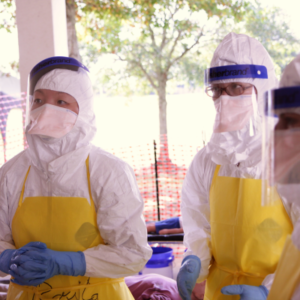
Key components of the plan include enhanced epidemiological surveillance, expanded laboratory testing capacity, improved clinical care and treatment services, infection prevention and control measures, community engagement programs, research initiatives, and strengthened logistical support. The strategy also places significant emphasis on cross-border coordination, recognizing the risks posed by population movement between affected countries and neighboring regions.
Health officials have stressed that community participation will play a central role in controlling the outbreak. Effective contact tracing, public awareness campaigns, and the adoption of appropriate health measures at the local level are considered critical to limiting transmission and ensuring a successful response. The plan therefore combines technical health interventions with community-based approaches aimed at improving trust, cooperation, and compliance with public health recommendations.
The outbreak has primarily affected the Democratic Republic of the Congo, which has recorded hundreds of confirmed cases and dozens of deaths, particularly in Ituri Province, the epicenter of the crisis. Uganda has also reported confirmed infections and fatalities linked to the outbreak. The rapid spread of the disease and the potential for cross-border transmission prompted health authorities to classify the situation as a public health emergency of international concern.
Beyond the immediate health risks, the outbreak presents significant economic challenges for affected regions. Ebola outbreaks often disrupt trade, agricultural production, labor markets, transportation networks, and local businesses. Restrictions on movement and border controls implemented to contain transmission can affect cross-border commerce and reduce economic activity, particularly in communities that depend heavily on informal trade for their livelihoods.
The crisis has also highlighted ongoing weaknesses in healthcare systems across parts of Africa, including limited medical infrastructure, shortages of trained personnel, and dependence on external financial and technical assistance during emergencies. Experts argue that long-term resilience will require sustained investment in healthcare infrastructure, sanitation systems, disease surveillance networks, and emergency preparedness programs capable of responding rapidly to future outbreaks.
The new continental response plan complements ongoing national efforts in affected countries while providing a broader framework for regional cooperation. By strengthening surveillance systems, improving treatment capacity, and enhancing coordination among governments and international partners, Africa CDC and WHO aim to contain the current outbreak and reduce the risk of further spread across the continent.
As African nations continue to face recurring public health threats, the initiative underscores the importance of collective action, coordinated financing, and stronger health systems in protecting populations and safeguarding economic stability from future epidemic risks.