You are here: Home/cat/ AfDB and GEF Reaffirm Partnership for Africa’s Sustainable Future on World Environment Day 2026
AfDB and GEF Reaffirm Partnership for Africa’s Sustainable Future on World Environment Day 2026
On World Environment Day 2026, the African Development Bank (AfDB) and the Global Environment Facility (GEF) reaffirmed their long-standing partnership to advance climate resilience, environmental sustainability, and inclusive development across Africa. The occasion coincided with the 8th GEF Assembly in Samarkand, Uzbekistan, highlighting the growing importance of global cooperation in addressing environmental challenges.
Since becoming a GEF implementing agency in 2007, the African Development Bank has managed a portfolio worth $521 million in GEF resources while mobilizing approximately $4.8 billion in co-financing. The partnership supports projects focused on climate adaptation, biodiversity conservation, sustainable land management, water security, and low-carbon development across the continent.
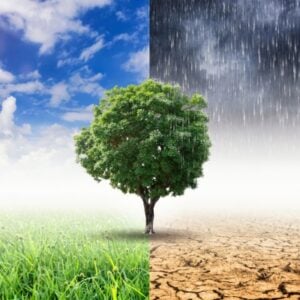
Despite contributing less than 4% of global greenhouse gas emissions, Africa remains one of the regions most vulnerable to climate change. Increasing droughts, floods, rising temperatures, and ecosystem degradation continue to threaten livelihoods and economic growth, making climate finance and environmental investment critical for the continent’s future.
The AfDB-GEF partnership has delivered measurable results in several African countries. In Mauritania, solar-powered water systems have improved access to clean water and strengthened local livelihoods. In The Gambia, climate-smart water and sanitation projects have enhanced public health, increased school attendance among girls, and improved community resilience. Energy access initiatives supported by the partnership have also brought electricity to more than 220,000 people while reducing carbon emissions and creating thousands of jobs.
In 2025, the collaboration expanded with new projects aimed at strengthening climate resilience, sustainable agriculture, fisheries management, pollution reduction, and water security in countries including Benin, Burkina Faso, the Central African Republic, the Democratic Republic of Congo, Liberia, and São Tomé and Príncipe.
As the GEF-9 funding cycle begins for 2026–2030, both organizations are expected to deepen their focus on climate-resilient infrastructure, private sector participation, blended finance solutions, and support for vulnerable communities. The renewed partnership underscores a shared commitment to ensuring that environmental sustainability and economic development continue to advance together across Africa.