You are here: Home/cat/ Successful workshop on arts-based practices in local peace
Successful workshop on arts-based practices in local peace
A two-day workshop held on 27–28 May in Sarajevo explored how arts-based approaches can support local peacebuilding in conflict-affected contexts, bringing together researchers, practitioners, and institutions working at the intersection of art, education, and peace studies.
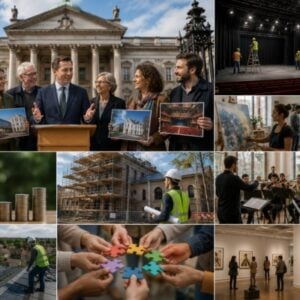
The event included presentations, discussions, and co-creation sessions focused on how creative methods—such as theatre, photography, storytelling, and visual arts—can be used to better understand and support “relational peace” at the community level. Participants also engaged in reflective exercises and visited local sites and museums in Sarajevo to connect theory with lived experience.
The workshop was co-organized by the Peace Research Institute Oslo (PRIO), the Peace and Conflict Research Centre (PCRC), the Flemish Peace Institute, King’s College London, and Tampere University, bringing together a multidisciplinary group of scholars and practitioners.
Sessions highlighted a range of applied projects. Theatre-based methods were used to explore embodied approaches to peace, while photography-based “Photovoice” techniques were presented as tools for working with communities to identify local peace indicators. Other presentations examined topics such as sacred mapping of Indigenous territories affected by armed conflict in Colombia, storytelling with displaced Kurdish-speaking families in Türkiye, and arts-based engagement with Ukrainian higher education collaboration.
Additional case studies included curating exhibitions with Sudanese artists and using creative methods with military veterans, alongside discussions on education challenges in Bosnia and Herzegovina.
A panel of practitioners and academics also reflected on broader policy implications, while interactive sessions identified key challenges in combining artistic practice with academic research in peacebuilding work.
Participants emphasized that war’s effects extend across generations and that peacebuilding work often requires long-term engagement. The workshop concluded with reflections on how arts-based methods can open new ways of understanding conflict, memory, and reconciliation, while also shaping future research and policy approaches to peace.