
Malala Fund, the global education advocacy organization founded by Nobel Peace Prize laureate Malala Yousafzai, has announced support for a youth-led coalition in Nigeria aimed at reducing child marriage by keeping more girls in school. The Fund will provide a two-year Joint Action Grant (JAG) to four Nigerian civil society organizations to activate the country’s… [Read More]
SADC and South Africa Evaluate Flood Damage and Priority Relief for Affected Communities
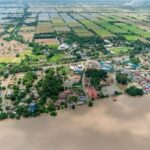
From 25–26 January 2026, a Southern African Development Community (SADC) team, accompanied by South African officials, conducted a mission to assess the impacts of recent floods and the humanitarian priorities of affected communities in Limpopo Province. The objective was to gain a comprehensive understanding of the flood situation, its consequences, and the immediate needs of… [Read More]
16 Days of Activism in Pakistan: UNESCO Partners with UN to Raise Awareness
In 2025, UNESCO Islamabad framed the 16 Days of Activism against Gender-Based Violence around the increasingly complex challenge of digital violence. The campaign went beyond a single event, using high-level advocacy, artistic expression, and youth empowerment to create a practical “survival framework” for women and marginalized groups navigating online spaces. Symbolic gestures, such as illuminating… [Read More]
Transforming Early Childhood Education in West and Central Africa: Expertise into Action
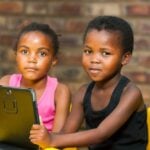
From 20–22 January 2026, countries from West and Central Africa convened in Dakar for the Regional Expert Meeting on Early Childhood Education and Development (ECED) to reaffirm the strategic importance of ECED for equity, human capital development, and regional resilience. With just five years remaining until the 2030 Agenda, participants emphasized that the priority is… [Read More]
Asia-Pacific Focus: Strengthening Human Security with Poly-Risk Planning

Amid escalating climate impacts, socio-economic shocks, and political instability, government representatives across Asia-Pacific are intensifying efforts to adopt integrated, people-centred approaches to resilience in the region’s increasingly complex poly-risk environment. In this context, the United Nations Development Programme (UNDP) and the United Nations Trust Fund for Human Security (UNTFHS) convened the “Regional Knowledge-Sharing Workshop on… [Read More]
Haiti Takes Key Step in School Reform with UNESCO Support

New funding has been secured to continue international support for curriculum development in Haiti, advancing the next stage of a long-term education reform aimed at transforming the country’s basic education system. A US$6.8 million agreement was signed by the Minister of National Education and Vocational Training, Augustin Antoine, and UNESCO-IBE Director Costanza Farina, allocating funds… [Read More]
Data-Powered Kickstarter Projects Rolled Out by Government to Boost Public Services

The UK government has launched a series of new data-driven Kickstarter projects aimed at improving public services by making better use of public sector data. These initiatives are designed to reduce bureaucracy, target support more effectively, and explore how artificial intelligence can help address everyday challenges, from rising energy bills to legal guidance for small… [Read More]
£55m Funding Boost for Mental Health Research in Under-Served Areas

The National Institute for Health and Care Research (NIHR) is investing nearly £55 million to establish five additional Mental Health Research Groups (MHRGs), further expanding its mental health research programme in England. This funding targets areas with high levels of mental ill-health and limited local research capacity, aiming to bring research closer to communities most… [Read More]
No 64% Cut: Gauteng Education Clarifies Quintile 5 School Funding
The Gauteng Department of Education (GDE) has strongly rejected claims that it cut funding to Quintile 5 schools by 64%, calling these reports false, misleading, and a deliberate distortion of information. The Department emphasized that no such reduction has been implemented and clarified that an interim funding realignment was necessary due to severe budget reductions… [Read More]
Apply Now: Latest Arts and Culture Funding Opportunities
The Department of Cultural Affairs and Sport has launched its annual funding call for organisations and individuals working in the arts and culture sector. Funding is available across multiple categories, including cultural tourism, literature, film, language promotion and preservation, and the performing arts. Detailed criteria, categories, and application forms are accessible online. Western Cape Minister… [Read More]
Darfur Justice: Why the ICC’s Work Remains Vital
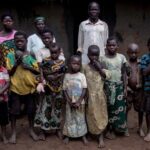
On January 19, ICC Deputy Prosecutor Nazhat Shameem Khan briefed the United Nations Security Council on her office’s ongoing investigation in Darfur, Sudan, though she had to participate remotely after being denied a visa to travel to New York City. This restriction followed sanctions imposed in 2025 by the Trump administration on several ICC officials,… [Read More]
Justice at Sea: Italy’s Shipwreck Trial and the Path to Accountability

The trial of six Italian officers for a 2023 shipwreck that killed at least 94 people represents a critical opportunity for justice for migrants and asylum seekers who die at sea. Scheduled to begin on January 30, 2026, in Crotone, Italy, the trial follows a postponement and involves two Coast Guard officers and four Customs… [Read More]
The Absence of Consent: Why Italy’s Sexual Violence Law Is Flawed

Italy’s new draft law on sexual violence marks a significant regression from a consent-based framework designed to protect survivors of sexual abuse. Instead of establishing the absence of freely given consent as the basis for assessing sexual violence, the revised law shifts the burden onto victims, requiring them to prove they explicitly refused sexual acts… [Read More]
Lessons from the First Biennial Transparency Reports on the Enhanced Transparency Framework

With the submission of their first Biennial Transparency Reports (BTRs) by 31 December 2024, Parties to the Paris Agreement have implemented a core component of the Enhanced Transparency Framework (ETF). These reports, submitted by both developed and developing countries, provide comprehensive information on greenhouse gas emissions, climate action, and support, in line with the Modalities,… [Read More]
Renewed Conflict in South Sudan Sparks Urgent Concerns Over Atrocities
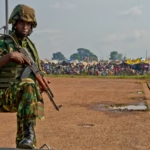
On January 25, South Sudan’s military issued orders for civilians, aid workers, and United Nations personnel to evacuate opposition-controlled areas in Jonglei state, signaling the start of a new offensive in Nyirol, Uror, and Akobo counties. The escalation comes amid intensified fighting between government forces, the South Sudan People’s Defence Forces (SSPDF), the Sudan People’s… [Read More]
UN Condemns Algeria-Tunisia Asylum Seeker Return as Breach of Human Rights Obligations
Algerian authorities forcibly returned former parliamentarian and government critic Seifeddine Makhlouf to Tunisia on 18 January 2026, despite his status as a registered asylum seeker with the UN Refugee Agency (UNHCR), Amnesty International has stated. The organisation condemned the move as refoulement, a clear violation of international law, and called on Algeria to clarify the… [Read More]
Escaped Victims Reveal Shocking Abuse in Cambodian Scamming Compound Amid Growing Humanitarian Crisis
Thousands of people who recently escaped or were released from scamming compounds in Cambodia are now stranded and in urgent need of humanitarian assistance, according to Amnesty International. Survivors, most of whom are foreign nationals, reported facing horrific abuse including rape, torture, and murder while held in compounds controlled by criminal gangs. Many are now… [Read More]
Paris Climate Agreement at Risk: US Exit Threatens Global Climate Goals

The United States’ withdrawal from the Paris Climate Agreement has sparked international concern over its potential to undermine global climate cooperation. Marta Schaaf, Amnesty International’s Programme Director for Climate, ESJ and Corporate Accountability, described the move as a “disturbing precedent” that risks instigating a “race to the bottom” and reversing over a decade of progress… [Read More]
UN Experts Raise Alarm Over Sanctions on ETH Zurich Students Protesting Israeli Collaborations

UN human rights experts have raised serious concerns over the Swiss Federal Institute of Technology in Zurich (ETH Zurich) pursuing criminal prosecution against students who peacefully protested the university’s research partnerships with Israeli institutions. The experts emphasized that publicly funded research must not contribute, directly or indirectly, to war crimes, crimes against humanity, or genocide,… [Read More]
UK’s Climate Action Fund Opens to Support Low-Carbon and Resilient Food Systems

The National Lottery Community Fund (NLCF) has launched its Climate Action Fund – Food Systems programme, inviting applications for long-term, partnership-led projects aimed at transforming food systems across the UK. The fund offers grants ranging from £2.5 million to £7 million for projects lasting five to seven years, with up to ten initiatives expected to… [Read More]
Sierra Leone Invites Private Developers to Boost Rural Electrification Through SOGREA Initiative
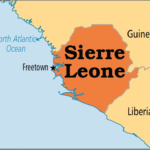
The Salone Off-Grid Renewable Energy Acceleration (SOGREA) Initiative has launched its first Call for Pre-Qualification Applications, inviting private sector companies to develop and upgrade green mini-grids in rural communities across Sierra Leone. The initiative, backed by the European Union and the Government of Denmark, aims to expand clean and reliable electricity access while promoting climate-resilient… [Read More]
Western Balkans Receives €171 Million EU Support Package to Strengthen Infrastructure and Enterprises

The European Commission has announced a €171 million support package to strengthen infrastructure and private sector development across Western Balkans partner countries. This funding combines contributions from multiple EU sources, including the Instrument for Pre-Accession Assistance (IPA III), the Western Balkans Investment Framework (WBIF) bilateral donors, and the Reform and Growth Facility (RGF), targeting projects… [Read More]
From Refugee Camp to Garden: How Green Thumbs Are Transforming Lives

Inside the Hagadera Refugee Camp in Dadaab, eastern Kenya, Mariam has transformed her kitchen garden into a source of nutrition and self-reliance. Having lived in the camp for 19 years after fleeing political unrest in Somalia, she has worked tirelessly to make her surroundings feel like home. Her garden provides diverse, nutritious produce for her… [Read More]


