
On the occasion of World Cancer Day, the Pan American Health Organization has urged countries in the Americas to accelerate efforts to eliminate cervical cancer by 2030, warning that progress is currently too slow to meet global targets. With only five years remaining, PAHO emphasized that despite gains in vaccination, gaps in screening and treatment… [Read More]
Amnesty Condemns US Use of Force in Venezuela, Calls for Accountability
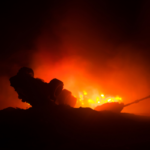
Amnesty International has condemned the 3 January United States military attack on Venezuela, describing it as an unlawful use of force under the UN Charter and a serious threat to the rules-based international order. The organization warned that the operation constitutes an act of aggression that endangers civilians, weakens international law, and risks encouraging similar… [Read More]
Agrihoods: How Nature-Based Neighbourhoods Could Shape Future Cities
Cities now house more than half of the world’s population and account for around 70 per cent of global greenhouse gas emissions, making urban design a central challenge in addressing the climate crisis. In Brazil, urban planners are experimenting with a new model of development known as the “agrihood,” which aims to significantly reduce the… [Read More]
Ireland Announces New Research Awards and European Research Participation
Ireland’s Minister for Agriculture, Food and the Marine, Martin Heydon, alongside Minister of State for Research and Innovation, Noel Grealish, has announced funding for multiple international research projects and confirmed Irish participation in two new European research initiatives. The announcements underline Ireland’s continued commitment to strengthening research collaboration and innovation at both European and global… [Read More]
Ontario Invests $2M in Business Succession Planning to Support Entrepreneurs

The Ontario government is investing nearly $2 million to establish the province’s first dedicated business succession planning services hub, aimed at helping entrepreneurs prepare for smooth ownership transitions. The initiative, known as Succession Ontario, is designed to support business owners in selling, buying, or transferring businesses while protecting good-paying jobs and strengthening local communities across… [Read More]
NAC 2026-2027 Arts Funding Opportunities for South African Practitioners
The National Arts Council of South Africa (NAC) has announced its Annual Project Funding Call for the 2026-2027 financial year, inviting applications from individual arts practitioners, registered arts organisations, and community art centres. Each applicant, whether an individual or organisation, may submit only one proposal for consideration. The call is open to practitioners in craft,… [Read More]
Pacific Nations Engage with EU to Expand iEPA Benefits and Boost Economic Resilience

The European Union and Fiji co-chaired a meeting of iEPA Parties, bringing together Fiji, Papua New Guinea, Samoa, and Solomon Islands, alongside Pacific observer countries pursuing accession, including the Cook Islands, Federated States of Micronesia, Kiribati, Niue, the Republic of the Marshall Islands, Timor-Leste, Tonga, Tuvalu, and Vanuatu. The participation of these countries highlighted the… [Read More]
The Role of African Women in Shaping Peace Processes and Conflict Resolution

In Sudan’s ongoing conflict, women have played a pivotal role in grassroots peacebuilding, yet their participation in formal negotiations has been repeatedly marginalized. Despite their leadership during the 2018–19 revolution and ongoing community mobilization through platforms like the Peace for Sudan Platform, women were excluded from the Jeddah ceasefire talks in 2023, highlighting persistent patterns… [Read More]
Ghana Banks Face Rising Non-Performing Loans Amid Global Trade and Security Pressures

The 2026 Industry Outlook from the Ghana Association of Banks (GAB) highlights that Ghana’s banking sector continues to face significant external risks, particularly from global trade disruptions, geopolitical tensions, and regional insecurity. While domestic macroeconomic conditions have shown signs of stabilisation, vulnerabilities originating outside the country remain substantial, affecting financial institutions’ risk appetite, credit conditions,… [Read More]
Transforming Remittances into Investments: Ghana’s Push for Sustainable Development
Ghana is aiming to transform diaspora remittances into long-term investment as easing inflation and regulatory reforms enhance its appeal to foreign and diaspora investors. The Ghana High Commission in the United Kingdom hosted a high-level business breakfast to mobilize diaspora capital and strengthen strategic partnerships supporting sustainable investment in the country. Under the theme “Harnessing… [Read More]
Strengthening Ghana–Korea Trade Ties: GIPC Showcases Gateway Market Potential
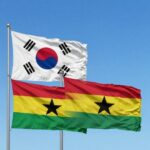
The Ghana Investment Promotion Centre (GIPC) hosted a South Korean business delegation in Accra as both countries work to strengthen trade and investment relations. During the Ghana–Korea Business Forum, GIPC CEO Simon Madjie emphasized that Ghana is open to new investment, highlighting regulatory reforms and large-scale economic programmes, including the proposed 24-Hour Economy and the… [Read More]
Afreximbank Launches 2026 Accelerator Supporting Trade and Industrialisation in Africa
Afreximbank has selected eight startups for the inaugural cohort of its Afreximbank Accelerator Programme, a three-month initiative designed to scale companies that support intra-African trade and industrialisation under the African Continental Free Trade Area (AfCFTA). The programme, set to begin in March 2026, attracted over 1,600 applications from across Africa, the diaspora, and the Caribbean,… [Read More]
New Greek Law Could Criminalize Aid Workers Assisting Migrants
The Greek government has introduced a new immigration bill that imposes severe penalties on nongovernmental organizations (NGOs) and humanitarian workers assisting migrants, effectively linking them to criminal conduct despite their life-saving efforts. The proposed amendments would make membership in an NGO an aggravating factor for several offenses, imposing minimum prison sentences of 10 years and… [Read More]
South Korea Under Global Scrutiny Over Death Penalty for Ex-President Yoon
The Anti-Death Penalty Asia Network (ADPAN) and partner civil society organizations have expressed strong opposition to South Korean prosecutors seeking the death penalty for former President Yoon Suk-Yeol during the final hearing of his trial for insurgency on 13 January 2026. They argue that insurgency does not qualify as a crime warranting capital punishment under… [Read More]
Rohingya Atrocities and Political Crackdown: Myanmar’s Human Rights Emergency

Human Rights Watch submitted a report to the Foreign Affairs, Defence and Trade References Committee on the state of democracy and human rights in Myanmar, five years after the February 2021 military coup. Since the coup, the military junta has systematically dismantled the country’s infrastructure, economy, civil and political institutions, and public services, including healthcare… [Read More]
Zimbabwe Minerals Marketing Authority Reports 6% Revenue Growth in 2025

In 2025, Zimbabwe’s Minerals Marketing Authority (MMCZ), responsible for marketing minerals excluding gold and silver, reported export revenues of $3.4 billion, representing a 6% increase from 2024. Despite this growth, the figure remains significantly below the national target of $12 billion, which has yet to be achieved, pending the release of gold and silver export… [Read More]
Government to Unlock Advanced Nuclear Power to Boost Economic Growth

Britain is positioning itself to become one of the first countries to deploy advanced nuclear power stations capable of supplying clean, reliable energy to factories and AI data centres. As part of what the government describes as a “golden age” of nuclear energy, these initiatives aim to support skilled jobs, boost economic growth, strengthen energy… [Read More]
FAO Launches Free Virtual Course on Improving Ruminant Biosecurity

The Food and Agriculture Organization of the United Nations (FAO) has launched a new free, self-paced virtual course designed to help ruminant farmers and veterinarians strengthen biosecurity practices on farms. Titled Improving Ruminant Biosecurity, the course is available through FAO Virtual Learning Centres in English, Russian and Turkish, and aims to promote safer livestock production,… [Read More]
WHO Urges Investment in Health Security Through 2026 Emergency Appeal

The World Health Organization has launched its 2026 emergency appeal as a call for global solidarity with people affected by conflict, displacement, and disasters, stressing that humanitarian support is about restoring dignity and hope, not just delivering services. WHO Director-General Dr. Tedros Adhanom Ghebreyesus emphasized that the appeal seeks to reassure vulnerable communities that the… [Read More]
UNICEF Warns Children at Severe Risk as Conflict Disrupts Aid and Health Services
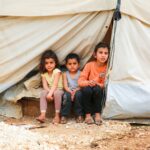
UNICEF has raised serious concerns over the impact of ongoing violent clashes on women and children, warning that access constraints are worsening an already dire humanitarian situation. Aid delivery remains severely limited due to restrictions on river, road, and air travel, while health services continue to deteriorate. Several counties are close to exhausting therapeutic food… [Read More]
WHO Warns: Cancer Cases Could Rise 50% by 2040 Without Strong Prevention
Cancer continues to be one of the world’s leading causes of illness and death, accounting for nearly 10 million deaths globally in 2020—almost one in six deaths overall. If current trends persist, the number of new cancer cases is projected to rise by 50 per cent by 2040, highlighting the urgent need to strengthen prevention… [Read More]
What Is Crisis Management in Digital Marketing and Why Does It Matter?

Crisis management has become a critical element of digital marketing in an era where information spreads rapidly, particularly through social media. Even minor incidents can escalate into major reputational threats within hours. Effectively managing such situations is no longer optional; it is essential for protecting brand credibility and sustaining consumer trust. Brands that understand how… [Read More]
How Digital Marketing Crises Impact Brand Trust: Case Studies and Recovery Lessons

In today’s highly connected digital environment, brand crises can unfold rapidly, especially on social media where information spreads instantly. Effective crisis management has therefore become a critical pillar of digital marketing, essential for protecting brand reputation and maintaining consumer trust. Learning from past brand failures provides valuable insights into how businesses can respond strategically and… [Read More]


