
The January 2025 Los Angeles wildfires were among the most destructive in California’s history, claiming over two dozen lives and destroying thousands of structures. The Eaton Fire in Altadena and the Pacific Palisades fire were ranked the second and third most destructive in the state’s records, with total property and capital losses estimated between $76… [Read More]
Asia-Pacific Cities: How Local Leadership Will Define Urban Development
Cities across Asia and the Pacific are at the forefront of some of the region’s most urgent challenges, including climate risks, infrastructure stress, and growing social inequalities. With more than half of the world’s urban population, the region’s ability to achieve sustainable development depends heavily on how effectively cities implement global commitments. Local leadership has… [Read More]
Lessons in Transregional Cooperation from Asia, the Pacific, and Latin America

At the second High-Level Conference of Middle-Income Countries, a panel discussion on strengthening global and regional South-South Cooperation highlighted the challenge of sustaining transregional cooperation platforms. Drawing on the experiences of the Asia-Pacific and Latin America and Caribbean (LAC) regions provides valuable lessons in practical, targeted interregional collaboration that other regions can emulate. A key… [Read More]
Sudan Faces Famine Crisis with 4.4 Million People at Risk
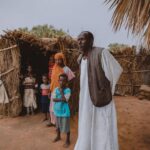
Somalia is facing a severe drought emergency, putting millions of people at risk of hunger, malnutrition, and preventable death. Consecutive poor rainy seasons have left communities struggling to access food and water, prompting the Federal Government of Somalia to declare a national drought emergency. According to the latest IPC analysis, around 4.4 million people are… [Read More]
Rising Violence in Aleppo Drives Mass Exodus of 16,000 People

Violence in Aleppo has intensified sharply, prompting a dramatic surge in displacement. In the last 24 hours, over 16,000 people have fled the city, a seventeenfold increase compared to previous days. Many families remain trapped in Aleppo, facing extreme hardship with limited access to food, clothing, or heating amid near-freezing nighttime temperatures. Humanitarian organizations are… [Read More]
Violence Against Women in Utah: Why Progress Remains Elusive

Utah continues to struggle with high rates of violence against women, a crisis that persists due to deeply interconnected social, cultural, and systemic factors. One key issue is the reluctance of Utahns, including both leaders and residents, to confront the problem openly. This silence allows violence to continue unchallenged and prevents meaningful action to address… [Read More]
U.S. Intervention in Venezuela Sparks Rights Crisis and International Alarm

The Trump administration’s recent military assault on Venezuela has raised serious concerns about a potential human rights disaster, according to Human Rights Watch. In the early hours of January 3, 2026, US forces conducted strikes in Venezuela, taking President Nicolás Maduro and his wife, Cilia Flores, into custody. They have since been arraigned in a… [Read More]
Declining Funding in Egypt Jeopardizes Education and Health Services

The Egyptian government has severely undermined citizens’ rights to education and health care by failing to allocate sufficient funding, falling short of both constitutional requirements and international standards, Human Rights Watch reported. This chronic underfunding has left schools and hospitals severely under-resourced, with shortages of classrooms, teachers, doctors, and nurses, while families shoulder significant out-of-pocket… [Read More]
How Child-Focused Investments Drive Economic Development and Save Lives in West Africa

A targeted investment of $2.5 million by the United Nations Capital Development Fund (UNCDF) is poised to transform humanitarian supply chains in West Africa, significantly improving the lives of children at risk of malnutrition. The initiative focuses on building local manufacturing capacity for Ready to Use Therapeutic Foods (RUTFs), which are essential for treating severely… [Read More]
How the UN Helped Uruguay Pioneer Sustainable Transport Financing Worldwide

Uruguay is breaking new ground in decarbonising its transport and industrial sectors with the launch of the Kahirós green hydrogen project, the country’s first large-scale initiative to produce and use green hydrogen for heavy transport. Launched in December 2025 with an investment exceeding $30 million, the project is financed by Grupo Santander, the International Finance… [Read More]
UN in Iraq: Transitioning from Stability Efforts to Long-Term Sustainability

In Iraq, the United Nations is navigating a significant transition, reflecting both the country’s evolving priorities and the UN’s need to remain relevant and effective. After decades of conflict, Iraq has made tangible progress: nearly five million internally displaced people have returned home, economic activity is recovering, state institutions are regaining confidence, and the country… [Read More]
Ahead of 2026 Elections, UN Urges Uganda to Safeguard Human Rights

UN experts have issued a stark warning regarding the upcoming general elections in Uganda, scheduled for 15 January 2026, highlighting a pervasive climate of fear that undermines the potential for peaceful voting. They expressed concern that patterns of repression observed during the 2021 elections—such as enforced disappearances—are reappearing, with at least 160 cases reported in… [Read More]
$152,000+ in Grants Awarded to Tackle Hunger and Food Insecurity in Northern New York

The Northern New York Community Foundation has awarded $152,175 in grant support during 2025 to 67 food pantries, soup kitchens, and school-based backpack programs across Jefferson, Lewis, and St. Lawrence counties. This funding includes $55,000 approved as year-end aid by the Foundation’s Board of Directors, aimed at strengthening local programs and stocking shelves with essential… [Read More]
Ilute Solar Project Reaches Financial Close, Marking a Landmark Solar IPP Deal in Zambia
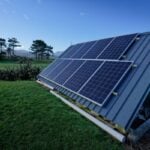
Financial close has been successfully achieved for the Ilute Solar Project, allowing construction to begin on one of Zambia’s most innovative renewable energy developments. Announced by Serengeti Energy, Kwama Energy, and FMO, this milestone completes the project’s development phase and establishes a new benchmark for privately financed power generation in Zambia and the wider Southern… [Read More]
PRIO Wins Major Research Grants to Advance Studies on Conflict, Security and Gender

PRIO has secured several new external research grants, underscoring strong confidence in the Institute’s work and its relevance to urgent global challenges. The funding supports five major research areas, including displacement, Nordic security, societal preparedness, the human impacts of the war in Ukraine, and gender, peace and security. Together, these initiatives strengthen PRIO’s capacity to… [Read More]
United States Halts Assistance to Somalia Following Allegations of Aid Diversion

The United States has announced the suspension of all assistance to the government of Somalia following allegations that Somali officials destroyed a World Food Programme warehouse containing US-funded food aid. According to a statement shared on social media by the US State Department, 76 metric tonnes of donor-funded food intended for vulnerable Somalis were allegedly… [Read More]
DEQ Launches New Grant Program for Water Quality Protection Projects
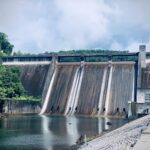
The Montana Department of Environmental Quality is inviting nonprofit organizations and government entities to apply for approximately $1.5 million in grant funding to support nonpoint source pollution reduction projects across the state. Eligible applicants must submit draft applications by February 20, 2026. The funding is aimed at improving water quality in Montana’s lakes, streams, and… [Read More]
Montana 250th Commission Grants Almost $420,000 to 32 Groups Celebrating America’s 250th Anniversary

The Montana 250th Commission has announced the recipients of its statewide grant program, awarding a total of $419,721 to 32 organizations across Montana to support projects commemorating America’s 250th anniversary in 2026. The funded initiatives are designed to deepen public understanding of Montana’s diverse culture and heritage while fostering meaningful connections to the nation’s semiquincentennial…. [Read More]
Protecting Federal Programs Is Essential to Fulfilling U.S. Trust and Treaty Duties

On December 24, 2025, the Native American Rights Fund filed an amicus brief supporting an injunction that blocked a sweeping federal funding freeze directed by the Office of Management and Budget in January 2025. The injunction prevents the enforcement of the original directive as well as similar future policies. The brief was submitted on behalf… [Read More]
U.S. Must Fulfill Its Obligations by Safeguarding Critical Programs

On December 24, 2025, the Native American Rights Fund (NARF) filed an amicus brief in support of an injunction that blocks the sweeping federal funding freeze imposed by the Office of Management and Budget (OMB) in January 2025. The injunction prevents not only the original freeze but also any similar funding restrictions the Administration might… [Read More]
New $6.5M Funding Boost Ensures Performing Artists Lead in Technology Innovation

The Doris Duke Foundation (DDF), in partnership with the Mozilla Foundation, has announced a $6.5 million commitment to their new initiative, Artists Make Technology (AMT), aimed at placing performing artists at the center of technological innovation. Launching on January 7, 2026, AMT seeks to dismantle systemic barriers that have historically excluded artists from shaping technology,… [Read More]
Baring Foundation Upholds Racial Equity as Core to Its Programmes

The Baring Foundation is committing an additional £3 million in funding over the next five years to advance racial justice through its grant-making. This follows an initial £3 million commitment made in 2020, which was distributed through the Foundation’s UK Arts and Strengthening Civil Society programmes between 2021 and 2025 and concluded this year. The… [Read More]
Promoting Women’s Health in The Hills Through Menstrual Education

In Merung, one of the most remote unions in Khagrachari, part of the Chittagong Hill Tracts, menstrual health was long a silent struggle. Limited awareness and the high cost of sanitary pads often kept girls out of school and left women enduring discomfort. The situation is now changing through UNDP Bangladesh’s Women and Girls Empowerment… [Read More]


