
India is rapidly advancing its nationwide digital infrastructure by combining rural 4G expansion, secure satellite communications, and one of the fastest 5G rollouts in the world. This integrated strategy aims to enhance digital inclusion, strengthen network resilience, and position India as a global leader in telecom innovation and the digital economy. The coordinated push underscores… [Read More]
cat
Famine Deepens in Sudan as WHO Labels Guinea-Bissau Trial ‘Unethical’
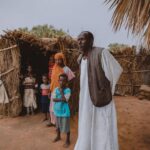
Famine conditions in Sudan are worsening, particularly in the most vulnerable areas, as the humanitarian situation continues to deteriorate. WHO Director-General Dr. Tedros Adhanom Ghebreyesus warned that acute malnutrition has surpassed famine thresholds in parts of North Darfur, where thousands of people fled to towns like Um Baru and Kernoi to escape violence in El… [Read More]
Kyrgyz Republic Moves Toward Sustainable Transit with EBRD Support

The European Bank for Reconstruction and Development (EBRD) is supporting the modernization of public transport in Bishkek, Kyrgyz Republic, through the introduction of 95 new compressed natural gas (CNG) buses. This initiative aims to improve comfort, accessibility, and environmental performance across the city, marking the second phase of a project that will see a total… [Read More]
Ghana’s Legal Cannabis Industry Could Generate $1 Billion Annually

xGhana’s legal cannabis industry is poised to become a major economic sector, with the potential to generate at least $1 billion annually if fully implemented, according to Dr. Mark Darko, President and CEO of the Chamber of Cannabis Industry. Nearly three years after Parliament legalized cannabis for medicinal and industrial purposes, the Narcotics Control Commission… [Read More]
Top 5 Urgent Global Challenges the World Faces in 2026
The International Rescue Committee’s (IRC) 2026 Emergency Watchlist highlights the world’s most pressing crises, describing a “New World Disorder” in which humanitarian needs are surging while global support is collapsing. This annual report identifies countries at greatest risk of new or worsening emergencies and calls attention to urgent global problems that require immediate action. Armed… [Read More]
UNCDF Joins Canada Forum for Impact Investment and Development

The United Nations Capital Development Fund (UNCDF) has joined the Canada Forum for Impact Investment and Development (CAFIID), a national platform connecting Canadian organizations and professionals committed to advancing impact investing and innovative finance for sustainable development. This membership provides UNCDF with a strategic space for dialogue, learning, and collaboration on mobilizing capital to achieve… [Read More]
WHO/Europe and EU Advance Arts and Culture for Health and Wellbeing

WHO/Europe, supported by the European Union (EU), is expanding efforts to help Eastern Partnership countries integrate arts and culture into health systems through a series of regional capacity-building workshops. These workshops serve as catalysts for country-led action and collaboration, enabling nations to move from fragmented initiatives to structured, evidence-based approaches that align with national health… [Read More]
Supporting Innovation in Drug and Alcohol Addiction Healthcare Solutions

The Addiction Healthcare Goals, led by the Office for Life Sciences (OLS), aim to establish the UK as a global leader in drug and alcohol addiction healthcare innovation. The programme seeks to foster partnerships between industry, researchers, the NHS, and third-sector treatment providers to develop, trial, and deploy innovative treatments and healthcare technologies that can… [Read More]
Shaping the Future of Skills: Key Insights from Workforce Foresighting Hub Workshops

The Workforce Foresighting Hub (WF Hub) workshops were designed to showcase the data insights already generated and provide demonstrations of visualisation tools and reports. The sessions aimed to gather feedback to refine the data and its presentation for broader adoption while fostering a community where educators and skills providers feel empowered to shape solutions for… [Read More]
Mozambique Hydropower Boost: Mphanda Nkuwa Project Gains AfDB Support
Mozambique, in collaboration with the African Development Bank (AfDB), is advancing plans to secure financing for the $4.5 billion Mphanda Nkuwa Hydropower Project, a landmark initiative aimed at strengthening the country’s energy infrastructure and boosting regional power exports. On 5 February 2026, a high-level technical workshop was held at the AfDB’s Country Office in Maputo,… [Read More]
AgriConnect-Côte d’Ivoire: Job Creation and Food Security Boost with AfDB & World Bank
The African Development Bank Group and the World Bank Group, in partnership with the Government of Côte d’Ivoire, launched the AgriConnect Country Component for Côte d’Ivoire on 5 February 2026 in Abidjan. The initiative aims to transform the country’s agricultural sector into a key driver of large-scale job creation and national food sovereignty. The launch… [Read More]
Ontario Investing $20 Million in Species at Risk Conservation Programs

The Ontario government is investing $20 million through the Species Conservation Program to protect species at risk and their habitats across the province. This funding will support 46 community-led conservation projects focusing on at-risk species such as Monarch butterflies, Blanding’s turtles, and butternut trees. The initiative is part of Ontario’s broader effort to safeguard biodiversity… [Read More]
$6.4 Billion Investment by Ontario to Boost Postsecondary Sector Success and Future Growth

The Ontario government is investing $6.4 billion in its postsecondary sector to ensure long-term sustainability, protect student access to high-quality education, and support world-class research at universities, colleges, and Indigenous Institutes. This move comes in response to unprecedented pressures, including federal policy changes that have reduced international student revenues and increased domestic demand for higher-cost… [Read More]
Czechia Secures Nearly €2 Billion from EIB Group in 2025 for Rail, Power Grids, Business Growth, and Housing

In 2025, the European Investment Bank (EIB) Group provided €1.93 billion (nearly CZK 47 billion) in new financing in Czechia, supporting initiatives that improved railway services, advanced clean energy, strengthened business growth, and expanded affordable housing. The financing contributed to Czechia’s green transition while promoting competitiveness and regional development. Transport projects received nearly half of… [Read More]
Czechia Receives €2 Billion EIB Funding for Railways, Energy Grids, SMEs, and Housing in 2025

In 2025, the European Investment Bank (EIB) Group provided nearly €1.93 billion (around CZK 47 billion) in new financing in Czechia, supporting projects across transport modernization, clean energy, SME financing, and affordable housing. The funding advanced Czechia’s green transition while strengthening competitiveness and regional development. Transport projects accounted for almost half of the EIB’s support,… [Read More]
DR Congo Child Soldiers Describe Abduction, Violence, and Drugging; Calls for Urgent Action

Human Rights Watch has submitted recommendations to the Special Rapporteur for the upcoming thematic report on curriculum, pedagogy, and assessment in relation to the right to education, drawing on its global research on human rights and education. The submission emphasizes three critical concerns: the lack of comprehensive sexuality education (CSE), barriers to education for refugee… [Read More]
DR Congo Children Reveal Abduction and Violence in Armed Groups, Urgent Action Needed
Children in the Democratic Republic of Congo (DRC) continue to face the devastating impact of recruitment by armed groups, with many subjected to abduction, drugging, and exposure to extreme violence. In 2025, at least 1,360 children were released from armed groups in the eastern province of Ituri, yet approximately 13,000 children remained in captivity, highlighting… [Read More]
EIB Backs Czechia’s Electricity Grid Upgrade and Expansion Project

Czechia is set to modernize and expand its electricity network with a €380 million loan from the European Investment Bank (EIB), supporting the country’s transition to a more reliable and resilient power system. The funding will enable the national transmission-system operator, ČEPS a.s., to refurbish and extend high-voltage infrastructure, covering over 500 kilometres of 400… [Read More]
PAHO/WHO and Antigua & Barbuda Partner to Drive Health Priorities Through 2031
Antigua and Barbuda has formally endorsed the PAHO/WHO Multi‑Country Cooperation Strategy (MCCS) 2026–2031 for Barbados and the Eastern Caribbean, signaling a strengthened commitment to improving health outcomes and advancing regional development goals. The signing ceremony in St. John’s was presided over by Hon. Sir Molwyn Joseph, Minister of Health, Wellness, Environment and Civil Service Affairs,… [Read More]
Quantum Systems Receives New EU Financing to Scale Unmanned Systems Solutions
Quantum Systems has secured a €150 million financing package, backed by the European Investment Bank (EIB) and major European banks including Commerzbank, Deutsche Bank, and KfW. The funding is intended to support the company’s growth, industrial scaling, and ongoing investments in unmanned systems technology, while reinforcing Europe’s security and technological sovereignty. The announcement was made… [Read More]
World Bank Warns Human Capital Crisis Threatens Future Earnings

The World Bank Group has released a report highlighting that current deficits in health, education, and workplace skills are costing low- and middle-income countries 51% of their future labor earnings, with Nigeria facing losses equivalent to 111% of projected earnings. Despite rising incomes and declining poverty over the past 15 years, two-thirds of these countries… [Read More]
World Bank Launches Transport Connectivity Project in Bosnia and Herzegovina

The World Bank has approved a €70 million ($80.97 million) loan to Bosnia and Herzegovina to enhance transport connectivity and modernize key road infrastructure, supporting economic growth and job creation. The project is complemented by an €8.5 million ($9.99 million) grant from the European Union’s Western Balkans Investment Framework, reflecting strong international collaboration. The Federation… [Read More]
Human Trafficking Crisis: IOM Calls for Global Action on 125,000 Victims

In Marrakesh, on 12 February 2026, the International Organization for Migration (IOM) called on governments to place migration and trafficking at the centre of global efforts to end child labour. Speaking at the Sixth Global Conference on the Elimination of Child Labour, IOM emphasized the need for stronger data, research, and cross-border cooperation to better… [Read More]


