
Mauritius and Seychelles, as Small Island Developing States, face distinct yet interconnected challenges in transitioning to renewable energy and advancing circular economy models. Mauritius must address limited land and natural resources, heavy dependence on imported fossil fuels, fragmented policies, capacity gaps, and the need for large-scale infrastructure investment to meet its clean energy ambitions. Seychelles,… [Read More]
cat
Mozambique Flood Crisis: IOM Expands Emergency Aid for More Than Half a Million Displaced
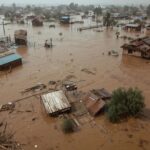
The International Organization for Migration (IOM) is intensifying its emergency response in Mozambique as severe flooding continues to displace large numbers of people across the country. The organization is expanding life-saving assistance while strengthening nationwide displacement tracking, coordination, and protection efforts in collaboration with the government and humanitarian partners. Weeks of heavy rainfall have triggered… [Read More]
Lebanon Shows Signs of Economic Recovery as Reforms Advance
Lebanon’s economy recorded positive growth in 2025, marking the beginning of a modest recovery after years of severe economic contraction. According to the latest World Bank Lebanon Economic Monitor, real GDP expanded by 3.5 percent in 2025, reflecting early signs of macroeconomic stabilization, a rebound in tourism, and the impact of reform progress, albeit uneven…. [Read More]
Bhutan Advances Clean Energy Goals with World Bank Group–Supported Hydropower Financing

The World Bank Group’s Boards of Executive Directors have approved a major financing package to expand Bhutan’s hydropower generation, support regional clean energy trade, stimulate economic growth, and create jobs. The initiative underscores Bhutan’s strategic role in advancing sustainable energy development while strengthening economic opportunities through low-carbon power exports. At the center of the package… [Read More]
Central Asia Launches First Regional Electricity Market with World Bank Support

The World Bank’s Board of Executive Directors has approved the Regional Electricity Market Interconnectivity and Trade (REMIT) Program, a 10-year initiative designed to enhance energy connectivity across Central Asia. The program will establish the region’s first-ever regional electricity market, expand electricity trade, increase transmission capacity, and create a foundation for integrating large-scale renewable energy. In… [Read More]
Nigeria Faces Food Aid Shortages as WFP Signals Cuts Amid Escalating Northern Crises

The United Nations World Food Programme (WFP) has warned that over one million people in northeast Nigeria could lose access to emergency food and nutrition assistance within weeks unless urgent new funding is secured. For the first time in the country, WFP’s aid will be limited to only 72,000 people, highlighting the severity of the… [Read More]
Kenya Secures $16.5 Million from AfDB for Renewable Energy Expansion

The African Development Bank (AfDB) Board of Directors approved a $16.5 million loan in November to support the development of the 35 MW OrPower Twenty-Two (OTTL) Geothermal Power Plant, a key renewable energy project in Kenya. The plant aims to increase the country’s baseload generation capacity and accelerate its transition to clean energy. The OTTL… [Read More]
Why Labour Markets Need Policy: Lessons on Employment and Decent Work

Well-designed employment policies play a decisive role in turning the idea of decent work into a lived reality for millions of people, according to Dorothea Schmidt, Chief of the International Labour Organization’s Employment Policy, Labour Market and Youth (EMPLAB) branch. She emphasises that employment policies are not abstract government documents, but powerful tools that shape… [Read More]
Why Indonesia Needs Education Budget Reform to Improve Quality and Equity

Indonesia deserves recognition for making education a constitutional priority. This commitment reflects an understanding that education is not simply one sector of development, but the foundation of human development, democracy, and citizenship. Yet despite strong state attention, a critical question remains unanswered: how far has education budget policy truly addressed the persistent challenges of quality… [Read More]
Creating Jobs at Scale: Why Entrepreneurship Ecosystems Matter More Than Ever

When J-PAL co-founder Esther Duflo spoke with the Aspen Network of Development Entrepreneurs (ANDE) last fall, she delivered a message that strongly resonated with both organizations: evidence is not about confirming what we already believe, but about discovering what truly makes a difference. She also highlighted the long-term ambition behind evidence-based entrepreneurship support—to help small… [Read More]
Five Key Lessons from Viet Nam’s National Adaptation Plan Mid-Term Evaluation
Viet Nam is among the countries most vulnerable to the impacts of climate change, with rising sea levels, saltwater intrusion, typhoons, floods, and landslides posing serious risks to its long coastline, low-lying deltas—particularly the Mekong Delta—and mountainous regions. These climate hazards are already exacting a heavy toll. In 2025 alone, the country recorded 415 deaths… [Read More]
What Remains After Project Exit? Lessons from Livestock and Dairy Interventions in Northern Afghanistan
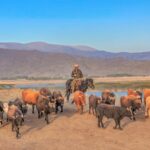
Projects that use the market systems development (MSD) approach often argue that their most successful interventions create lasting impact for target communities long after donor funding ends. In practice, however, these claims are rarely tested. Ex-post evaluations are uncommon, leaving a significant gap in understanding what truly remains once projects exit. To address this gap,… [Read More]
Mozambique Secures $150 Million African Development Bank Loan for Coral North Floating LNG Project
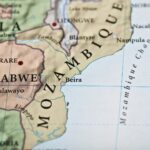
The African Development Bank has approved a $150 million senior loan to support the development of the Coral North Floating Liquefied Natural Gas (FLNG) Project, a major offshore energy initiative in Mozambique. The decision, approved by the Bank’s Board of Directors on 14 January, marks a significant step forward in strengthening the country’s energy infrastructure… [Read More]
State Violence and Community Resilience: Lessons From Minneapolis, Portland, and Beyond

The killing of unarmed Minnesota woman Renee Nicole Good by an ICE agent in Minneapolis this January has sparked nationwide alarm and protests, intensifying concerns about the growing risk of political and state violence in the United States. The incident came amid a year marked by high-profile political assassinations, increasing death threats against elected officials… [Read More]
How Cultural Conflicts Shaped Society During Covid-19: Lessons from Tight and Loose Cultures
Cultural conflicts became far more visible during the height of the Covid-19 pandemic, revealing deep differences in how societies respond to crisis. As lockdowns spread across the world, arguments erupted online over whether stay-at-home orders were excessive. In some places, protesters gathered at government buildings to demand freedom of movement, while inside homes, parents and… [Read More]
EU Unveils €1.9 Billion Humanitarian Budget for 2026 to Support Global Crises

The European Commission has announced its initial €1.9 billion humanitarian aid budget for 2026, reaffirming the EU’s commitment to life-saving assistance at a time when 239 million people worldwide need help and major donors are reducing their funding. Commissioner for Equality, Preparedness and Crisis Management Hadja Lahbib presented the funding commitment in Davos, highlighting efforts… [Read More]
£2M Funding for Scottish Youth Charities to Expand Programs and Services
Children and young people across Scotland are set to benefit from over £2 million (£2,081,593) in funding announced by The National Lottery Community Fund on 21 January 2026. The funding will support 22 organisations through the Young Start programme, which distributes money from dormant bank accounts to initiatives that empower young people and help them… [Read More]
UN and Circle Foundation Join Forces to Enhance Global Humanitarian Aid and Accountability

Circle Foundation, a philanthropic initiative supported by Circle Internet Group, announced its first international grant to the United Nations’ Digital Hub of Treasury Solutions (DHoTS) to modernize and streamline financial operations across the UN system. The grant aims to enhance transparency, reduce costs, and enable secure, real-time access to financial systems and markets worldwide. The… [Read More]
WHO Highlights Partnerships and Progress Toward Eliminating Leprosy Globally

The World Health Organization (WHO) has emphasized the critical importance of access to leprosy treatment as part of global efforts to eliminate the disease, ahead of World Leprosy Day on 25 January. Leprosy, caused by the bacterium Mycobacterium leprae, primarily affects the skin and peripheral nerves. If left untreated, it can lead to permanent disabilities… [Read More]
Why Haiti’s Political and Security Crisis Is Deepening – Full Overview
Haiti is facing a deepening crisis as armed gangs control large areas, extending their influence well beyond the capital, Port-au-Prince, and severely weakening the State’s ability to provide governance and essential services. Presidential elections have not been held in over a decade, leaving transitional governance arrangements under strain. Humanitarian needs have reached unprecedented levels, with… [Read More]
Gaza Infant Dies as Harsh Winter Hits Vulnerable Families, West Bank Displacement Surges

A three-month-old baby girl in Gaza City tragically froze to death on Tuesday, marking the ninth cold-related fatality of the season, according to UN Deputy Spokesperson Farhan Haq. In response, the UN Office for the Coordination of Humanitarian Affairs (OCHA) called for urgent measures, including the entry of batteries, solar panels, and other energy sources… [Read More]
Haiti on Edge: Gang Violence Escalates Amid Looming Government Transition

Haiti faces a critical juncture as the political transition set to expire on 7 February collides with escalating violence, entrenched criminal networks, and growing humanitarian needs. Officials warn that without urgent and sustained security and political efforts, the country risks sliding further into instability. Carlos Ruiz-Massieu, head of the UN Integrated Office in Haiti (BINUH),… [Read More]
Ontario Commits Over $47 Million to Advance Regional Research and Innovation
The Ontario government is investing over $47 million in 195 research projects at universities, colleges, and hospitals across the province, supporting homegrown research that drives economic growth, protects jobs, and strengthens innovation. This investment is part of the government’s plan to protect Ontario and maintain its competitiveness in global markets. Minister Nolan Quinn highlighted that… [Read More]


