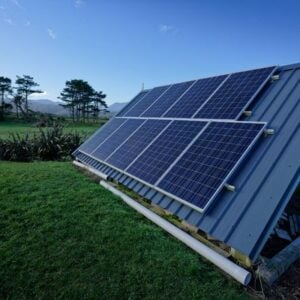
Kazakhstan has announced its Just Energy Transition Investment Platform (QaJET) at the Regional Ecological Summit 2026 in Astana, positioning it as a central pillar of its climate action, economic resilience, and long-term development strategy. The initiative reflects the country’s ambition to accelerate its clean energy transition by deploying 10 GW of new renewable energy capacity by 2035, supported by an estimated US$20 billion in investment from public, private, and international sources. Once implemented, the platform is expected to reduce greenhouse gas emissions by more than 20 million tonnes annually, accounting for around 7% of Kazakhstan’s current energy-related emissions.
A formal memorandum of understanding was signed between Kazakhstan’s Ministry of Energy, Ministry of Ecology and Natural Resources, and the European Bank for Reconstruction and Development (EBRD), establishing a cooperative framework for international financial institutions, donors, philanthropic organisations, and private investors to support the platform’s implementation. The EBRD will play a coordinating role, building on its existing support in designing the initiative and aligning national priorities with global climate finance mechanisms.
The launch marks a significant step for Kazakhstan, a country with a carbon-intensive industrial base and heavy reliance on coal for electricity generation. QaJET strengthens the country’s long-term commitment to achieving carbon neutrality by 2060 and supports its Nationally Determined Contribution target of reducing greenhouse gas emissions by up to 25% by 2030 compared to 1990 levels. Beyond emissions reduction, the platform is also designed to enhance energy security, improve economic competitiveness, and encourage domestic production of renewable energy technologies and related services.
Key areas under the QaJET framework include the expansion of renewable energy generation, including pilot projects for diverse clean energy technologies in heat supply; upgrades to electricity transmission and distribution infrastructure with modern grid systems and battery storage; electrification of businesses, SMEs, and households; and broader support for a just transition through skills development, knowledge sharing, technology transfer, and research and development initiatives.
The EBRD will leverage lessons from similar country platforms, including initiatives in Egypt, North Macedonia, and Türkiye, to guide implementation and ensure scalability and effectiveness. With nearly US$12 billion already invested in Kazakhstan through 345 projects, the EBRD remains the country’s largest and longest-standing international development partner in Central Asia, reinforcing its central role in supporting Kazakhstan’s energy transition agenda.