The African Development Fund has approved a $24.5 million grant for São Tomé and Príncipe as part of a broader $30 million investment aimed at transforming the country’s energy sector. The funding will support the Energy Transition, Efficiency, and Expansion Project (ETREEP), which seeks to reduce reliance on expensive imported diesel and accelerate the shift toward renewable energy. The initiative is expected to benefit more than 200,000 people and plays a central role in the country’s national goal of achieving universal electrification and a 50% renewable energy share by 2030.
Currently, São Tomé and Príncipe depends on fossil fuels for nearly all its electricity generation, resulting in high production costs, frequent power outages, and significant energy losses before electricity reaches consumers. The ETREEP project is designed to address these challenges by improving energy efficiency, expanding clean energy capacity, and strengthening the reliability of the national power system over the 2026–2031 implementation period.
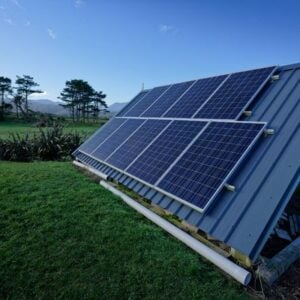
The project includes several key infrastructure upgrades. These include the installation of 1,000 energy-efficient LED streetlights to improve safety and reduce consumption, the development of a 4 MW solar power plant with a 2 MWh battery storage system on Príncipe Island, and the modernization of electricity distribution networks. It will also introduce more than 40,000 prepaid meters to reduce losses and improve billing efficiency while upgrading the national electricity dispatch centre to better integrate renewable energy sources.
Alongside infrastructure improvements, the project will strengthen national institutions such as the electricity and water utility and the Ministry of Infrastructure through training and technical assistance. These efforts are intended to ensure long-term sustainability and improve operational capacity in managing the energy transition.
The initiative is expected to deliver significant social and economic benefits, including new electricity connections for around 50,000 households and improved service reliability. It also aims to increase revenue collection efficiency while reducing technical and commercial losses that currently strain the energy system and national finances.
The project places strong emphasis on social inclusion. Women are expected to benefit from improved lighting, cleaner energy access, and new economic opportunities, while young people—who make up the majority of the population—will gain from job creation and targeted training in solar and electrical skills to support the growing green economy.
Financing for the project comes primarily from the African Development Fund, with additional support from development partners and the government. According to the African Development Bank, the initiative represents more than infrastructure development, serving as a commitment to ensuring that small island nations can achieve modern, sustainable, and inclusive energy systems.