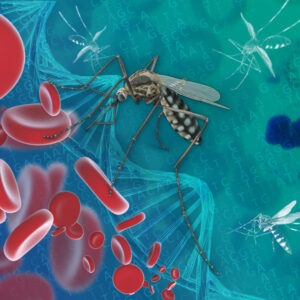
Research to eliminate malaria, one of the world’s deadliest diseases, is set to accelerate with a USD $4.7 million grant from the Gates Foundation awarded to scientists at The Kids Research Institute Australia and The University of Western Australia (UWA). Global malaria cases surged to an estimated 263 million in 2023, resulting in over 597,000 deaths, the majority of which occurred in Africa, disproportionately affecting vulnerable groups such as children and pregnant women.
The grant will support the work of The Kids Global Disease Modelling Team, led by Professor Melissa Penny, who has spent over eight years shaping global malaria strategies through the World Health Organization (WHO) and was recently appointed to its Malaria Policy Advisory Group. The funding will enable the team to advance two linked programs aimed at malaria elimination.
The first program focuses on updating OpenMalaria, the team’s flagship open-source mathematical model of malaria dynamics, co-developed with Professor Nakul Chitnis. OpenMalaria simulates how the Plasmodium falciparum parasite infects people, predicts case severity, and estimates transmission patterns. By incorporating two decades of data on interventions and disease patterns, the updated model will provide insights into optimizing existing and novel malaria control strategies to accelerate reduction and elimination efforts.
The second program will use mathematical modelling, including OpenMalaria, to support the development and testing of new malaria interventions such as vaccines, medications, and long-acting injectable drugs. The models will predict the potential impact of these interventions on malaria cases and deaths, inform research and development decisions, and estimate the lives saved across different African settings.
Professor Penny emphasized that these programs aim to improve decision-making and speed progress toward malaria elimination, offering evidence on the effectiveness of new tools even before they reach clinical trials. The models will also help product developers optimize intervention characteristics for maximum impact.
The grant has been hailed as recognition of both Professor Penny’s leadership and The Kids Research Institute’s global contributions to child health research. Professor Jonathan Carapetis highlighted that the funding underscores the institute’s commitment to high-impact research that saves lives, particularly among children affected by malaria.
Professor Anna Nowak of UWA added that the investment acknowledges the pioneering work of the research team, which brings together leading minds and institutions to tackle one of the world’s most significant health challenges. Through the grant, the Global Disease Modelling team will continue to collaborate with partners worldwide across academia, industry, and policy to accelerate progress toward malaria elimination.